
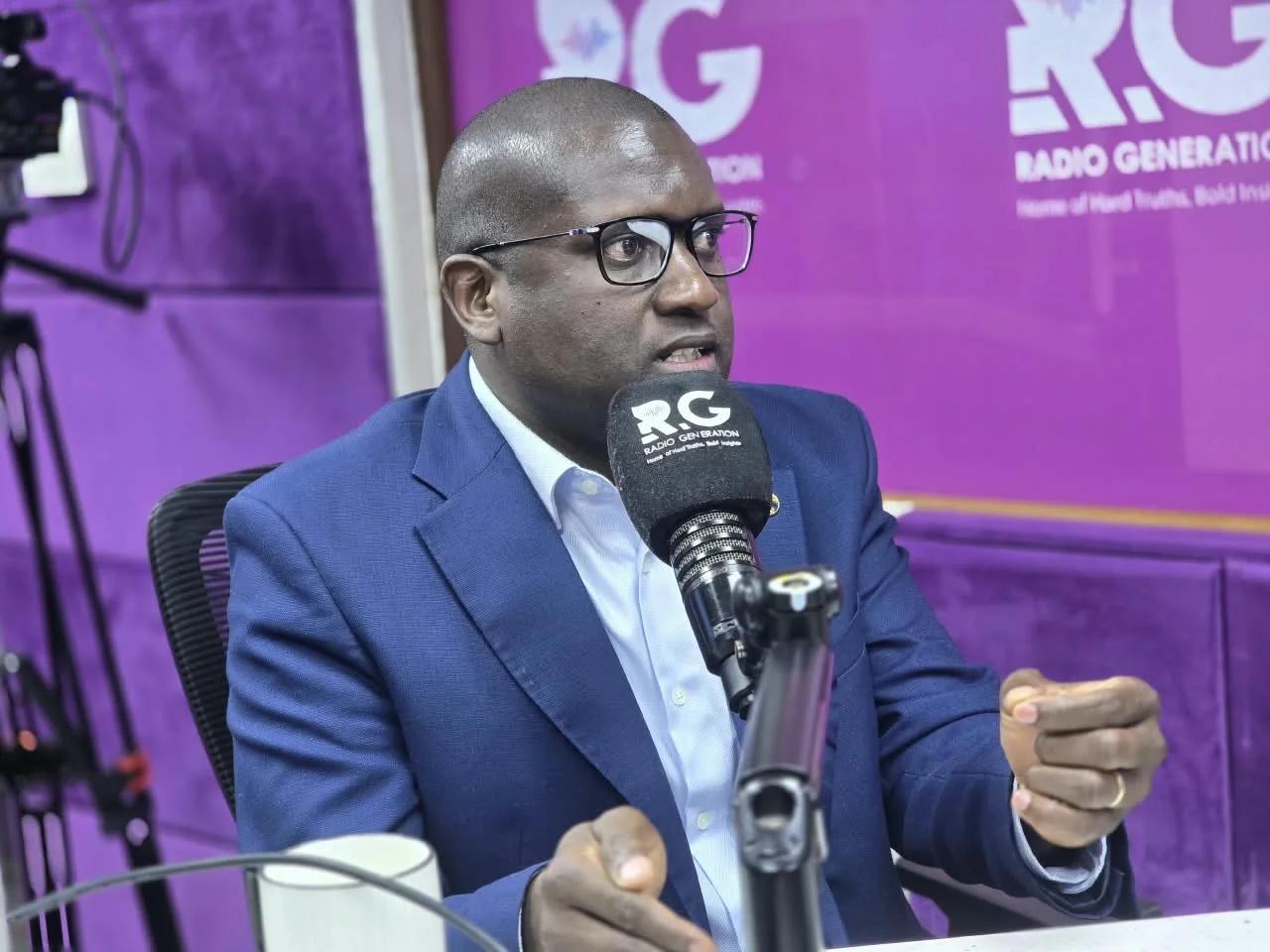
Cyprian Nyamwamu, a Nairobi gubernatorial aspirant and spokesperson for Kenya Bora Tuitakayo, has called for grassroots mobilisation to drive political change, arguing that public dissatisfaction with the government must be translated into organised action ahead of the 2027 General Election.
Speaking on Radio Generation on Monday, Nyamwamu said opposition leaders must organise citizens around a shared national vision rather than concentrate on individual political ambitions.
His remarks come amid public concern over Kenya’s direction, with opinion polls indicating that dissatisfaction has been influenced by economic pressures, unemployment and the cost of living.
A TIFA Research Survey conducted between June 13 and 22, 2026, interviewed 2,048 adults across all 47 counties. It found that 76 per cent believed the country was moving in the wrong direction, compared with 14 per cent who said it was on the right track.
The findings marked an increase from November 2025, when 68 per cent of respondents said Kenya was headed in the wrong direction.
Economic concerns featured prominently in the survey. Unemployment and poverty were cited by 44 per cent of respondents as major national problems, while 25 per cent pointed to inflation, high prices and taxes. Corruption was identified by 19 per cent.
The survey also found that 65 per cent of respondents said their personal or family economic circumstances had worsened since the 2022 General Election.
However, a Politrack Africa survey conducted between September 15 and 25 found a more divided public opinion. Of 20,419 respondents, 45.2 per cent said Kenya was moving in the right direction, while 44.6 per cent believed it was headed in the wrong direction. Another 10.2 per cent were undecided.
The contrasting findings show that perceptions of the country’s direction vary across surveys and periods. They also underline the importance of distinguishing public dissatisfaction from a guaranteed electoral outcome.
Nyamwamu said dissatisfaction alone would not bring change unless political leaders organised citizens around common interests and helped them understand how governance affected their lives.
“When you know that 73 per cent of the people are unhappy with how the country is being governed, then you ask, how can they make the same mistakes when it comes to the ballot? It is because they have not been organised for change,” he said.
“So that is what we have to do. We have to organise the people constructively for change. That is the work that is before us.”
Nyamwamu argued that some political parties mobilise supporters primarily to secure power for their leaders instead of pursuing broader social and economic transformation.
“There are people like our current president who form political parties and organise people for his power, not organising them for their liberation,” he said.
He traced Kenya’s struggle for political reform to 1966, when former Vice-President Jaramogi Oginga Odinga resigned from government and formed the Kenya People’s Union.
Nyamwamu said the country’s national vision was reflected in the first stanza of the national anthem, which he interpreted as emphasising justice, solidarity and brotherhood, peace, freedom, and social and economic prosperity.
“Every conversation should be: Are we working for Kenya’s national interests as they are expressed in the first stanza of the national anthem?” he questioned.
He added that the Constitution, devolution and public institutions should advance these aspirations rather than become instruments for individual enrichment.
“The people have agonised since 1963 because they have not been organised for liberation, organised for transformation,” he said.
Nyamwamu maintained that opposition leaders must build a coherent grassroots strategy capable of converting public concerns into sustained civic and political participation.
With the 2027 General Election approaching, he concluded that the challenge was not merely to identify dissatisfaction with the government, but to organise citizens around a common programme for change.