
Kenya is losing billions of shillings every year through treated water that goes unpaid for, as rising supply losses, poor sewerage coverage and inadequate funding continue to slow efforts to expand access to clean water and sanitation across the country.
The 2024-2025 Joint Annual Sector Report shows that non-revenue water has increased from 43 per cent to 48 per cent, meaning nearly half of the water produced by utilities fails to generate income. The losses are placing additional pressure on water service providers already struggling with high operating costs and limited resources to improve their networks.
The report puts national water coverage at 74 per cent, while only 40.9 per cent of Kenyans have access to safely managed sanitation. Just 16 per cent of the population is connected to sewerage systems, while six per cent still practise open defecation.
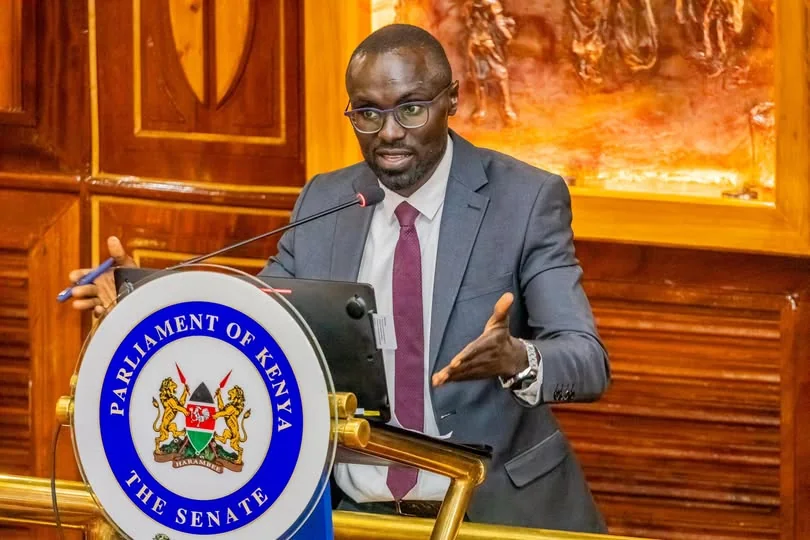
Speaking at the second Water, Sanitation and Irrigation Conference on Thursday, October 22, 2026, Cabinet Secretary Eric Mugaa raised concerns about the high cost of pumping water, warning that electricity expenses were threatening the financial stability of water service providers.
He urged utilities to explore renewable energy and hybrid power systems as alternatives to conventional electricity, saying such investments could lower operating costs and make water supply systems more reliable.
"Are we developing green energy to support this?" Mugaa asked, pointing to the need for cheaper and more reliable sources of power for water infrastructure.
The Cabinet Secretary also highlighted the shortage of sewerage infrastructure, noting that many county headquarters still lack centralised systems more than a decade after devolution began.
He said the gap remained despite the approval of a national sanitation plan, raising concerns about the slow pace of investment in facilities needed to improve sanitation and public health.
The government has amended the Water Act to allow water works development agencies to attract private capital to support infrastructure development. However, Parliament has cautioned that the new funding arrangements must protect consumers from unaffordable water charges.
Kuria East MP and National Assembly Departmental Committee on Blue Economy, Water and Irrigation vice-chairperson Maisori Marwa said regulated water utilities had expanded access to more than 4.5 million people during the 2023-2024 and 2024-2025 financial years.
According to the committee, 3.27 million people gained access to water services in the 2023-2024 financial year, followed by another 1.26 million in 2024-2025.
However, Marwa said the progress remained under threat from high water losses, gaps in sanitation services and insufficient funding to support the expansion and maintenance of infrastructure.
He put the annual economic losses arising from treated water that fails to reach paying customers at approximately Sh11.9 billion, calling for stronger oversight of public spending and greater accountability among agencies implementing water projects.
Marwa said inefficiencies, delayed projects, rising construction costs and unpaid bills were weakening the sector's ability to deliver services despite the substantial resources already committed to development.
He stressed that public funds should produce clear and measurable improvements in water supply, irrigation and sanitation, rather than being tied up in projects that remain incomplete for years.
The parliamentary committee reported that the State Department for Water and Sanitation required more than Sh140 billion, while the State Department for Irrigation also faced a funding shortfall, with an allocation of Sh11.5 billion against its needs.
The two departments received allocations of Sh61.4 billion and Sh11.5 billion, respectively, according to the report.
Marwa said the committee would oppose the introduction of new capital projects until viable stalled water and irrigation schemes had been completed and commissioned.
The committee also called for government funding to be linked to measurable performance, a move intended to ensure that budget allocations translate into completed projects and improved services for the public.
Water and Sanitation Principal Secretary Julius Korir said the country needed more predictable investment to turn government policies and development plans into working infrastructure.
He said the sector's investment framework required about Sh995 billion to finance dams, bulk water harvesting facilities, urban and rural water supply systems, sanitation infrastructure and measures to reduce inefficiencies.
Korir said 16 priority dams could provide approximately 14 billion cubic metres of water storage, serve about 12 million people, support irrigation across 1.7 million acres and generate hydropower.
The projects are expected to strengthen water availability for households and farming while supporting electricity generation and wider economic activity.
However, progress towards developing the planned dams remains slow, with only a few having completed designs. Many are still at the feasibility or concept stage, delaying their readiness for financing and construction.
Korir urged development partners to help prepare bankable projects that can attract investment and move from planning to implementation.
Water Services Providers Association chief executive Anthony Jaramba said utilities were facing mounting financial pressure from high electricity and chemical costs, while donor funding was declining.
He called on the government to take the financial needs of water service providers into account when making development financing decisions, warning that the sector required sufficient resources to maintain existing systems and expand access.
Jaramba also urged communities to take responsibility for protecting and maintaining water infrastructure after projects are completed, saying local involvement was important in ensuring that investments continue to benefit residents.
The sector's challenges come as the government faces pressure to expand water and sanitation coverage while addressing losses that reduce the revenue available to maintain existing networks.
With nearly half of treated water failing to generate income, limited sewerage connections and major infrastructure projects still awaiting funding, the report points to the need for better water management, stronger financial planning and faster delivery of planned investments.