
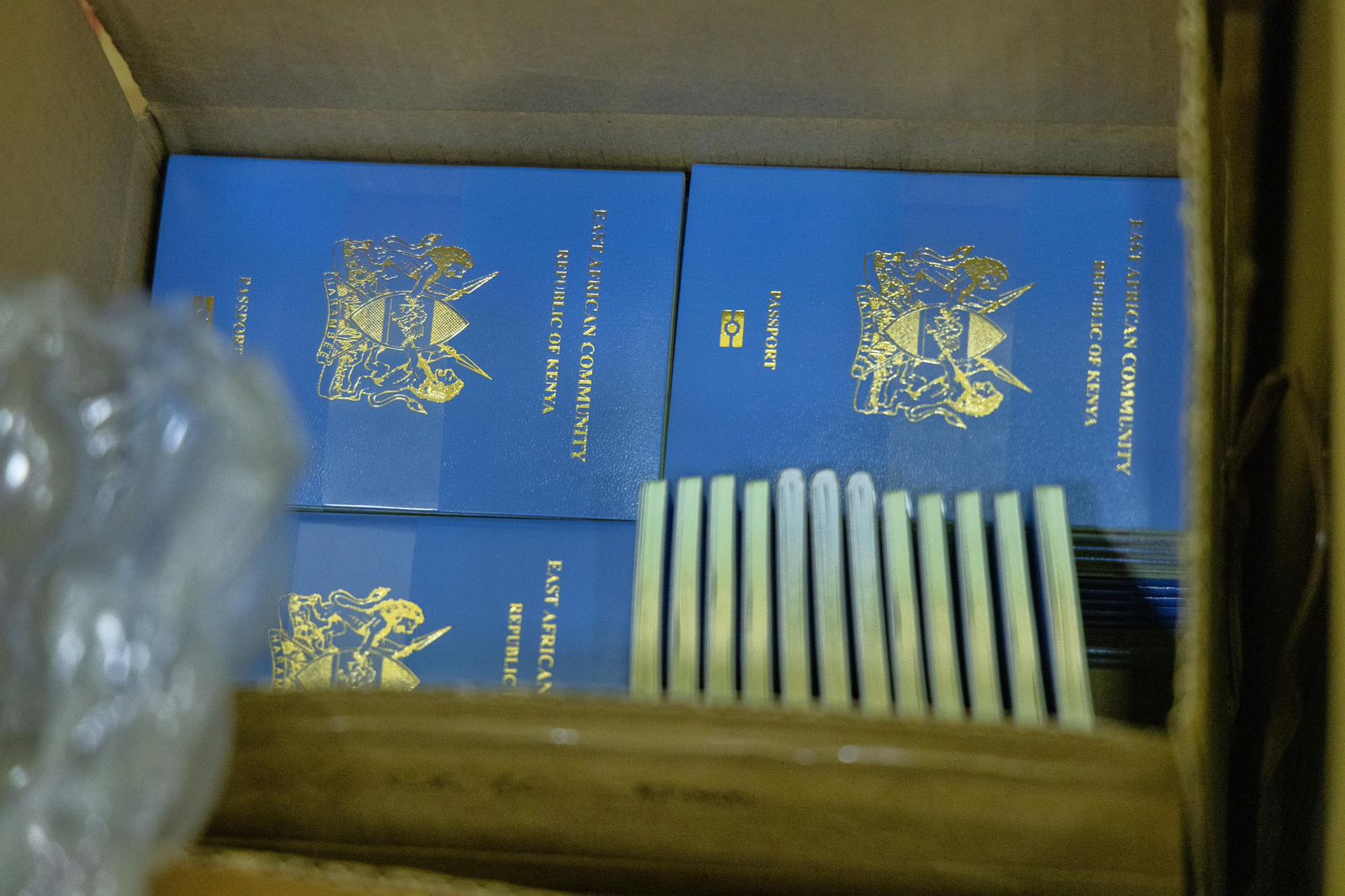
Kenyan travellers are facing a weaker international mobility position after the country's passport fell 10 places in the latest global rankings, placing 119th among 199 countries as its score dropped to 76, the lowest level recorded since 2022.
Data from Passport Reports shows that Kenya's Mobility Score has declined from 78 in 2025, reflecting the number of destinations Kenyan citizens can visit without obtaining a conventional visa beforehand.
The latest assessment gives Kenyan passport holders access to 76 destinations through three categories: visa-free entry, visas issued upon arrival and Electronic Travel Authorisations (ETAs).
Of these destinations, 37 allow Kenyans to enter without a visa, while 34 provide visas on arrival. Another five require travellers to obtain an ETA before their journey.
However, advance visa applications remain necessary for 122 destinations, including the United States, the United Kingdom, Canada and countries within the Schengen Area.
The latest results mark a reversal from Kenya's performance in 2024, when its Mobility Score reached 79. In 2022, the country recorded a score of 74 and ranked 121st globally, meaning its current position is lower than its performance in the intervening years.
Changes in Visa Policies Affect Kenya's Position
Kenya's ranking has also experienced short-term fluctuations as countries revise their entry requirements for foreign visitors.
On September 15, the country dropped from 119th to 120th place after Laos stopped offering Kenyan citizens visas on arrival. Kenya regained its previous position on September 20 after the Southeast Asian country reinstated the arrangement.
The movement illustrates how changes in access to even a single destination can influence a country's standing, depending on the scoring system used by a passport index.
Passport Reports collects and publishes passport data covering 199 countries in 34 languages. The platform cautions that rankings from different passport indexes may not always match because the organisations apply different assessment methods.
Some indexes may consider different types of travel access, while others use distinct ways of classifying entry permissions, assigning scores and resolving ties between countries.
Passport Reports calculates its Mobility Score by adding the destinations that permit visa-free entry, issue visas upon arrival or accept travellers through an ETA arrangement.
When two passports have the same overall score, the platform compares their number of visa-free destinations. If the tie remains, it considers the number of destinations offering ETAs and then those providing visas on arrival.
Where passports remain equal across all these measures, they are assigned the same rank.
Despite the decline in its worldwide standing, Kenya remains among the continent's better-performing passports under the Passport Reports assessment.
The country ranks 10th among the 54 African passports covered by the index and holds the same position among the 54 member states of the African Union.
Beyond Africa, Kenya occupies 40th place among 56 Commonwealth countries, 67th among 132 G77 members and 111th among 159 World Trade Organisation members.
The country also leads among the four nations where Kiswahili is an official language.
According to the platform, 38.4 per cent of countries are accessible to Kenyan citizens through visa-free travel or simplified entry arrangements.
Travel within Africa presents a more favourable picture. The report indicates that Kenyans can enter 38 of the continent's other 53 countries without a visa, with a visa on arrival or through an ETA.
This represents access to about 71.7 per cent of the other African states through the entry categories included in the index.
The report reveals a marked contrast between the travel restrictions Kenyan citizens face abroad and the entry arrangements Kenya offers to visitors from other countries.
Kenya ranks second worldwide for ease of entry, according to Passport Reports, because citizens of no nationality are required to obtain a visa before travelling to the country.
The platform lists 76 nationalities as eligible for visa-free entry into Kenya, while citizens of 122 countries must obtain an ETA.
It also records several other entry procedures used internationally, showing that travel requirements extend beyond conventional visas.
Malaysia and Singapore require arrival cards, while Côte d'Ivoire uses a pre-enrolment system. Seychelles requires tourist registration, and Papua New Guinea offers entry through an eVisitor permit.
Cape Verde, meanwhile, uses the Ease procedure, an online electronic pre-registration system.
Ease stands for Efficient, Automatic and Safe Entry of Travellers. The platform is used to register travellers electronically before they enter Cape Verde.
These arrangements are among the procedures documented by Passport Reports when assessing how easily citizens of different countries can travel internationally.
Beyond identifying visa requirements, Passport Reports provides information on the maximum length of stay permitted in several destinations under the entry arrangements it records.
Nepal allows stays of up to 150 days, according to the platform.
A maximum period of 90 days is listed for Côte d'Ivoire, Djibouti, Gabon, Guinea, Madagascar, Mauritania, Nigeria, Seychelles, Suriname and Vietnam.
Other countries provide shorter periods of stay. Cambodia, India, Indonesia, Jordan, Laos, Malaysia, Mozambique, Papua New Guinea, Russia, Sierra Leone and Singapore are listed as allowing visitors to remain for up to 30 days.
These periods help travellers understand how long they may stay in a destination under the arrangements covered by the report.
What the Different Travel Categories Mean
The index separates international entry requirements into several categories, each reflecting a different process that travellers must follow.
A visa-required destination is one where travellers must apply for a conventional visa before departure. The necessary application must be completed before travelling.
A visa-free destination allows eligible visitors to enter without obtaining a visa.
An Electronic Travel Authorisation (ETA) is a digital permission that must be secured before arrival, even though a conventional visa is not required.
A Visa on Arrival (VOA) allows a traveller to obtain a visa after reaching the destination, generally at the airport, without needing approval before departure.
An eVisa is a conventional visa application submitted online, with the document issued electronically. Travellers must receive approval before leaving for their destination.
These distinctions are important because the index counts several forms of facilitated entry when calculating passport mobility, rather than considering only destinations that allow completely visa-free travel.
Kenya's score of 76 therefore reflects the combined number of destinations accessible through visa-free entry, visas on arrival and ETAs, while the country's 119th-place ranking reflects how that access compares with the mobility offered by other passports in the index.