
Deputy President Kithure Kindiki has called for the adoption of technology, stronger cybersecurity, and environmentally sustainable practices to modernise Kenya’s correctional services and improve the administration of justice.
Kindiki said digital innovation and green solutions should support institutional efficiency, rehabilitation and the reintegration of offenders, while protecting human dignity and personal information.
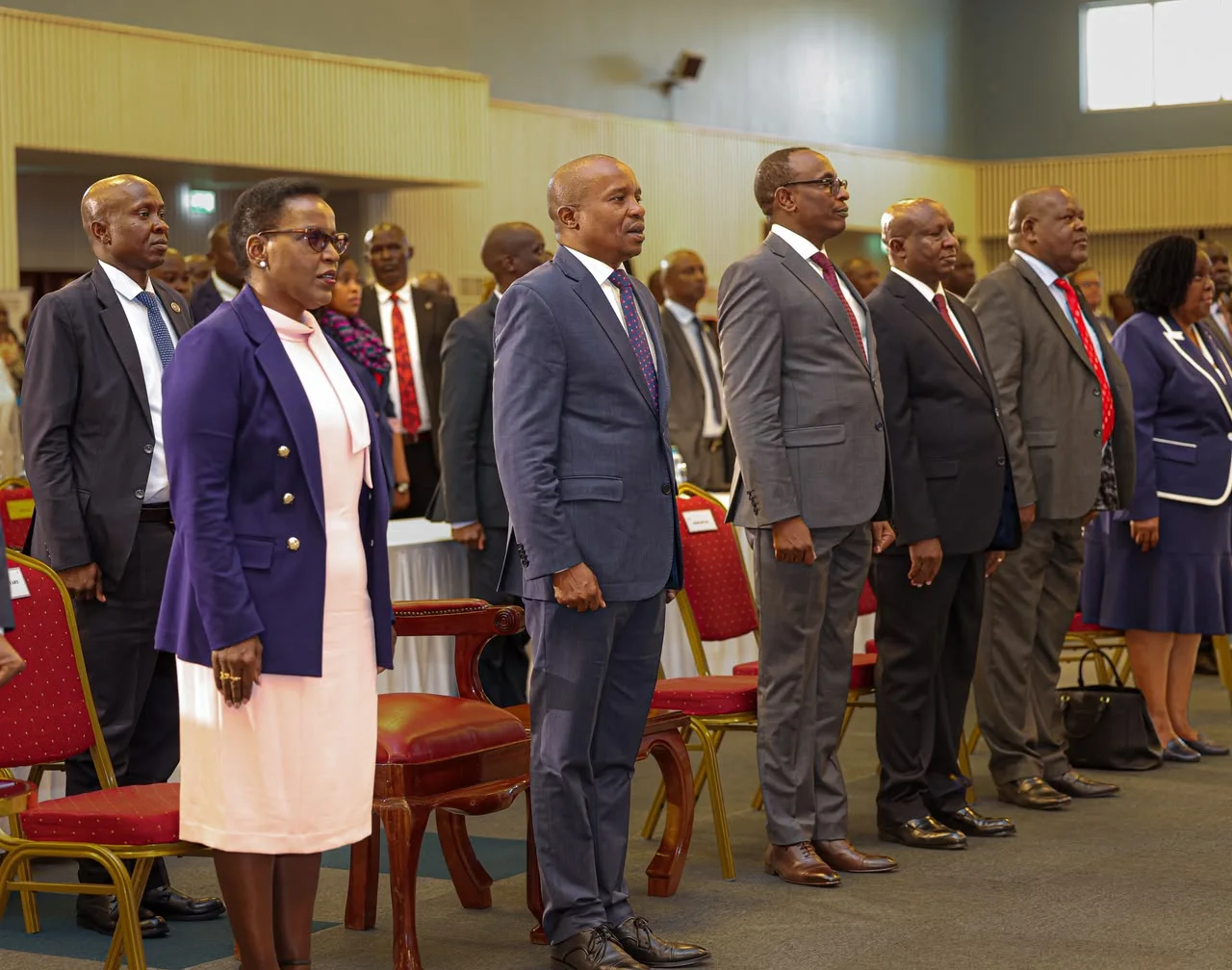
Speaking during the opening of the Fourth Correctional Services Week 2026 at the Edge Convention Centre on October 13 2026, Kindiki urged the State Department for Correctional Services to align its digital initiatives with national technology policies and strengthen collaboration with other government agencies.
The call comes amid growing cybersecurity concerns as Kenya expands its digital infrastructure. According to the Communications Authority of Kenya, the National Kenya Computer Incident Response Team detected approximately 3.37 billion cyber threat events between January and March 2026, down from 4.56 billion in the previous quarter. The authority also issued more than 20.5 million cyber threat advisories during the period.
The Deputy President warned that cyberattacks, including distributed denial-of-service attacks, could disrupt essential services and undermine public confidence in government systems.
He urged correctional institutions to make cybersecurity central to digital transformation, noting that public agencies needed to work together to address emerging threats.
“The digital superhighway provides an opportunity to transform how government institutions operate, how citizens access services and how public resources are managed. We must move progressively from fragmented, paper-based processes towards secure, integrated and data-driven systems coordination across the justice value chain," said Kindiki.
Kindiki maintained that artificial intelligence, data analytics and secure digital communication could improve operational planning, identify service delivery gaps and help institutions deploy limited resources more effectively.
He called for the correctional services to align their initiatives with the National Digital Master Plan 2022–2032, the National E-Commerce Strategy 2023 and the National Artificial Intelligence Strategy 2025–2030. The digital master plan provides a national framework for expanding digital infrastructure, e-government services, digital skills and innovation.
However, he cautioned that the use of emerging technologies must not compromise the rights of people under correctional supervision.
“Innovation within correctional institutions must uphold human dignity, protect personal information, guard against discrimination and preserve the rights and welfare of people under correctional supervision.”
Kenya’s correctional system has a responsibility for rehabilitation. The Kenya National Bureau of Statistics’ Economic Survey 2026 reported that the average daily prison population rose by 2.9% to 60,740 in 2025, including 24,462 unconvicted prisoners.
Kindiki clarified that reforms should therefore go beyond institutional security to strengthen rehabilitation and social reintegration.
He urged continued investment in education, vocational training, psychosocial support, restorative justice, family participation and community-based alternatives to imprisonment.
On environmental sustainability, the Deputy President called for correctional facilities to expand renewable energy, water harvesting, waste recycling, climate-smart agriculture and tree-growing initiatives.
He also encouraged productive farms, improved irrigation and agricultural mechanisation, saying institutions could combine rehabilitation with practical skills development and sustainable production.
“Our correctional institutions must therefore become not only centres of rehabilitation, but also platforms for skills development, innovation and sustainable production.”
Kindiki challenged stakeholders to translate discussions into measurable action through improved digital systems, cybersecurity cooperation, staff training and environmentally responsible infrastructure.
He concluded that the objective was to build a correctional system that delivers justice effectively, protects society, manages public resources responsibly, and supports offenders’ rehabilitation and reintegration.