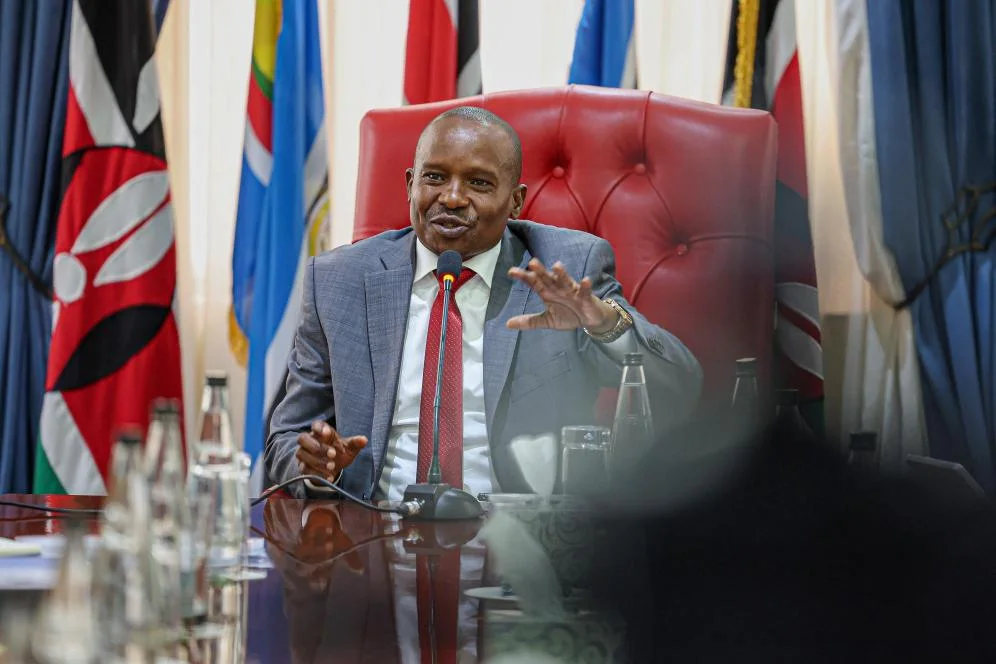
Deputy President Kithure Kindiki has warned government officers against compromising the enforcement of laws targeting illicit brews, saying those found aiding the production, distribution or sale of harmful alcohol will face legal action.
Kindiki directed security, regulatory and enforcement agencies to intensify the crackdown on illicit alcohol and ensure the law is applied without fear or favour.
“Enforcement agencies have been directed to be ruthless and any official of the Government of Kenya taking part in enforcement who compromises or allows sale or distribution of these dangerous products will face the consequences of the law,” the Deputy President said.
Kindiki spoke on Wednesday at the Official Residence in Karen, Nairobi, where he chaired a follow-up meeting bringing together representatives of security agencies and heads of regulatory and enforcement bodies.
The meeting assessed the implementation of government directives and measures aimed at curbing the production and distribution of illicit and harmful alcoholic drinks.
The Deputy President commended agencies involved in the crackdown but called for increased efforts following the establishment of a multi-agency team tasked with expanding enforcement operations across the country.
“There has been work that has been ongoing but we want to scale it up,” Kindiki said.
“I commend the law enforcement and the regulatory agencies for the efforts they have made so far in the multi-agency format since the President ordered for the tightening of the responses to this menace,” he added.
Kindiki said he would chair a Multi-Sectoral High Level Team meeting every two weeks to monitor progress in the fight against illicit alcohol and drugs.
The team will bring together stakeholders from government, industry and communities and will focus on monitoring enforcement, identifying criminal elements involved in the illegal trade and supporting the rehabilitation of alcoholics and drug addicts.
Kindiki said greater involvement of local communities would be central to the government’s strategy, particularly in gathering intelligence and identifying individuals involved in the manufacture and sale of prohibited alcoholic products.
“Our involvement of the community has not been optimal. We are going to optimize that involvement going forward,” he said.
He directed enforcement and regulatory agencies to work closely with communities at the local level to improve intelligence gathering and assist the public in identifying those violating the law.
The Deputy President said community participation was necessary in efforts to dismantle networks involved in the illicit alcohol trade and protect public safety.
He also announced that new legislative measures aimed at strengthening controls on the importation and sale of ethanol were being finalised.
“It has come out clearly that sale of ethanol is one of the areas we need to enhance control and also take action on people involved in illegal importation or diverting industrial ethanol for other uses,” Kindiki said.
The Deputy President further warned politicians against interfering with the enforcement campaign, saying the government would not allow the crackdown to be politicised.
“In the past, this noble exercise has been politicized. This time round, we will not have anything of that nature because we will keep politics out of this. This is a national security and economic welfare issue,” he said.
Kindiki said the government would continue coordinating security, regulatory and community actors to strengthen enforcement and address the risks posed by harmful alcoholic products.