
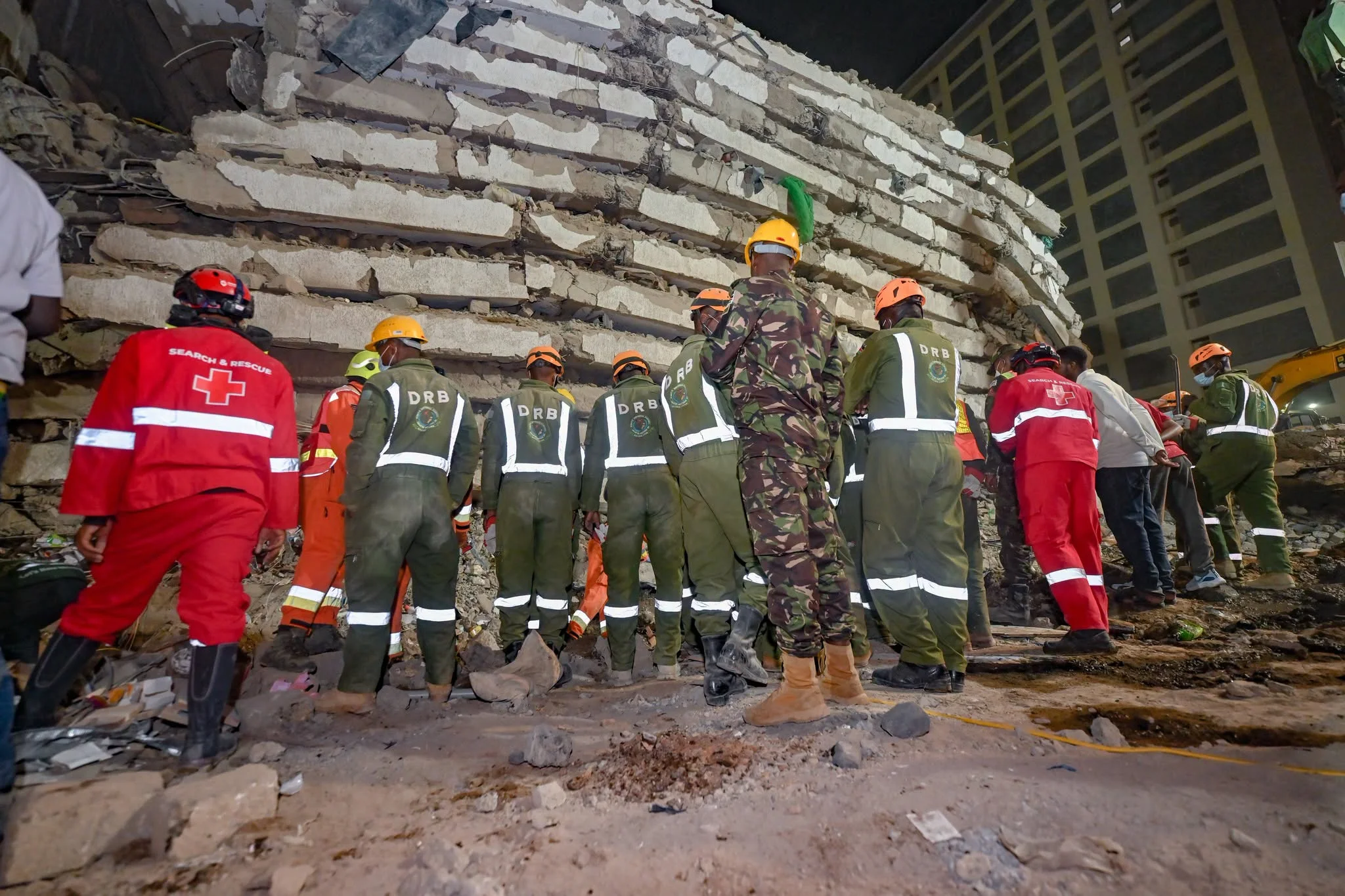
The collapse of a multi-storey building in Eastleigh, Nairobi, has exposed persistent weaknesses in construction safety, with data showing the capital leads the country in reported building collapses and deaths as questions mount over planning approvals, professional supervision and regulatory enforcement.
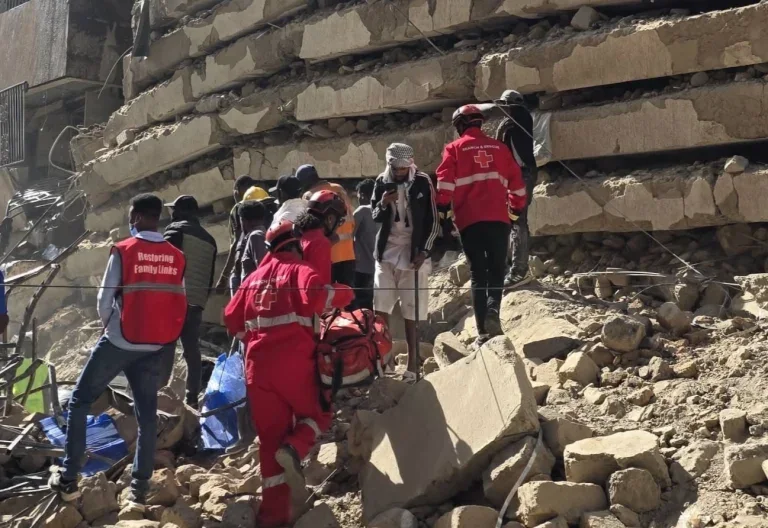
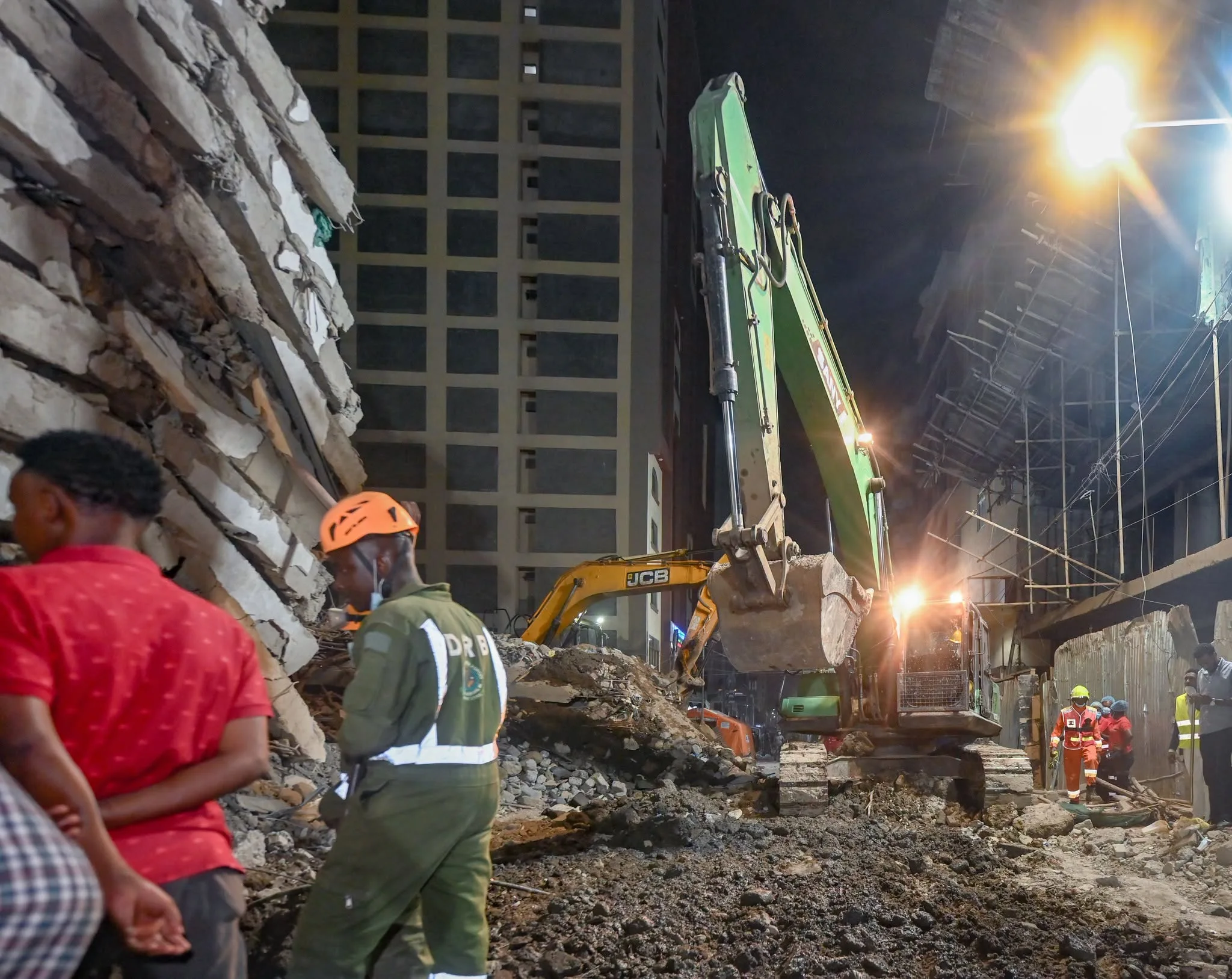
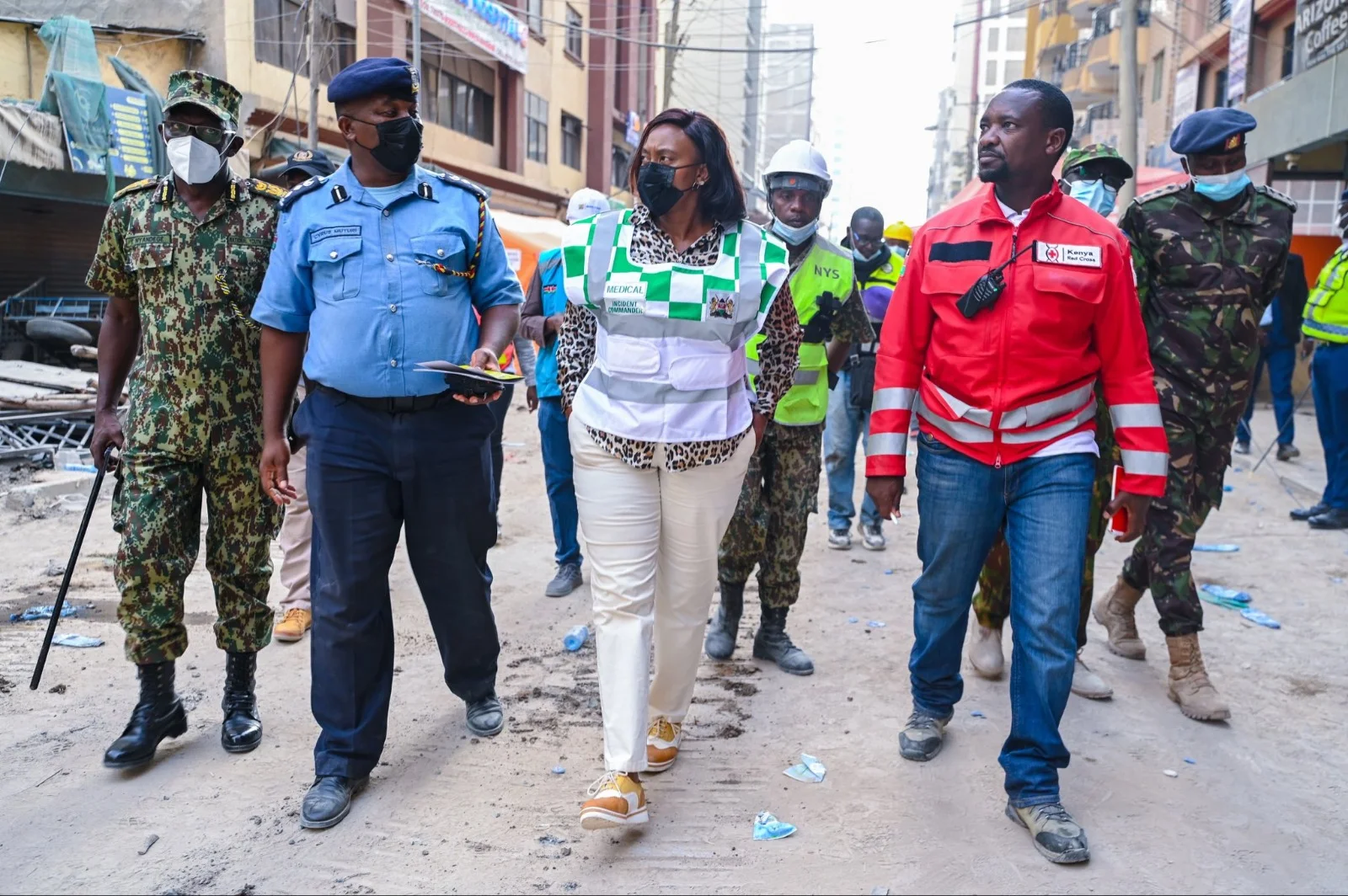
The building collapsed on October 23, 2026, along 9th Street in Eastleigh while construction was ongoing. Shops on its ground and basement floors were reportedly operating when the structure came down, trapping workers and other people beneath tonnes of concrete and debris.
By October 30, rescuers had recovered the body of a woman, four people had been rescued alive, and 16 others remained unaccounted for, according to reports from the scene.
The incident triggered investigations into the building's construction history, approvals, and the responsibilities of the agencies and professionals involved.
The tragedy is not an isolated incident. A compilation by Stats Kenya, based on media reports, recorded at least 83 building collapses nationally between January 2020 and October 2026, resulting in 88 deaths and 131 injuries.
Nairobi County recorded 30 collapses and 25 deaths, the highest figures nationally, followed by neighbouring Kiambu County, which recorded 13 collapses and 13 deaths.
Together, Nairobi, Kiambu, Kajiado, Machakos and Murang'a accounted for 50 of the 83 reported incidents, demonstrating the concentration of construction-related risks in the capital and its surrounding counties.
The dataset identified 40 collapses involving buildings under construction and another 12 during demolition. These two categories accounted for 66 of the 88 recorded deaths, or approximately 75 per cent of the fatalities.
Another 37 incidents occurred between March and May, coinciding with Kenya's long-rains season.
Stats Kenya cautions that its figures are minimum estimates because they rely on publicly reported incidents and may exclude smaller collapses that received limited media coverage.
It recorded 24 collapses nationally in 2026 by October, more than in any full year since 2020.
Nairobi's risks are spread across several neighbourhoods, including Eastleigh, Kasarani, South C, Karen, Westlands, the central business district and Highrise in Kibera.
Kasarani has featured in several building-safety incidents. On November 15, 2022, a multi-storey building under construction collapsed in the Seasons area, killing three people and injuring others.
The National Construction Authority (NCA) subsequently indicated that the project had previously been suspended over non-compliance concerns, including an allegedly forged project-registration certificate.
Nairobi Governor Johnson Sakaja later interdicted three county officers pending investigations.
The constituency has the highest number of active illegal-construction cases under investigation by Nairobi County, with 46 of the 256 cases recorded across the capital.
Embakasi West follows with 27 cases, Embakasi East has 21, Lang’ata 18, Roysambu and Starehe 16 each, while Mathare has 15.
County data further shows that 25 of the cases have been processed and forwarded to the Office of the Director of Public Prosecutions (ODPP) for review and further action.
In January 2026, another major incident occurred in South C, within Lang'ata Sub-County, where a 16-storey building under construction collapsed along Muhoho Avenue.
The NCA later said the approved structural designs provided for a 12-storey development.

Other reported incidents included a building collapse along Ngong View Lane in Karen on January 10, 2026, and incidents in Westlands and the Nairobi central business district.
However, the figures on illegal construction relate to suspected regulatory violations and do not necessarily establish which constituencies have the highest number of building collapses.
The risks extend beyond buildings that have already collapsed.
The Architectural Association of Kenya's (AAK) Status of the Built Environment Report 2024 cited National Building Inspectorate findings showing that, among 20,649 buildings audited nationally, 962 were classified as dangerous and 11,662 as unsafe.
Nairobi accounted for 688 buildings classified as dangerous, while only 210 buildings nationally underwent structural-integrity testing.
The AAK's 2025 report raised further concerns, revealing that the National Building Inspectorate audited just 396 buildings during the year, compared with 20,649 in 2024.
Of the 396 developments assessed, 87 per cent either lacked the required approvals or failed to meet basic building standards. Two buildings were demolished because of severe structural defects.
The report also highlighted weaknesses in urban planning, noting that Kenya had approximately 2,636 urban centres, but only 202 were adequately planned.
Speaking on Radio Generation on October 28, urban development expert Professor Alfred Omenya warned that Kenya's problem was not necessarily a shortage of regulations but failure to enforce existing laws.
"We do have regulations; we don't follow them," Omenya said, citing inadequate professional supervision, unqualified site supervisors and the use of cheap labour as contributing factors.

Construction safety involves several institutions, including county governments, the NCA, the National Environment Management Authority (NEMA) and professional bodies regulating architects and engineers.
County governments assess development applications and approve architectural and structural plans, while the NCA registers projects and regulates contractors. NEMA handles environmental approvals where required.
However, approval documents alone cannot guarantee safety if construction deviates from approved designs, inferior materials are used, or professional supervision is inadequate.
The Eastleigh collapse has exposed these gaps, with Governor Sakaja giving conflicting details about the building's approval history as political leaders challenged his account.
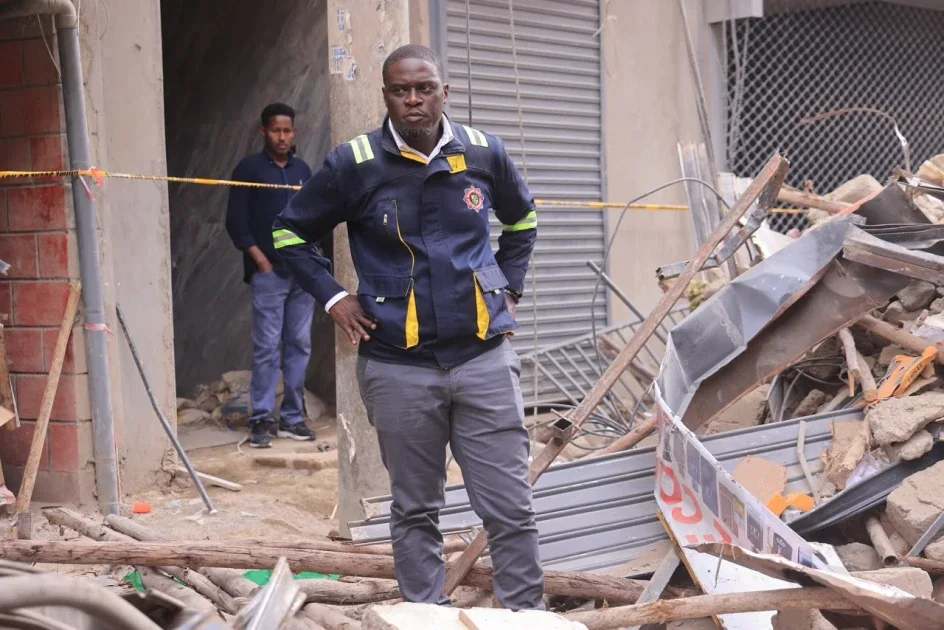
Sakaja said the county had approved a change of use from residential to commercial-cum-residential in October 2024 but had not approved the architectural plans for the high-rise development. He also said the building lacked an occupation certificate.
The governor warned that occupation certificates must be issued before buildings are opened to the public.
"Before anybody gets an occupation certificate, you're not allowed to get into that property. At all. Even temporarily, that is not allowed," he said.
The NCA confirmed that the project was registered on July 30, 2025, listing 9th Street Plaza Limited as developer, Stromax Holdings E.A Limited as contractor, Emmanuel Mwangi Maina as architect, and Joseph Muturi Mugu as structural engineer.
However, registration did not establish that the county had approved the construction plans or that all statutory requirements had been met.
Embakasi East MP Babu Owino challenged Sakaja's account, citing a document dated February 13, 2024, which he said showed county approval for the development. Sakaja dismissed the document as misleading, arguing that a change-of-use approval was different from permission to construct the high-rise building.
The Director of Public Prosecutions subsequently directed the Directorate of Criminal Investigations to investigate the roles of county officials, developers, contractors and construction professionals.
The ODPP said no inquiry file concerning the building's construction had previously been forwarded to its office by Nairobi County.
The Architectural Association of Kenya (AAK) has repeatedly warned about weaknesses in development control and professional accountability.
AAK president George Arabbu Ndege has cautioned against treating building collapses as isolated incidents.
"There is so much sensationalisation surrounding the collapse of the building. A building collapses, we make so much noise, then after a few days we go back like nothing ever happened. It is a technical thing that needs deep analysis," he told Daily Nation.
Institution of Engineers of Kenya vice-president John Ogallo, who visited the Eastleigh site, said residents had reportedly observed warning signs.
"People here are saying distresses were observed, like cracks," Ogallo said, warning that unsuitable materials could turn a building into a "time bomb".

The NCA's research on building failures also identifies poor workmanship as the leading contributor, accounting for 35 per cent of cases, followed by unprofessional contractor conduct at 34 per cent and substandard materials at 28 per cent.
Meanwhile, the National Building Code 2024, which took effect on March 1, 2025, introduced updated requirements covering building design, materials, construction, inspections and maintenance.
A 2025 government report outlined plans to audit 2,500 buildings, strengthen building-safety information management and establish a multi-sectoral technical committee to investigate collapses.
The government has also been developing the Building Standards and Control Bill, 2025, alongside a review of the National Construction Authority Act, 2011, to strengthen oversight and enforcement.
In an October 28, 2026 policy analysis, the Kenya Institute for Public Policy Research and Analysis (KIPPRA) recommended mandatory inspections at critical construction stages, including foundations, structural framing, slab casting, completion, and before occupation.
It also proposed a national digital compliance system linking development approvals, contractor registration, professional sign-offs, inspection reports, materials testing and occupation certificates.
The institute argues that Kenya must move beyond approval-based regulation towards continuous monitoring and accountability.
"To curb recurrent building collapses, there is a need to move from approval-based control to a culture of continuous compliance and accountability," the researchers conclude.
Ultimately, Eastleigh presents another test of whether Nairobi and national construction regulators can turn existing laws into effective enforcement.
The success of reforms will depend not on the number of warnings issued after disasters, but on whether unsafe developments are stopped, dangerous buildings secured, and those responsible held accountable.