
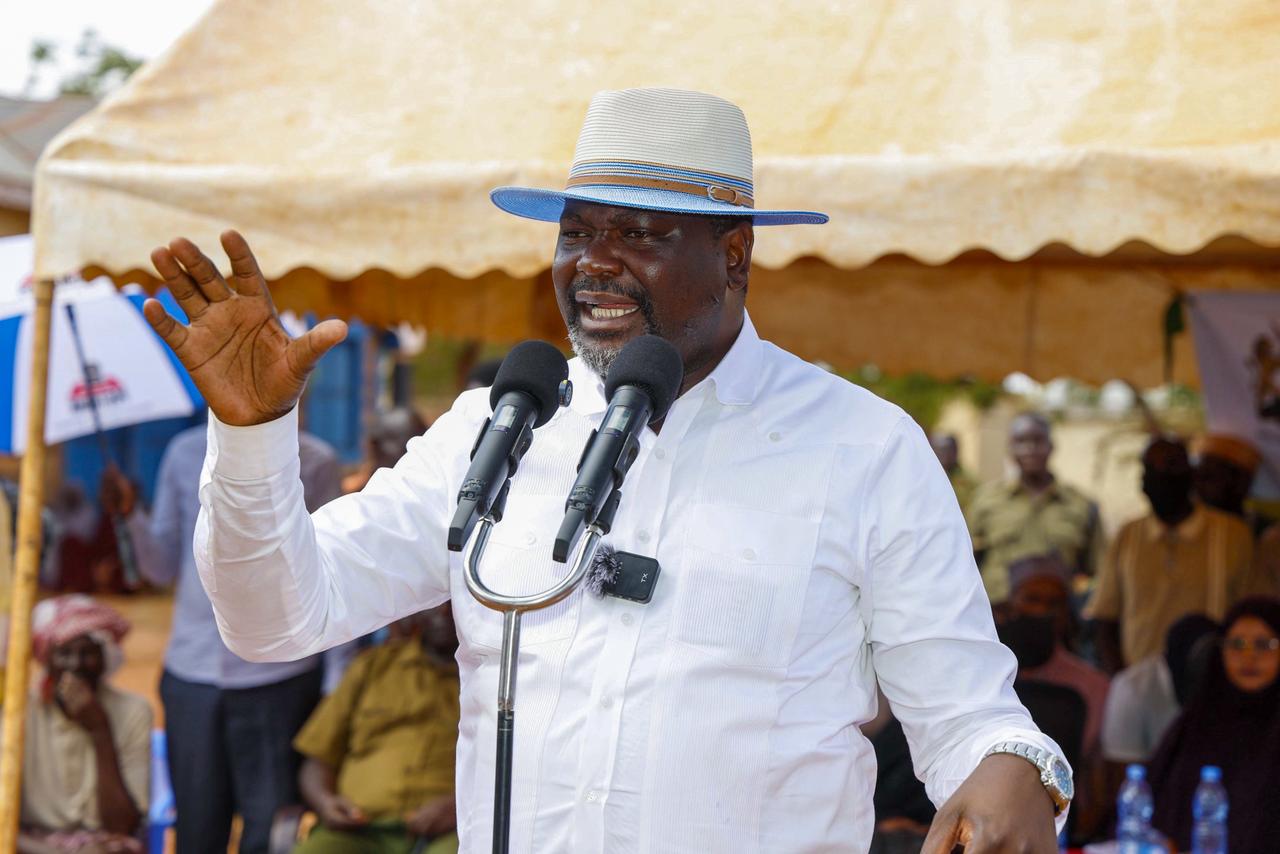
The National Cohesion and Integration Commission (NCIC) has ruled that Cabinet Secretary Geoffrey Ruku’s remarks made in Tharaka-Nithi crossed the line into ethnic generalisation and collective blame against the Kikuyu community, ordering him to immediately stop repeating or promoting the statements.
In a statement issued on Wednesday, the commission said Ruku’s comments at Kiang’ondu in July 2026 went beyond a political call for identity, fair development and equal access to public appointments.
The NCIC said the remarks “crossed from legitimate advocacy for identity and equitable development into divisive ethnic generalisation and collective blame”.
As part of its response, the commission issued an immediate cessation notice requiring Ruku to stop repeating, publishing, endorsing or encouraging the remarks, as well as any “substantially similar generalisations”.
The commission has also ordered an audit of ethnic diversity in national public establishments to determine whether public institutions are meeting legal requirements on ethnic representation.
The audit will use official staffing and appointment records, with the NCIC ruling out assumptions based on people’s surnames as a way of establishing ethnic representation.
The commission said Ruku’s remarks included claims that people from Mt Kenya West believed Kenya belonged to them, arguing that such statements turned concerns about institutions and public appointments into blame directed at an entire community.
“The remarks demeaned the equal standing of Kikuyu people, undermined harmonious relations and failed to respect their rights and reputation,” the commission said.
Ruku had also rejected the position taken by Mt Kenya East, describing it as the political “trailer” of the Kikuyu people.
During the speech, he referred to ethnic surnames while arguing that development and public appointments had benefited one community at the expense of others.
The CS also repeatedly spoke of stepping on former Deputy President Rigathi Gachagua’s neck until he had no room to “breathe”.
The NCIC said it viewed the neck reference as “figurative political language in the circumstances”, but added that such language called for greater restraint from a public leader.
Ruku appeared before the commission on September 1, 2026, accompanied by his lawyer, where he admitted making the remarks.
In his defence, he argued that the Constitution protects the right of communities to maintain their distinct identities and allows citizens to demand equitable development and fair access to public appointments.
The NCIC agreed that communities have the right to preserve their identity and that leaders are free to raise concerns over unequal development and appointments.
However, the commission drew a line between raising such concerns and blaming an entire community for them.
“Those rights do not authorise collective blame against another community.”
The commission also rejected the reliance on surnames to establish whether one community had benefited more than others from public appointments.
“Verified institutional data is required.”
The NCIC said the planned audit would therefore be based on official records on staffing and appointments rather than conclusions drawn from ethnic surnames.
Seven-day conciliation process
The commission has proposed a seven-day conciliation process through which Ruku would be required to publicly withdraw allegations that Kikuyu people consider Kenya their property or that they are collectively responsible for unequal development and public appointments.
Under the proposed measures, Ruku would also be required to affirm “equal citizenship, dignity and freedom of political choice for all communities”.
He would further take part in dialogue focused on equitable development and inclusive public appointments.
The proposed reconciliation measures also include a non-partisan peace caravan bringing together communities from Mt Kenya East and Mt Kenya West.
The NCIC has additionally proposed a restorative peacebuilding and social cohesion activity to be funded by Ruku.
The commission acknowledged Ruku’s efforts after the remarks, describing his subsequent peace initiatives as “genuine and substantial first steps towards reconciliation”.
However, it said those efforts were not enough to bring the matter to an end.
“They do not erase the adverse findings or complete the remedial process.”
The NCIC said the action it has taken is aimed at preventing further tension while also repairing relations affected by the remarks.
The commission described its approach as “preventive and restorative”, with the measures covering an immediate end to the allegations, public correction, conciliation, a requirement not to repeat the remarks and an evidence-based audit of ethnic representation.
The commission will monitor Ruku’s public statements and his implementation of the agreed conciliation measures for 12 months after the process is completed.