Senate suspends Revenue Bills amid escalating Governors’ accountability row
The Division of Revenue Bill sets the formula for splitting revenue between national and county governments, while the County Allocation of Revenue Bill guides how counties receive their individual shares. A delay in passing the Division of Revenue Bill also affects funding for national government operations in the next financial cycle.
A dispute between the Senate and county governors over accountability has led to the suspension of debate on key revenue-sharing Bills, raising uncertainty over the flow of funds to counties as the new financial year approaches. The move has set the stage for a political and constitutional standoff that now threatens county operations across the country.
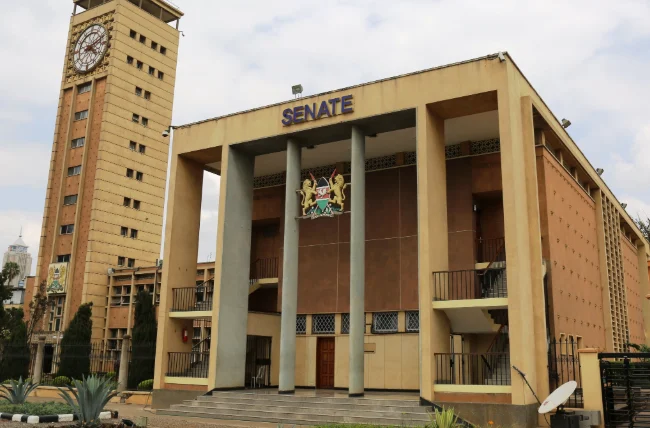
The Senate has put on hold discussion of the Division of Revenue Bill, 2026, and the County Allocation of Revenue Bill, 2026, both of which determine how national revenue is shared between the national government and the 47 counties, and how the county share is distributed among devolved units.
The decision comes amid rising frustration in the House after several governors failed to respond to summons by Senate oversight committees, where they were expected to explain how public money has been used.
The Division of Revenue Bill sets the formula for splitting revenue between national and county governments, while the County Allocation of Revenue Bill guides how counties receive their individual shares. A delay in passing the Division of Revenue Bill also affects funding for national government operations in the next financial cycle.
With the legal deadline for passing the Division of Revenue Bill set for April 30, the suspension now raises the possibility of delayed disbursement of funds, a situation that could slow down service delivery in counties if the deadlock continues.
At the centre of the impasse is the Senate’s position that accountability must be met before any approval of funds. Lawmakers have maintained that oversight cannot be compromised, especially where public resources are involved.
Narok Senator Ledama Olekina defended the Senate’s decision, stressing that public leadership must be tied to responsibility and transparency.
“Leadership is a sacred trust bestowed by the people. It is not a personal enterprise for self-enrichment,” Olekina said, criticising governors who have not honoured Senate committee invitations.
He also accused the Council of Governors of trying to protect its members from scrutiny, arguing that accountability is individual and cannot be handled collectively.
“When governors refuse to appear before the Senate, they are not defying individual senators—they are defying the sovereign will of the people of Kenya,” he said.
Olekina further said the suspension of the Bills was not meant to weaken devolution but to protect it from misuse of public funds.
“We cannot, in good conscience, channel billions of shillings to counties when those entrusted with the funds treat the Senate with disdain,” he added.
Nandi Senator Samson Cherargei backed the suspension, questioning whether it was proper for the House to proceed with allocation of funds under the current circumstances.
“Is it in order for this House to allocate resources to governors who have failed and shown impunity in accounting for public funds?” he asked.
The unfolding standoff now places county governments in a difficult position, with the timeline for budget approval narrowing and uncertainty growing over future funding.



Comments
Sign in with Google to comment, reply, and like comments.
Continue with Google