MPs clash over rules defining meaningful public participation in new Bill
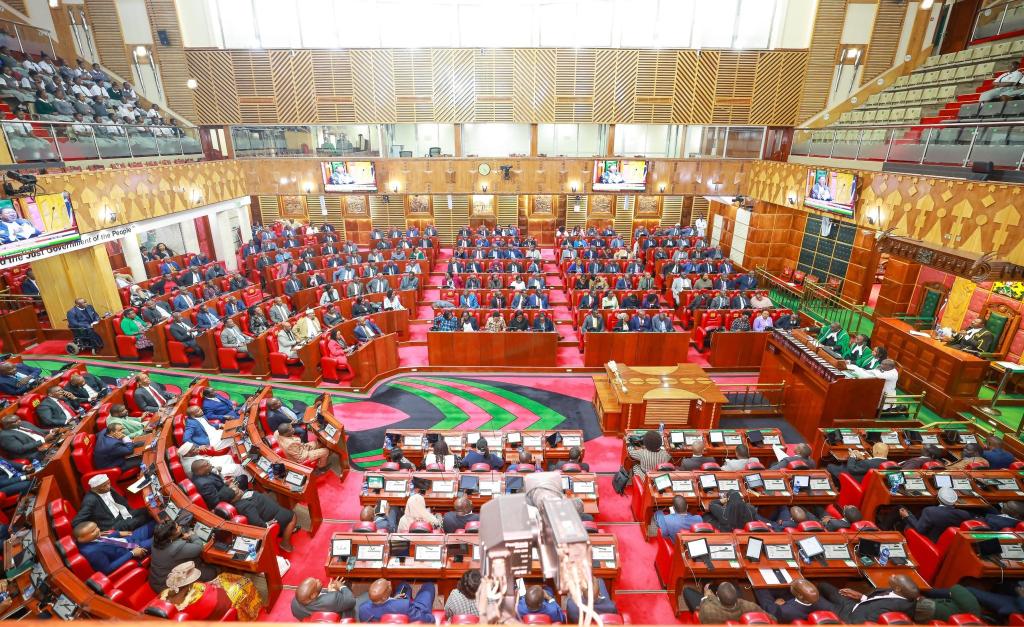
The Public Participation Bill, 2025, sponsored by Rarieda MP Otiende Amollo and Ainabkoi MP Samuel Chepkonga, has already gone through the Second Reading stage in the National Assembly. It is now awaiting detailed scrutiny at the Committee of the Whole House stage, where amendments are expected to determine its final shape.
Members of Parliament are now at the centre of a heated debate over a proposed law that seeks to clearly define how citizens should be involved in shaping public decisions, with sharp divisions emerging on how participation should be measured, funded and implemented across the country.
The Public Participation Bill, 2025, sponsored by Rarieda MP Otiende Amollo and Ainabkoi MP Samuel Chepkonga, has already gone through the Second Reading stage in the National Assembly. It is now awaiting detailed scrutiny at the Committee of the Whole House stage, where amendments are expected to determine its final shape.
The proposed law is meant to give effect to constitutional provisions that require citizens to be actively involved in governance, especially in law-making and policy decisions. The Constitution states that power belongs to the people, meaning government decisions must reflect public input and consultation.
Even with broad agreement on the need for the law, MPs are struggling to agree on what genuine public participation should look like in practice.
One of the most contested issues is whether citizens attending consultation forums should be compensated for their time and transport costs, or whether participation should be viewed strictly as a civic responsibility similar to voting. Some legislators also want the creation of a dedicated fund to support public engagement, but others warn this could open room for misuse and financial strain.
Another unresolved issue is the number of people who should be involved in public consultations. While some MPs argue for wide inclusion to ensure all voices are heard, others believe setting strict figures may be unrealistic and difficult to implement consistently across different regions.
Lawmakers are also divided on how much influence public views should carry after consultations, how much advance notice should be given before meetings are held, and the appropriate timelines for conducting the entire process without delaying government work.
Parliament is proceeding cautiously due to past court decisions that have overturned laws for failing to meet public participation standards. In 2014, then High Court Judge George Odunga ruled that public participation is not a cosmetic exercise but a central component of legislative and policy-making functions.
Because there is no clear legal framework, courts have often interpreted what counts as “adequate” or “meaningful” participation differently, creating uncertainty for lawmakers and state institutions.
During public hearings, the Justice and Legal Affairs Committee heard concerns from members of the public who shared their experiences. In Kajiado, one participant told the committee he had travelled nearly 400 kilometres and felt he should be reimbursed for the cost.
Lamu Woman Representative Muthoni Marubu pointed out that many citizens spend between Sh1,000 and Sh2,000 to attend such forums, saying this should be considered when planning participation processes.
Kibwezi West MP Mwengi Mutuse noted that there have been proposals to allocate funds for public participation, but warned that such an approach could be difficult to sustain and open to abuse, especially given unpredictable attendance levels.
There was also concern over whether providing refreshments or transport support could be seen as influencing public opinion rather than enabling genuine participation. Otiende Amollo cautioned that although reimbursement ideas are attractive, they carry practical risks.
“When we examined it, we realised it is popular but dangerous. The first reason is that we never have a sufficient budget for anything. Every entity applies its budget to everything else except public participation, and then says‘insufficient budgetary allocation’,” he said.
He added that setting a fixed number of participants for public forums may not work and suggested that what matters is a “reasonable” level of engagement rather than rigid targets.
Gatanga MP Edward Muriu called for a structured way of assessing both the quality and quantity of public input, saying there is often a gap between what citizens say during consultations and what eventually reaches Parliament.
Tetu MP Geoffrey Wandeto warned that unclear definitions have already caused several laws to collapse in court, especially around the terms “adequate” and “meaningful” participation. He urged Parliament to clearly define the standards to avoid repeated legal disputes.
“These two words are subject to very broad interpretation. They are not just about going round the country, gathering a few people in a hall and inviting submissions. It must be seen that the people actually participated fully and lent their voice to the matter of discussion,” he said.
Another debate has emerged on whether public participation should be conducted at ward level or regional level, with some MPs warning that too many layers could slow down decision-making and increase costs for government operations.
At the same time, Uasin Gishu Woman Representative Gladys Boss opposed proposals introducing criminal penalties for officials who fail to comply with participation requirements, arguing that it would be unfair to punish individuals for circumstances beyond their control. She is expected to push for changes to Clause 20, which proposes fines of up to Sh500,000.
As deliberations continue, lawmakers are trying to strike a balance between strengthening citizen involvement in governance and ensuring that the system remains practical, affordable and workable in the long term.




Comments
Sign in with Google to comment, reply, and like comments.
Continue with Google