Senate proposes national hiring system in bid to fix county job imbalance

A committee report presented during the hearings shows deep disparities in county staffing. Bomet has 97.28 per cent of employees from the Kipsigis community, while Homa Bay records 96.98 per cent Luo representation.
A proposal before the Senate could change how county workers are hired across the country, with lawmakers now backing a system that would take recruitment away from individual counties and introduce a shared national structure aimed at reducing ethnic imbalance in public service jobs.
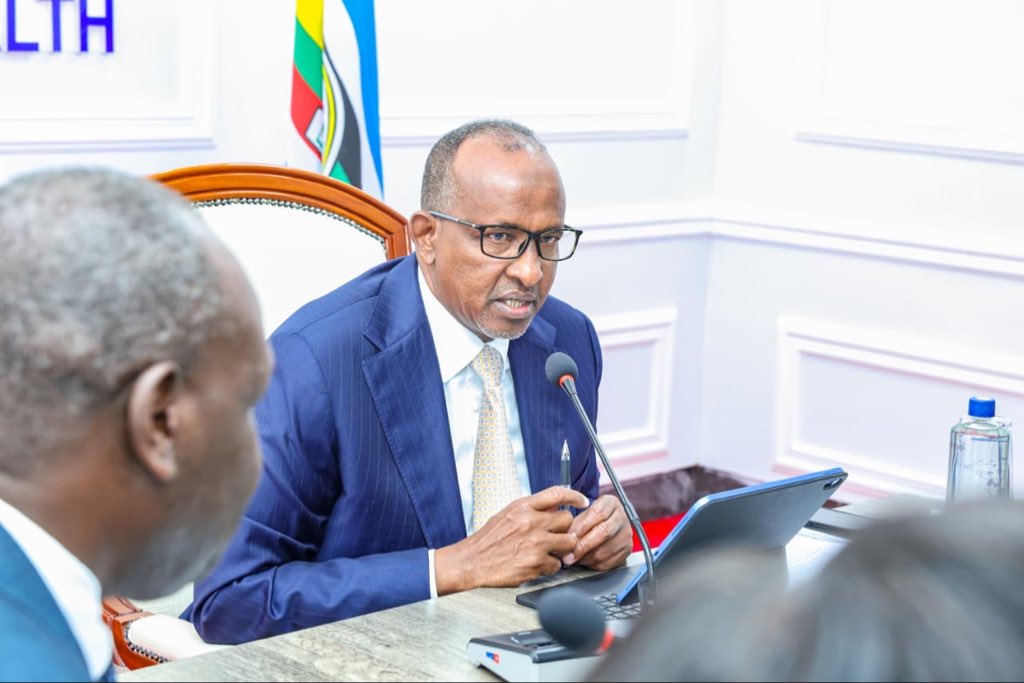
The plan is being driven by the Senate Standing Committee on National Cohesion, Equal Opportunity and Regional Integration, led by Marsabit Senator Mohamed Chute, who argues that current county recruitment systems have allowed jobs to be captured by dominant local communities.
Chute said the problem has become widespread across all 47 counties, with hiring often reflecting ethnic and clan dominance rather than national diversity.
“All the communities today... the county executive or even the county assemblies, they are all employed from the ethnic communities,” he said.
The remarks were made during a Senate committee session reviewing recruitment practices at the Garissa County Assembly, where the Speaker Abdi Idle and the Assembly Clerk were questioned over allegations that hiring favoured certain clans while excluding others.
Lawmakers, however, said Garissa was not an isolated case, pointing to similar patterns in other counties where one community overwhelmingly dominates the workforce.
A committee report presented during the hearings shows deep disparities in county staffing. Bomet has 97.28 per cent of employees from the Kipsigis community, while Homa Bay records 96.98 per cent Luo representation.
Samburu stands at 96.65 per cent from the Samburu community, Elgeyo-Marakwet at 96.22 per cent Kalenjin, Kirinyaga at 96 per cent Kikuyu, Nandi at 95.67 per cent Kalenjin, Nyamira at 95.61 per cent Kisii, and Kisii at 94.28 per cent Kisii. Nyandarua and Nyeri both stand at 93.66 per cent, largely Kikuyu.
To deal with the imbalance, senators are proposing a central recruitment system similar to the Public Service Commission model. The system would create a national pool of employees who can be deployed across counties to improve representation and reduce local hiring bias.
“If we want to follow the law as it is now... we need to have an organisation that can look at the 47 counties and see how to transfer and employ people from different ethnic communities,” Chute told the committee.
The proposal also targets deeper inequalities in regions where hiring is influenced by sub-clan divisions, particularly in parts of North Eastern Kenya where access to county jobs is said to be controlled by dominant groups.
If adopted, the changes would require major amendments to existing laws, including the County Governments Act. Sections 12 and 57 currently establish the county assembly service board and the county public service board, which handle recruitment in county legislatures and executives.
The Senate proposal seeks to abolish both boards and replace them with a single structure serving all counties under one framework.
This would also affect Article 235 of the Constitution of Kenya 2010, which gives counties authority to manage their own public service through independent County Public Service Boards responsible for hiring and administration.
Senators argue that this decentralised model has contributed to ethnic concentration in county jobs and weak enforcement of diversity rules.
“You have seen... most counties are at more than 70 per cent,” Chute said. “Siaya, almost 90 per cent. Kisumu, same. Murang’a, same.”
The proposal is expected to face scrutiny, with counties likely to resist losing control over hiring decisions, a key part of devolved governance.
Lawmakers also noted that practical issues such as climate and geography may affect willingness to transfer workers between regions, with staff from arid areas less likely to move to highland counties and vice versa.
“If we don’t change that law, then the issue of the dominant communities being less than 70 per cent will not be there,” Chute said.
The committee plans to table the proposed amendments for public participation before any further steps are taken.
The move comes amid growing concern over failure by counties to meet legal requirements on diversity. Section 65 of the County Governments Act requires at least 30 per cent of county jobs to go to people from outside the dominant community and to include marginalised groups such as persons with disabilities.
At the same time, Section 7 of the National Cohesion and Integration Act bars any single ethnic group from taking more than one-third of positions in public institutions.
Despite these rules, audits have repeatedly shown widespread non-compliance, with many counties accused of operating as ethnic strongholds in hiring practices.



Comments
Sign in with Google to comment, reply, and like comments.
Continue with Google