Police roll out election preparedness plan with tech, training and expansion push
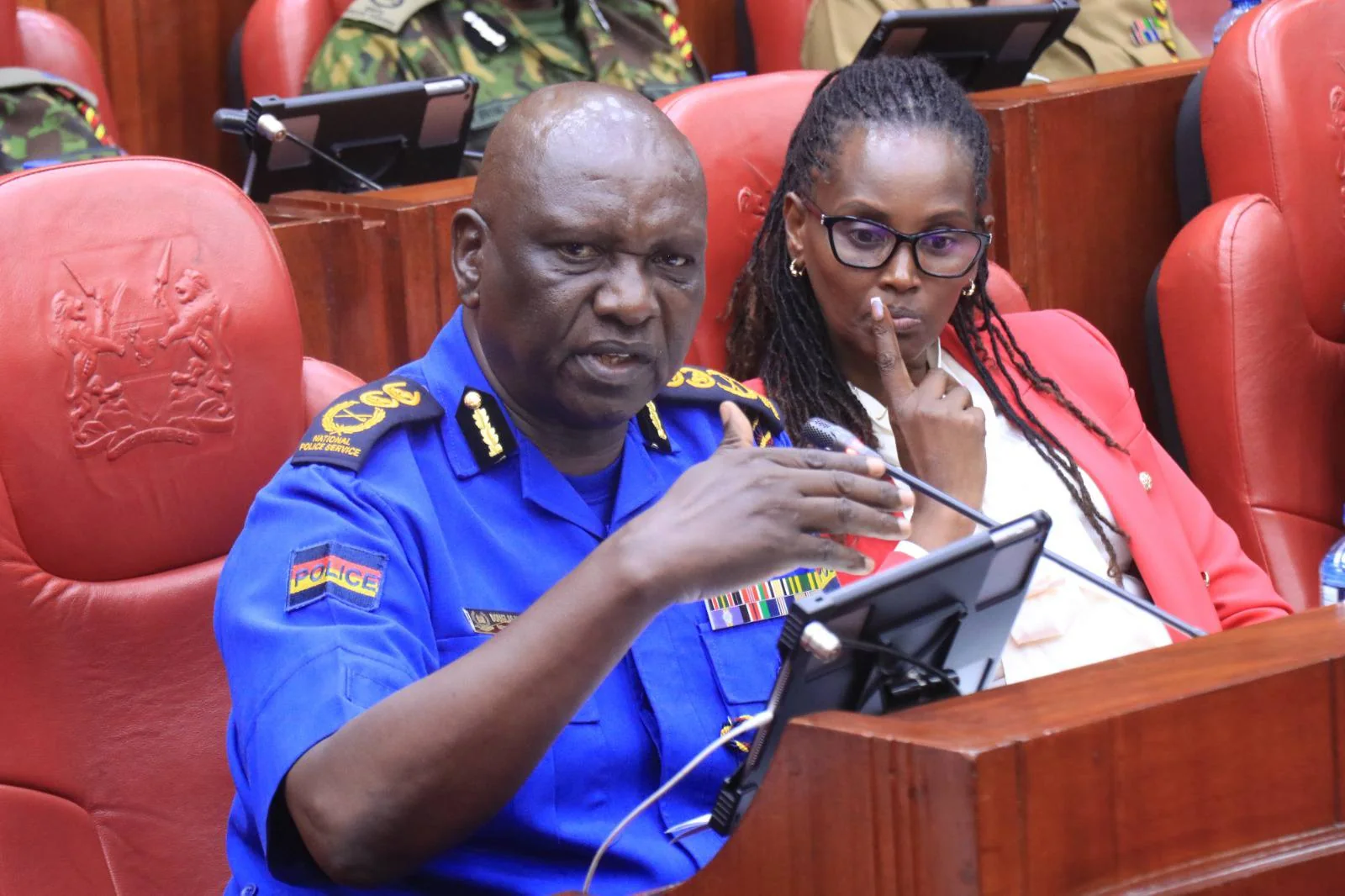
Inspector General Douglas Kanja said about 10,000 recruits are currently in various police training colleges, forming part of a wider push to boost operational readiness before the elections.
With the 2027 General Election drawing closer, the National Police Service has laid out an extensive preparedness plan that combines new technology, increased manpower, and expansion of facilities to strengthen election security across the country.
Inspector General Douglas Kanja told the National Assembly Committee on National Administration and Internal Security that the service has already kicked off key preparations, pointing to ongoing training programmes and planned digital upgrades meant to improve how police respond during the polls.
“We are set and ready to prepare because we have done it before. We did it during the 2022 elections and the outcomes are there. We are going to do it again in 2027,” Kanja said.
He said about 10,000 recruits are currently in various police training colleges, forming part of a wider push to boost operational readiness before the elections. He asked Parliament to consider further support for recruitment and funding to meet expected demands.
Kanja stressed that elections remain a core responsibility for the police service, noting that officers must be fully prepared to maintain order and protect citizens during voting.
“Training is very important. We need all our officers prepared on matters elections, including public order management. Support from this committee will go a long way in helping us enhance our preparedness,” he said.
Technology shift in policing
A major part of the plan is the introduction of the Integrated Command, Control, Communication and Coordination (IC4) system, which will phase out the current IC3 platform.
Kanja said the new system will introduce digital Occurrence Books, body cameras for officers, automated traffic enforcement, and expanded CCTV monitoring in key areas.
He said the shift is meant to improve transparency and strengthen evidence gathering during operations.
“The adoption of technology in policing, including body cameras, will provide evidential value and can also exonerate officers when falsely accused,” Kanja said.
The IG added that the automated traffic system and CCTV integration will help reduce direct interaction between officers and motorists, lowering corruption risks.
“We are headed in that direction. In the next three to four months, we should be having the digital systems with us,” he stated.
Health facility for officers
IG Kanja also highlighted plans to operationalize the National Police Service Level Four Hospital at Mbagathi, saying it will cater for officers injured in the line of duty.
“Our officers operate in dangerous environments across the country, including border points and conflict-prone areas. This hospital will ensure they receive the best specialized treatment befitting the service they render to Kenyans,” Kanja said.
He added that medical staff attached to the facility are already undergoing training at Kenyatta National Hospital as the service awaits full budget release.
Expansion of police infrastructure
Bernice Lemedeket, Secretary Administrative and Accounting Officer for the National Police Service, told the committee that police infrastructure has grown steadily in recent years.
She said stations receiving Appropriations in Aid support have increased from 575 to 1,142, while sub-counties have risen from 363 to 398 and patrol bases from 42 to 83.
“We have made tremendous improvement, but we still need to cover the remaining stations,” she said.
However, she warned that expansion must be carefully planned to avoid strain on resources.
“Setting up a proper model police station requires infrastructure, human resource and operational funding. We need strategic expansion as opposed to political expansion so that we improve the quality of service delivery,” she said.
She further noted a shortage of civilian staff supporting police work, saying only about 2,000 have been recruited against a much higher requirement of more than 10,000.
She explained that international standards recommend one civilian staff member for every 10 officers, adding that the gap is affecting administrative efficiency.
Financial pressures and accountability
On funding challenges, Lemedeket said both the Kenya Police Service and the Directorate of Criminal Investigations continue to face pressure from accumulated debts and limited allocations.
She said Kenya Police Service carries a large share of operational responsibilities, including costs linked to remandees, while DCI funding is largely limited to ongoing operations.
“KPS carries nearly 70 per cent of National Police Service operations, which strains their operational budget, while DCI’s allocation is only enough to sustain current operations and not clear historical pending bills,” she said.
Despite the challenges, she said efforts are ongoing to settle pending bills owed to suppliers.
Internal reforms
In addition, IG Kanja also pointed to improvements in discipline and accountability, crediting the Internal Affairs Unit for strengthening oversight within the service in partnership with IPOA.
“The Internal Affairs Unit has really helped the National Police Service on matters touching on discipline and investigations. We continue to support it by increasing personnel and expanding offices to regional areas,” he said.
Committee Chairperson Gabriel Tongoyo and members pledged continued cooperation with the police service to support funding for reforms, training, and election preparedness.



Comments
Sign in with Google to comment, reply, and like comments.
Continue with Google