
Nigerian health authorities are racing to contain the country’s first confirmed Ebola infection since the outbreak in East Africa began in May, after a 42-year-old woman fell ill in Abuja following a trip to Uganda. Officials have placed 44 people who may have been exposed to the virus in isolation as investigations continue into the patient’s movements and the possible source of her infection.
The woman, who is originally from Uganda and lives in Nigeria’s capital, is the wife of a diplomat. According to Nigeria’s Health Minister, Muhammad Ali Pate, she spent two and a half weeks in Kampala before returning to Abuja on October 3. She also made a two-hour stopover in Ethiopia’s capital during her journey back.
Pate confirmed to the BBC that the woman’s condition was improving, offering some reassurance as the country stepped up efforts to prevent further infections.
"She's stable, she's improving," he said.
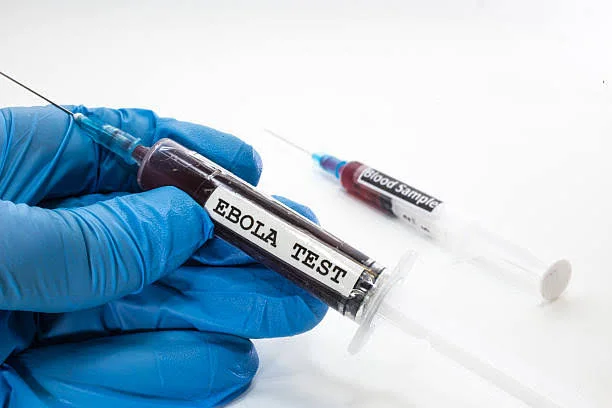
The minister said the woman tested positive for Ebola on Tuesday, prompting health officials to begin tracing people who had been in contact with her. A total of 44 individuals had been identified and placed in isolation as part of the containment measures.
"Not all of them have been in close proximity. We cast the net wide so that we contain it as broadly as possible," Pate told the BBC.
He said none of the identified contacts had developed symptoms at the time of his statement. The group also included the person who travelled with the patient.
According to Pate, the woman had remained within Abuja since arriving in Nigeria, allowing investigators to focus their efforts on her activities and possible contacts in the capital.
The head of the Africa Centres for Disease Control and Prevention, Dr Jean Kaseya, said the woman began experiencing symptoms on October 6, three days after her return to Abuja.
She initially believed she had malaria and sought treatment at a private hospital before visiting another private facility, where she was admitted on October 11.
"She went to the first hospital, a private hospital, thinking that she had malaria, and then she went to the second private hospital. She was admitted on the 11th," Kaseya told the BBC's Newshour programme.
Malaria is widespread in Nigeria, and its symptoms can resemble those of Ebola. Both illnesses may cause fever, headaches, muscle pain, vomiting and diarrhoea, making laboratory testing important in confirming the cause of a patient's illness.
Pate said public health officials were alerted on Monday, October 19, after the woman's condition failed to improve.
The diagnosis was confirmed the following day after three laboratory tests, the minister said.
Ebola symptoms may take between two and 21 days to appear after a person is exposed to the virus. During this period, an infected person may not immediately show signs of illness, making the identification and monitoring of contacts an important part of controlling an outbreak.
The investigation has been complicated by differing accounts from Nigerian and Ugandan authorities over the woman's nationality, travel and possible exposure to the virus.
Pate and Kaseya said the woman was originally from Uganda and had visited Kampala for a holiday before returning to her home in Abuja.
However, an earlier statement from Uganda's Ministry of Health described her as a Nigerian national who had travelled to eastern Democratic Republic of Congo (DR Congo) on business and passed through Uganda while in transit.
Ugandan authorities maintained that there were no confirmed active Ebola cases in their country and argued that the woman's passage through Uganda did not establish that she had contracted the disease there.
The conflicting accounts have raised questions about where the woman may have encountered the virus and the circumstances surrounding her infection.
Pate said Nigerian officials were working with authorities in Uganda and Ethiopia, alongside the Africa CDC, to establish the facts.
"We respect our sister nation of Uganda," he said. "We have very strong solidarity, we are all in it together."
Kaseya called for African countries to exchange information and coordinate their investigations. He said cooperation would help establish the patient's movements and determine where she might have contracted the infection.
The Africa CDC chief also urged Western countries not to introduce travel restrictions in response to the outbreak, arguing that countries needed to work together to contain the disease.
He said "collaboration and solidarity" were essential to stopping the spread of Ebola.
The Ebola outbreak in DR Congo, which began in May, has resulted in at least 4,600 deaths, with more than 9,500 cases recorded, according to the European Centre for Disease Prevention and Control.
Uganda also reported cases shortly after the outbreak was announced, with at least two people dying from the disease. The country declared itself free of Ebola in August after its last patient was discharged.
Kenya has also reported at least nine infections linked to the wider regional health emergency.
On Monday, the United States advised its citizens to reconsider travel to Kenya over health concerns and raised its travel advisory level for the country.
Ebola is a rare but deadly viral disease that can cause severe illness. As the condition progresses, patients may develop vomiting and diarrhoea, while serious cases can lead to organ failure. Some infected people experience internal or external bleeding, although bleeding does not occur in every case.
The virus is transmitted through direct contact with the bodily fluids of an infected person, including blood and vomit.
The outbreak in DR Congo has been linked to the Bundibugyo species of Ebola, a relatively rare strain for which there is no approved vaccine or treatment. However, clinical trials are under way.
Nigeria has previously contained an Ebola outbreak, recording 20 confirmed cases and eight deaths in 2014 before successfully stopping further transmission.
Pate expressed confidence that the country could again prevent the disease from spreading, citing improvements in surveillance systems, laboratory services and the training of thousands of epidemiologists.
He said the experience gained during the previous outbreak had helped prepare health authorities for the current threat, although he warned that the situation required continued caution.
"Nigeria has muscle memory that has been activated, but we are not fighting the past outbreak in the exactly the same way. We have to be vigilant," he said.
Authorities are continuing to monitor the people placed in isolation while tracing contacts and investigating the circumstances surrounding the patient's infection.
The response is also being coordinated with regional health agencies as officials seek to establish the source of the case and prevent further transmission within Nigeria and beyond its borders.