
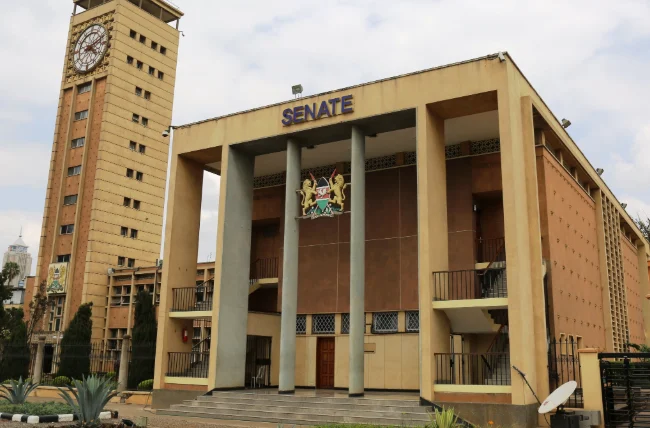
Aspirants seeking elective posts in 2027 will not be allowed to turn their popular names or political nicknames into ballot identities after senators rejected a proposal that sought to give candidates an alternative to the names on their official documents.
The Senate Justice, Legal Affairs and Human Rights Committee has advised against reviving legislation that would have allowed politicians to seek approval for the names they are commonly known by, dealing a setback to those who rely heavily on established nicknames and political brands to connect with voters.
The committee's position leaves the current rules intact, meaning an aspirant who wants to appear on the ballot under a name other than the one on their national identity card or passport must first legally change it.
The latest push came through a petition by Mohamed Alasow, who asked Parliament to amend the Elections Act and restore provisions that would allow candidates to use popular names during elections.
Alasow argued that official names do not always reflect how politicians are known by the people they seek to represent. He pointed to voters in rural and marginalised areas, where candidates may be more widely recognised by nicknames or other popular names than by the names contained in their identification documents.
He said allowing candidates to use those names on ballot papers would make it easier for voters to recognise them and could help address confusion during elections.
The petitioner also linked the proposed change to efforts to reduce rejected ballots, improve inclusivity and increase public confidence in the electoral process.
But the Senate committee found little evidence to support the claim that the present system was causing widespread voter confusion.
“There is no demonstrated evidence of the prevalence or scale of voter confusion or misidentification of candidates arising from the use of official names on ballot papers,” the report says.
The committee, chaired by Senator Hillary Sigei, said voters are not required to depend on names alone when choosing candidates.
It noted that ballot papers contain a candidate's official name, photograph and party symbol, giving voters several identifiers that can help them distinguish one aspirant from another.
The senators therefore concluded that the existing safeguards were sufficient to prevent widespread cases of mistaken identity at the ballot.
“The committee recommends that the petition seeking the re-introduction and enactment of the Elections (Amendment) (No. 3) Bill, 2021, be declined,” the committee said.
The committee also dismissed the argument that using official names was resulting in voters marking the wrong candidates.
It said the petitioner had not produced evidence showing that the use of legal names on ballot papers was responsible for voters being confused or accidentally supporting different candidates.
The senators further raised concerns over the possible misuse of a system that allowed candidates to select names specifically for electoral purposes.
They warned that permitting politicians to create or adopt election-specific identities could expose the electoral process to abuse and make it harder to maintain clear records of candidates.
The committee instead pointed to the existing procedure for anyone seeking to contest an election under a different name.
Under the current law, an aspirant whose preferred name differs from the one on their national identity card or passport has to formally change their name before using it in an election.
The committee said this process provides a recognised way of ensuring that a candidate's identity can be checked and properly recorded.
It described the arrangement as “an established, verifiable and accountable mechanism” for candidates wishing to adopt a different name.
The Senate's recommendation also shuts down, for now, the alternative system proposed in the Elections (Amendment) (No. 3) Bill, 2021.
The proposed legislation would have removed the need for an aspirant to first change their legal name. Instead, candidates would have been able to apply directly to the Independent Electoral and Boundaries Commission for approval and certification of a popular name for use on the ballot.
The proposal had previously failed to take effect ahead of the 2022 General Election.
With the committee now recommending that the petition be rejected, politicians preparing for the 2027 polls will continue operating under the existing rules. Their official names will remain the names used on ballot papers, supported by their photographs and party symbols to help voters identify them.