
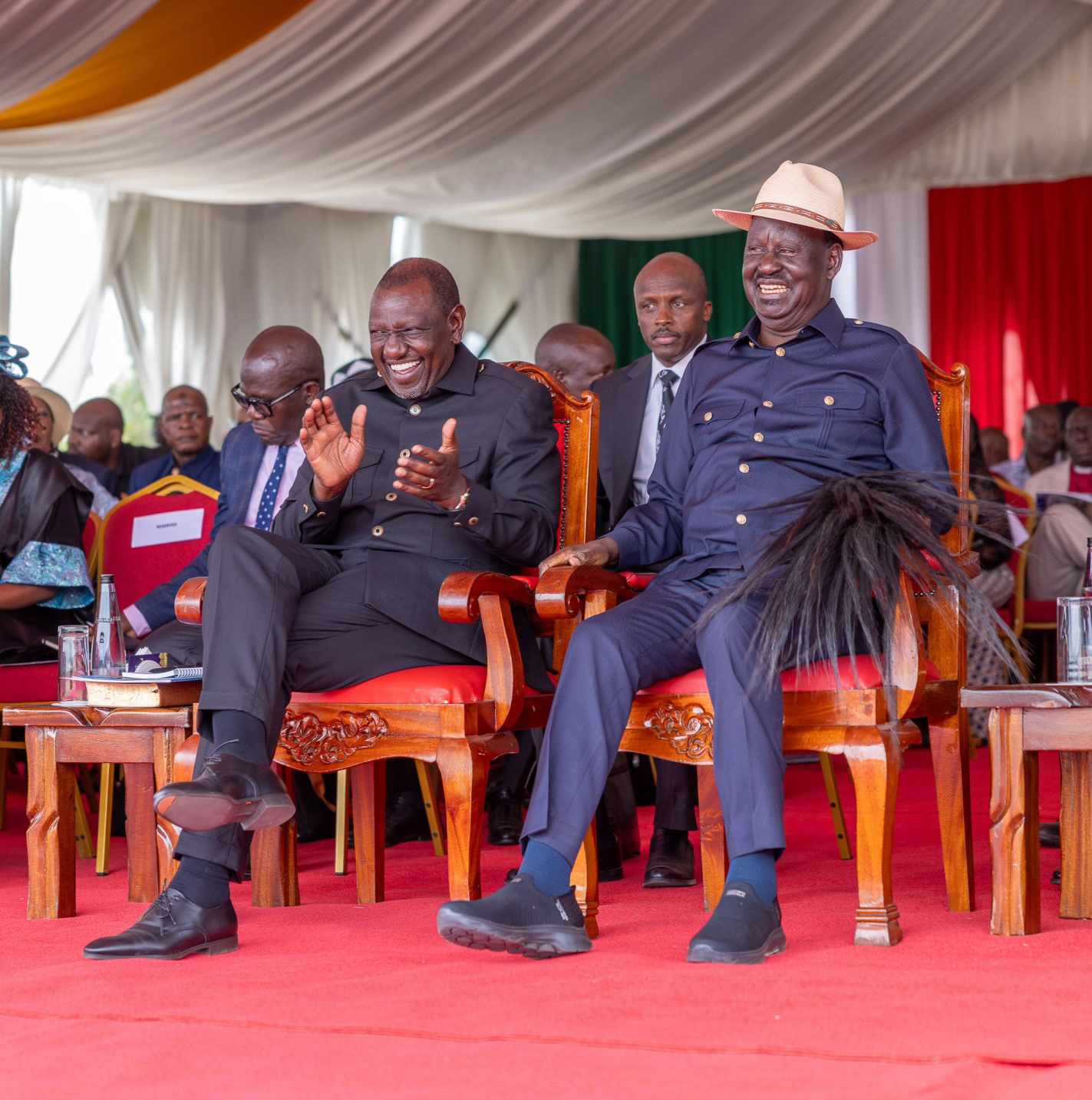
Former Prime Minister Raila Odinga’s final days were marked by continued conversations with President William Ruto, a private dinner at his Nairobi home and hope that medical treatment in India would help him recover, Ruto has recalled.
The President in a pre-recorded interview said their last face-to-face meeting happened after Raila returned to Nairobi from Malindi, where he had gone after doctors advised him to seek a warmer climate.
Ruto said Raila had earlier contacted him to say that he was unwell and wanted to see him. The former Prime Minister later went to State House in Nairobi, where the two spoke about the country’s future and other matters.
It was during the meeting that Ruto noticed that Raila was not in good health.
“I noticed that the former Prime Minister was visibly unwell,” Ruto said.
The two continued communicating even after Raila travelled to Malindi. When Raila later told the President that he was coming back to Nairobi, Ruto chose to visit him at his home instead of asking him to return to State House.
The President arrived at about 7.30pm and found Raila with his wife and children.
“I met [with] him and his wife and children,” he recounted.
The two had dinner together and spent time talking. Raila told Ruto that he was considering seeking another medical opinion because his condition was not improving.
“I encouraged him to do so,” Dr Ruto said.
A few days later, Raila travelled to India accompanied by his daughter, doctors and other members of his team for further treatment.
Ruto said the two remained in touch after the trip, with Raila initially sounding positive about his chances of recovering.
“He told me that several doctors had examined him and he believed they had found the right treatment,” the President recalled.
The President said he later received word that Raila had been discharged from hospital and intended to return home and rest.
That was the last update he received directly concerning Raila’s condition.
A final morning call
On October 15 last year, Ruto was on his way to his office at around 6.30am when his phone rang.
On the other end was Siaya's Senator Oburu Oginga, Raila’s elder brother.
“There is a problem, Youth Leader told me.
“I think I have lost my brother,” Ruto recalled Oburu saying.
Senator Oburu uses the name Youth Leader when referring to himself.
President Ruto said Raila had woken up that morning and exercised, but his condition later deteriorated.
The family subsequently explained to the President what had happened before Raila’s death in India, where he had travelled weeks earlier for medical care.
Raila’s sister, Ruth Adhiambo, also called Ruto shortly after Oburu’s call.
“His life could not be saved,” the President said.
The news came only days after Ruto and Raila had discussed the former Prime Minister’s health and the future of the country.
A relationship that changed over time
President Ruto said his relationship with Raila stretched back decades and went through several political phases.
The two began their political journeys on different sides before eventually working together in ODM.
“We started on different sides when we were in Kanu, they were in Ford and all the others,” Dr Ruto recalled.
Their political paths later converged in ODM, where Ruto said they worked together to build the party.
“We came and met in ODM, we forged ODM together. I went out of my way to support him and he was a great team leader, but then again, we parted ways.”
The two eventually became presidential rivals in the 2022 election, with Ruto securing 7,176,141 votes against Raila’s 6,942,930. Ruto therefore won by a margin of just over 233,000 votes.
Their political relationship changed again after the protests of 2024, with the two sides moving towards cooperation and Raila joining the broad-based government.
Ruto said Raila became an important voice in efforts to calm the country during periods of political tension.
“When there were challenges in the country, Raila came forward and said we must stabilise the country,” Ruto said.
The President also praised Raila for what he described as his role in defending democracy, saying the former Prime Minister had stood “on the right side of history”.
From hope to sudden loss
After travelling to India, Raila remained in contact with Ruto and initially appeared confident that doctors would help him recover.
His message that he had been discharged from hospital and wanted to rest gave Ruto no reason to expect that his condition would soon take a turn for the worse.
The President said the suddenness of Raila’s death made the loss particularly difficult because they had been speaking about Kenya’s future only days earlier.
After receiving the news, Ruto became involved in efforts to have Raila’s body brought back home from India.
He also spoke with Indian Prime Minister Narendra Modi, whom he said had personally known the former Prime Minister.
For President Ruto, the final phone call from Oburu marked a painful end to a relationship that had moved through political rivalry, cooperation and, in the last weeks of Raila’s life, close personal contact.