
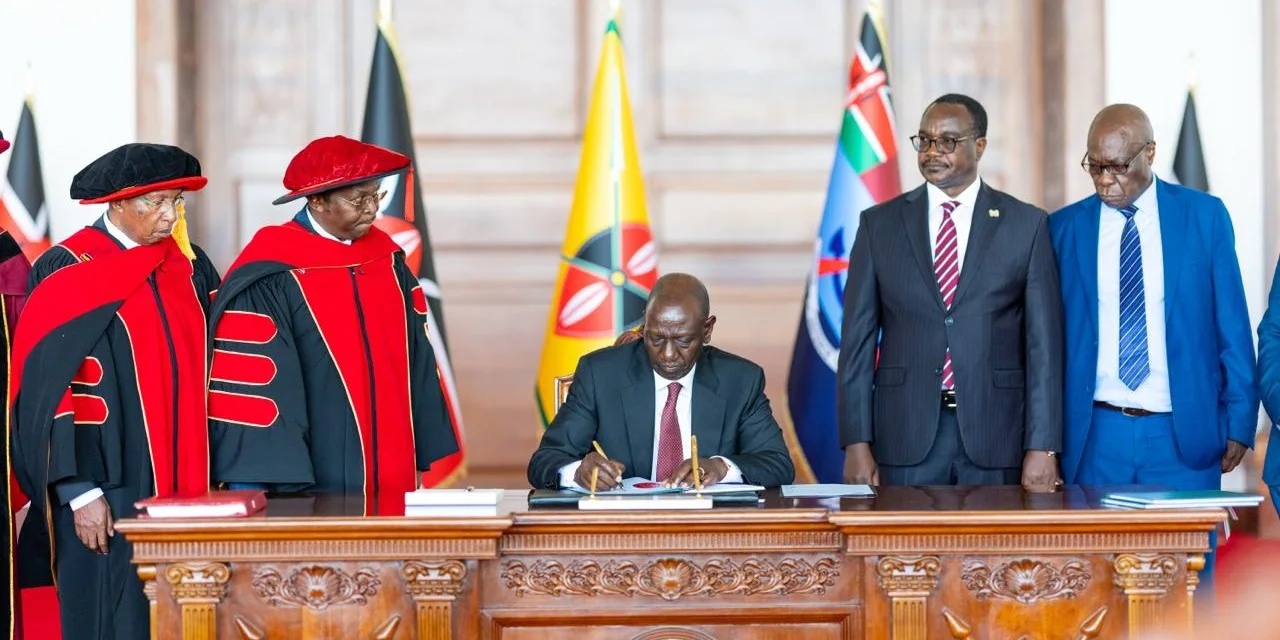
President William Ruto has challenged Kenyan universities to overhaul their academic programmes and embrace artificial intelligence, data analysis and digital technology, warning that graduates who lack these skills risk being left behind as technology reshapes employment opportunities worldwide.
The President said universities must move beyond traditional teaching methods and focus on producing graduates who can apply technology, solve practical problems and compete for jobs in an increasingly digital economy.
Speaking during the award of a charter to International Leadership University at State House, Nairobi, on Thursday, November 5, 2026, Ruto said higher education institutions must adjust their training to match the changing demands of employers and emerging careers.
He pointed to the World Economic Forum's Future of Jobs Report 2025, which estimates that 39 per cent of workers' skills could change or become outdated by 2030, warning that technological developments were rapidly changing how businesses operate and compete.
“This responsibility has become more urgent as the world of work changes. The World Economic Forum's Future of Jobs Report 2025 estimates that 39% of workers' skills will change or become outdated by 2030. Artificial intelligence, automation, and digital technologies are transforming how economies produce, how they trade, and how they compete,” Ruto said.
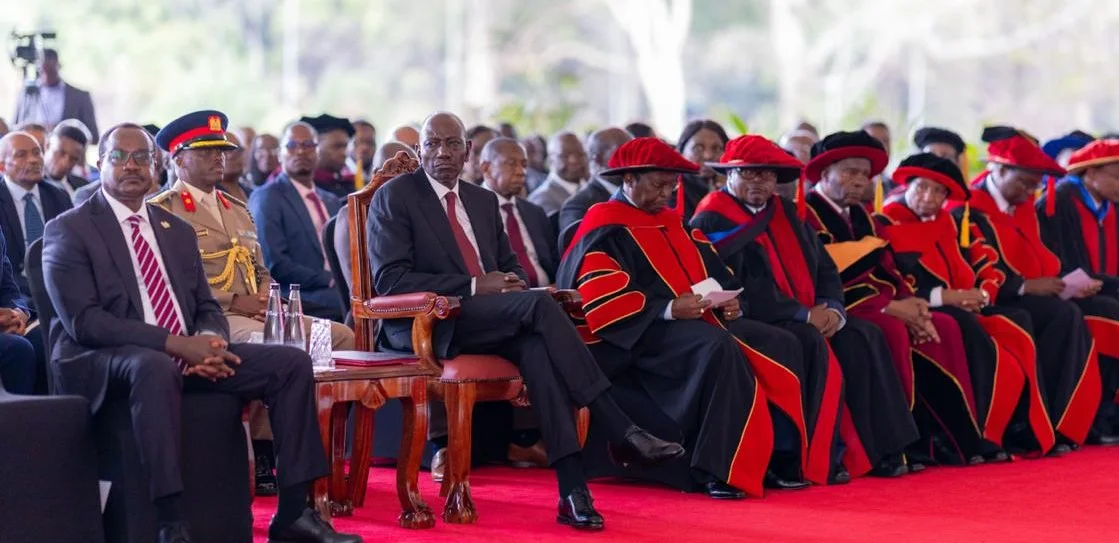
The Head of State said universities should make digital competence a central part of higher education, ensuring students graduate with the ability to use emerging technologies in their respective professions.
He noted that artificial intelligence was creating new possibilities in education, research and professional training, with digital learning platforms allowing students to access educational materials, receive feedback and study complex subjects beyond the traditional classroom setting.
Ruto also pointed to the growing role of AI and data analysis in research, saying the technologies could help students and academics examine large amounts of information, identify patterns and develop solutions to complex challenges.
However, he called for responsible use of the technologies, urging universities to equip students with digital literacy, critical thinking and ethical decision-making skills to help them assess information and avoid being misled by inaccurate content.
The President said Kenya's ambition to build a knowledge-based and globally competitive economy depended on universities producing professionals capable of using technology to improve productivity, services and innovation.
He further observed that digital skills were opening up international employment opportunities for Kenyan professionals, allowing them to work for companies and organisations abroad without having to leave the country.
“A software engineer in Nairobi can serve a company in London. A financial analyst in Kisumu, Migori, or Lodwar can support an enterprise in New York. Our medical specialists, researchers, and creative professionals can compete regionally and globally,” he said.
Ruto identified digital competence as one of four key areas universities should prioritise, alongside practical problem-solving, stronger partnerships with industry and entrepreneurship.
He maintained that every graduate should leave university with the ability to use technology, analyse data and apply artificial intelligence responsibly, describing these skills as essential in the changing employment landscape.
“Make every graduate digitally capable, able to use technology, work with data, and apply artificial intelligence responsibly. This is something we cannot escape going into the future. Technology is going to be part of everything that we will be doing, and therefore, it is only appropriate that universities begin to appropriate their place in making sure that we are not left behind,” he said.
Beyond digital training, the President urged universities to work more closely with employers to ensure students gain practical experience before completing their studies.
He said the government was expanding internship opportunities to help bridge the gap between academic qualifications and the hands-on skills required in the workplace.
Ruto revealed that 50,000 internship positions had been opened, attracting 150,000 applications within the first 24 hours of the programme's announcement.
He announced that the government planned to expand the national internship programme from January 1, 2027, with private sector organisations participating in the initiative set to recover expenditure incurred in hosting interns through tax incentives.
The government was also consulting universities and industry players on plans to place between 100,000 and 150,000 students in internships every year.
The President further challenged universities to make practical learning part of their academic programmes by giving students opportunities to tackle real-life challenges affecting counties, hospitals, businesses and agricultural cooperatives.
He said such exposure would help students develop problem-solving abilities while preparing them for the realities of the workplace.
On education funding, Ruto said the government had increased its allocation to the sector to Sh784.5 billion in the 2026/2027 financial year, up from Sh527 billion in 2022.
He urged International Leadership University and other institutions of higher learning to align their training programmes with technological developments, saying their performance should also be measured by how effectively they prepare students to take advantage of emerging employment opportunities.