
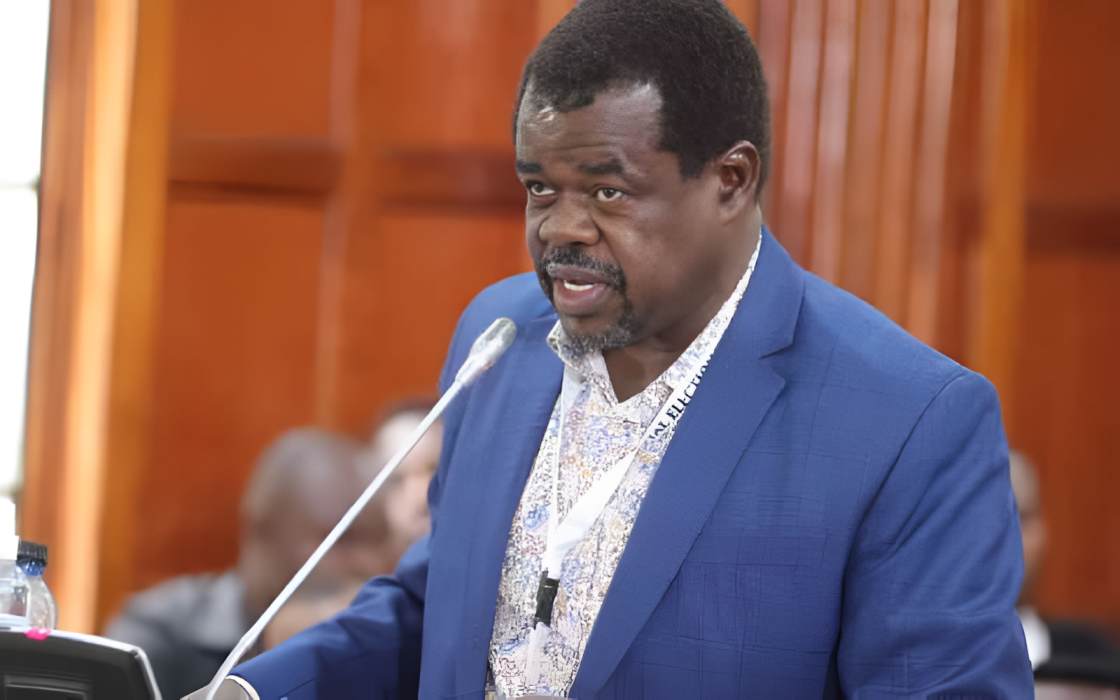
Busia Senator Okiya Omtatah has cautioned that Kenya's recurring political turmoil, ethnic divisions and authoritarian tendencies will persist unless the country addresses past injustices, enforces the Constitution and holds leaders accountable for abuses of power.
In an article titled The Return of the Repressed in Kenyan Politics and How to Cure It, which he shared on his X account on Thursday, Omtatah argues that the country's political troubles stem from historical grievances that have been ignored or pushed aside by successive administrations instead of being resolved.
Using Sigmund Freud's concept of the return of the repressed, the senator draws parallels between unresolved past injustices and the recurring political conflicts, protests, ethnic tensions and demands for democratic reforms witnessed in Kenya.
He argues that corruption, political violence, exclusion and authoritarian rule are connected to deeper historical and constitutional failures that continue to threaten the country's stability.
“What is buried without being healed does not disappear. It returns,” he writes, describing Kenya's political journey as marked by grievances that remain unresolved and democratic struggles that have yet to be completed.
Omtatah traces some of the unresolved grievances to colonial-era land dispossession, the suppression of the Mau Mau liberation struggle, detention without trial and political assassinations, arguing that these events continue to influence Kenya's political and social relations.
He faults successive governments for failing to adequately address the injustices, saying the country has allowed historical wounds to remain open across generations.
The senator also criticises the incomplete implementation of findings from commissions established to investigate past abuses, irregularities and political violence.
He cites the Akiwumi Report, which examined ethnic clashes; the Ndung’u Report on illegal and irregular allocation of public land; the Waki Report on the 2007-2008 post-election violence; and the Truth, Justice and Reconciliation Commission report.
According to Omtatah, failure to act on the recommendations of these commissions has allowed impunity to thrive while victims continue to lack justice, leaving disputes over land, inequality, exclusion and accountability unresolved.
He warns that these longstanding grievances could remain central to political contestation as Kenya heads towards the 2027 General Election.
To confront the problem, Omtatah proposes incorporating the country's history into school learning, public memorials and civic institutions to promote an honest account of past injustices without fuelling ethnic divisions.
He also questions the effectiveness of political deals between rival leaders in resolving the country's recurring crises, arguing that such arrangements often offer temporary relief without addressing the issues driving public dissatisfaction.
The senator cites the 2008 National Accord, the 2018 political handshake and subsequent broad-based political arrangements, arguing that agreements between political elites can contain tensions without delivering lasting solutions.
“Political peace secured through elite accommodation is not necessarily democratic peace secured through justice,” he says.
Omtatah further argues that bringing opposition leaders into government can weaken oversight by blurring the separation between those in power and those expected to scrutinise and hold them accountable.
He says issues including poverty, unemployment, corruption, excessive taxation, public debt and abuse of power remain unresolved despite successive political negotiations.
The senator points to the youth-led protests of 2024 and 2025 as proof that Kenyans can unite across ethnic and political lines when their economic welfare and constitutional rights are threatened.
He argues that the 2010 Constitution offers a path towards addressing the country's political and governance problems, but its provisions have not been fully implemented.
Among his proposals is dismantling what he describes as the imperial presidency, saying the excessive concentration of power and public resources in the Executive fuels patronage, ethnic mobilisation and winner-takes-all politics.
He proposes establishing an independent National Treasury to oversee public finances transparently, while remaining subject to parliamentary oversight and constitutional safeguards.
He also calls for county governments to receive their constitutionally allocated funds on time and fairly, and for the Judiciary, electoral commission and other independent institutions to be protected from interference by the Executive.
On leadership and integrity, Omtatah wants Chapter Six of the Constitution strictly enforced, arguing that public officials should be held accountable for corruption and the misuse of public resources rather than using their positions to escape scrutiny.
He further calls for sweeping police reforms to address unlawful arrests, abductions, torture, extrajudicial killings and the excessive use of force against demonstrators.
The senator maintains that the police should safeguard citizens' constitutional rights rather than be used to silence dissent, adding that peaceful protests, public gatherings and petitions are democratic freedoms that must be protected, particularly when citizens are demanding accountability.
Omtatah also advocates for a political culture driven by policies and public interests rather than ethnic loyalties and the sharing of political appointments.
He urges Kenyans to organise around issues affecting their daily lives, including taxation, jobs, healthcare, education, public debt, corruption and the cost of living, arguing that political leaders should be judged by their policies and performance.
In his conclusion, the senator argues that Kenya must stop relying on temporary political agreements and instead confront the historical and constitutional failures behind its recurring crises.
“Kenya must cease treating its recurring political crises as isolated emergencies. They are symptoms of a deeper constitutional and historical disorder,” he writes.
He maintains that lasting stability will require accountability, respect for the Constitution, independent institutions, justice for past abuses and protection of fundamental freedoms.