
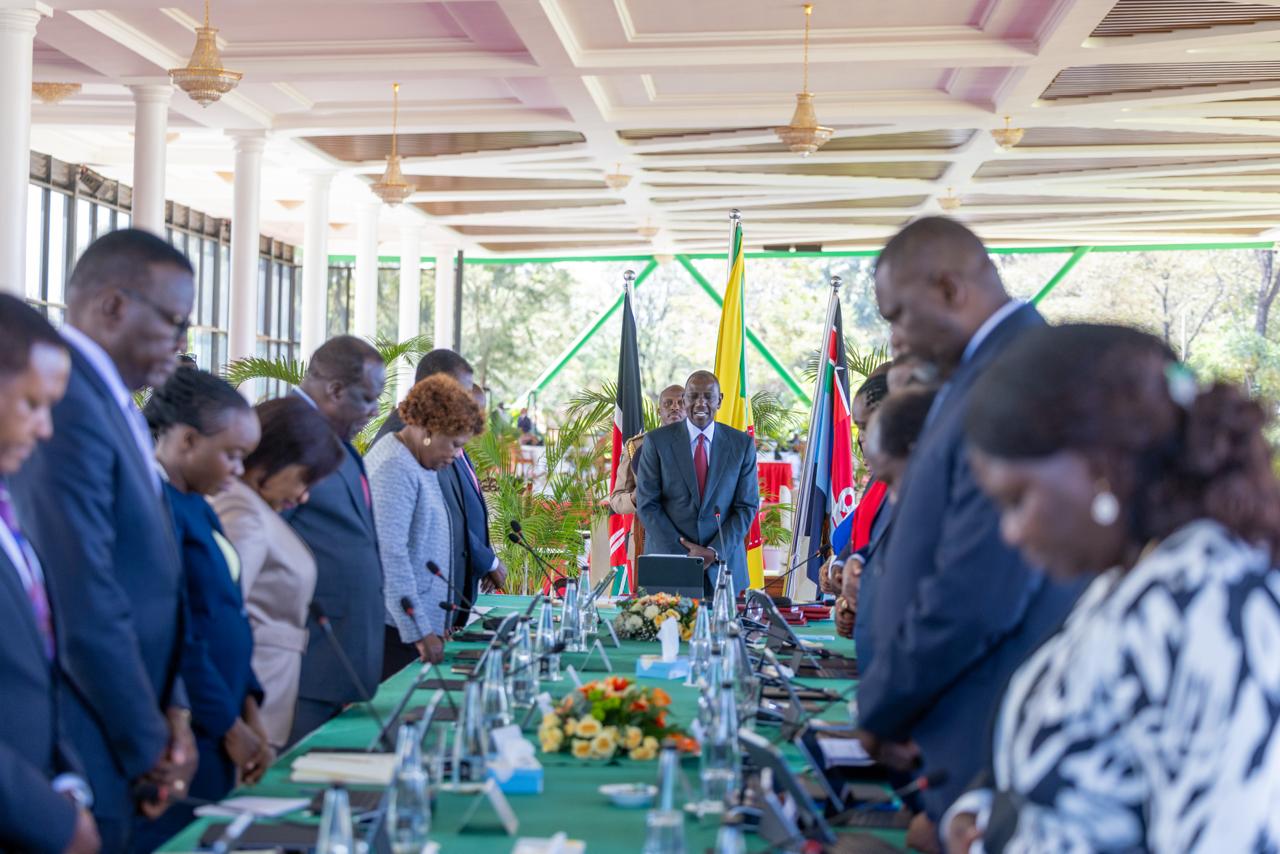
President William Ruto's Cabinet is facing a fresh legal challenge, with activist Okiya Omtatah and two others asking the High Court to stop Cabinet Secretaries from exercising executive powers over alleged violations of the constitutional two-thirds gender rule.
The petitioners, Eliud Karanja Matindi and Dr Magare Gikenyi Benjamin, argue that the Cabinet has remained in office despite failing to meet the constitutional threshold on gender representation and disregarding a court directive requiring the President to address the imbalance within 120 days.
They want the court to declare that the Cabinet Secretaries no longer have the legal authority to exercise powers and perform responsibilities reserved for members of the national executive following the expiry of the compliance period.
The case stems from a June 30, 2026 ruling in which the High Court found that the composition of the Cabinet fell short of the requirements under Article 27(8) of the Constitution.
The provision requires the State to take legislative and other measures to ensure that no more than two-thirds of members of elective or appointive public bodies belong to the same gender.
At the time, the Cabinet had 25 members, comprising the President, Deputy President, Attorney General and 22 Cabinet Secretaries.
Women occupied seven positions, representing approximately 28 per cent of the membership, while men held the remaining 18 positions, accounting for 72 per cent.
The court found that the Cabinet needed two additional women to comply with the constitutional requirement and directed the appointing authority to make the necessary changes within 120 days.
However, the petitioners claim that President Ruto failed to implement the directive before the deadline expired, despite the judgment not having been suspended.
They argue that Cabinet Secretaries cannot continue exercising executive authority when the government has allegedly failed to comply with the constitutional requirements governing the composition of the national executive.
The petitioners are seeking orders to bar the 25 respondents from performing functions reserved for Cabinet members.
They have also asked the court to suspend Executive Order No. 1 of 2025 to the extent that it assigns Cabinet Secretaries responsibilities for implementing Acts of Parliament in their capacity as members of the national executive.
Additionally, they want the Controller of Budget restrained from approving withdrawals from the Consolidated Fund or any other public fund to facilitate the payment of salaries, remuneration and benefits to the affected officials.
To support their case, the petitioners have cited Gazette Notices published on October 30, 2026, by several Cabinet Secretaries, including John Mbadi Ng'ongo, Hanna Wendot Cheptumo, Aden Duale, Julius Migos Ogamba, Mutahi Kagwe and Beatrice Askul Moe.
They contend that the notices demonstrate that the officials have continued exercising their powers and carrying out government responsibilities despite the expiry of the court-issued deadline.
"It is the petitioners' case that, upon expiry of the court-granted compliance period... there is no national executive and Cabinet of the Republic of Kenya as decreed by Articles 130 and 152(1) of the Constitution," the court papers state.
The petitioners are seeking conservatory orders to stop the Cabinet Secretaries from exercising executive powers pending an inter partes hearing and determination of the application.
However, the High Court declined to certify the matter as urgent.
Justice Patricia Nyaundi directed the petitioners to serve the case on the respondents by November 9, 2026, with the respondents required to file their responses by November 24.
The case will therefore proceed through the normal court process as the parties prepare to present their positions on the constitutional dispute.
The petitioners maintain that allowing the Cabinet Secretaries to continue exercising executive authority despite the alleged failure to comply with the earlier judgment threatens the country's constitutional order.
They argue that the court's intervention is necessary to enforce the Constitution and prevent further exercise of powers by officials whose continued tenure they are challenging.