
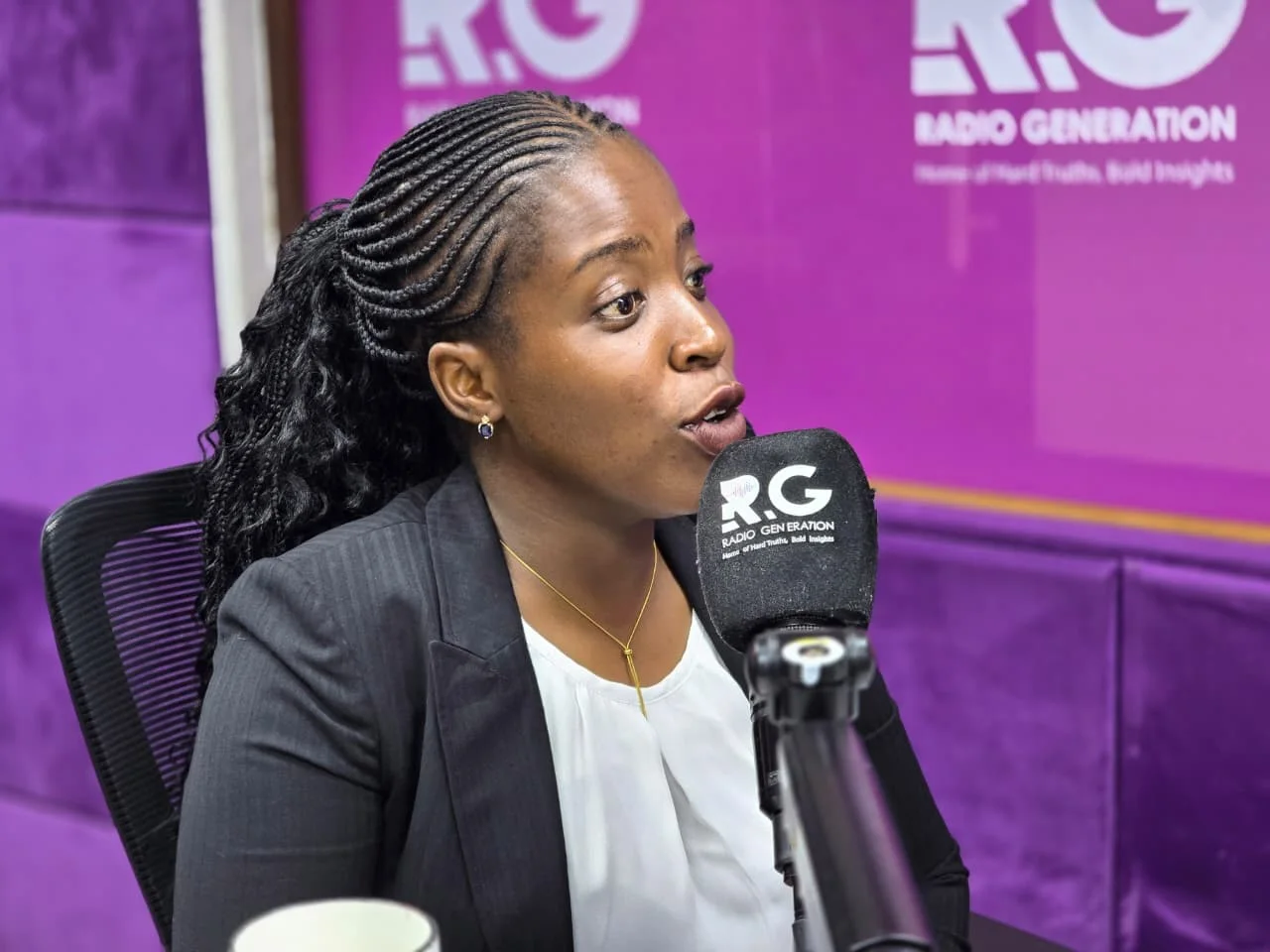
People's Renaissance Movement (PMP) Party National Youth League Chairperson Sophie Njehia has criticised President William Ruto’s administration over what she describes as a widening gap between its development promises and actual delivery, citing the affordable housing programme as an example of slow implementation.
Speaking on Radio Generation on Monday, Njehia questioned the government's progress towards its pledge to construct 250,000 houses annually, arguing that the number of completed homes remains significantly below the target.
She said the administration had spent much of its time making announcements and promoting its development agenda without delivering projects at the scale promised to Kenyans.
“First of all, our President has spent four years making noise and issuing promises, but there has been virtually no implementation of the manifesto he presented to Kenyans,” Njehia said.
She acknowledged that some projects had been undertaken, including affordable housing, but maintained that the government should be judged against its original commitments rather than the number of projects launched or under construction.
“But let's be honest, the things that have been done, for example, affordable housing. Yes, he said he'd build 250,000 houses per year. But how about four years down the line? We are looking at around 4,000 already commissioned, but the ongoing ones are many. But we have not reached that 250,000,” she highlighted.
Government figures, however, show that the housing programme has expanded considerably, although the number of completed units remains far below the annual target.
A September 2026 report indicated that approximately 10,000 affordable housing units had been completed since the programme began, with about 8,000 occupied. In August, the government said more than 280,000 units were under construction and set a target of completing 45,000 by December 2026.
The government's own delivery scorecard also reported more than 260,000 housing units launched or under construction by August 2025, alongside over 640,000 jobs linked to the programme. These figures point to significant activity in the sector, but they do not mean that the annual housing delivery target has been achieved.
Njehia described the progress as inadequate when measured against the promises made, arguing that launching projects was not the same as completing them.
“Great talkers are never great doers. It is not great. It is just doing. It's just bare minimum,” she said.
The housing programme is among the flagship initiatives under the Bottom-Up Economic Transformation Agenda (BETA), which also prioritises agricultural transformation, healthcare, support for small businesses and the digital economy.
There have been measurable gains in some of these areas. According to the Government Delivery Unit's January 2026 scorecard, inflation declined from 9.6 per cent in 2022 to 4.3 per cent in December 2025, while the cost of a two-kilogramme packet of maize flour fell from Sh250 to Sh165.
The same report indicated that more than 2,669 kilometres of new tarmac roads had been constructed, tea earnings had increased from Sh154 billion to Sh215 billion, and more than 28.5 million Kenyans had registered under the Social Health Authority. It also reported growth in agricultural production and the number of Kenyans placed in overseas employment.
However, progress across the government's wider development agenda remains uneven. A June 2026 report on the National Government Dashboard System indicated that the average implementation rate for 51 priority projects stood at 29 per cent. Five projects were listed as complete, seven as stalled and 36 as ongoing.
An independent assessment by parliamentary monitoring organisation Mzalendo Trust also offered a mixed picture of the administration's manifesto implementation.
Its Promise Tracker, last updated on August 30, 2026, listed 25 of 254 commitments as completed, representing 9.8 per cent. Another 150 were ongoing, 41 were classified as broken, 15 as stalled and 19 as not started. The organisation cautions that these classifications are its own evidence-based assessments, not official government determinations.
Njehia maintained that the government's performance should be assessed not only through the projects announced by the executive but also through the effectiveness of institutions expected to scrutinise public spending and hold leaders accountable.
She argued that elected representatives should exercise independent judgement and prioritise the interests of citizens rather than political loyalty.
Her criticism comes as the administration approaches the final stretch of its first term, with questions over the fulfilment of its 2022 campaign commitments likely to feature prominently in the debate ahead of the 2027 General Election.