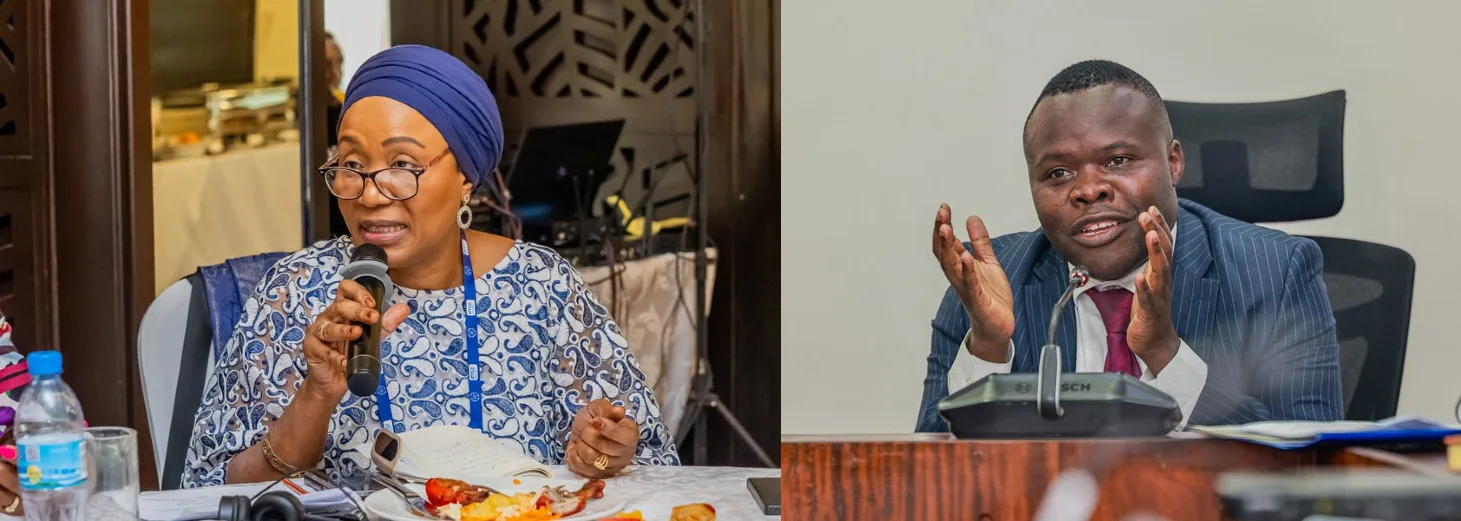
Kenya’s proposed list of recipients for the 2026 National Honours features 62 individuals, including Senators Hamida Kibwana and Eddy Oketch (Migori), nominated MP Irene Nyakerario Mayaka and several other lawmakers and senior public officials.
The names, shared by the National Heroes Council and published by a local daily newspaper on Friday, October 9, 2026, bring together representatives from Parliament and leaders of public institutions for possible recognition under the country’s honours system.
Other legislators included are Marianne Jebet Kitany of Aldai, Baady Twalib Bady of Jomvu, Elijah Memusi Kanchory of Kajiado Central and Ruweida Mohamed Obo of Lamu East.
The list also features Lilian Achieng Gogo of Rangwe, Nyeri County MP Rahab Mukami Wachira and Laikipia County MP Jane Wangechi Kagiri.
Nominated Senator Essy Okenyuri Nyaituga Anyieni is also among those proposed for recognition. Other names include Salaries and Remuneration Commission chairperson Sammy Chepkwony and Kenya National Commission on Human Rights chairperson Claris Ogangah.
The proposed recipients are listed under categories that include the Chief of the Order of the Burning Spear (CBS) and the Order of the Grand Warrior (OGW).
Their inclusion places elected leaders and public officials among those being considered for national recognition. However, the proposed list should not be confused with a final award announcement, as nomination alone does not confirm that an individual has received an honour.
The National Heroes Council is a public institution established under Kenyan law to support the identification, recognition and commemoration of people regarded as national heroes.
Its work focuses on individuals whose contributions have helped shape Kenya’s history, including those involved in the fight for independence and people who have served the country through national development and other areas of public service.
The council is also responsible for helping document their achievements, preserve their legacies and increase public awareness of their contributions. These efforts are intended to ensure that the stories of people who have played important roles in Kenya’s development remain part of the country’s historical record.
Beyond identifying people deserving recognition, the council helps safeguard national memory by supporting the preservation of historical accounts and promoting appreciation of those whose actions have benefited the country.
Its responsibilities differ from those involved in awarding presidential honours. Although both processes recognise service and contributions to Kenya, they operate under separate institutional and legal arrangements.
Presidential honours are conferred under the relevant constitutional and statutory provisions, with the President exercising the authority provided by law. Consequently, the publication of proposed names does not mean that the people listed have already been awarded the stated distinctions.
Kenya’s system of recognising national heroes is rooted in the country’s history of resistance to colonial rule, the independence struggle and the efforts to preserve the contributions of people who shaped its political and social development.
After the country gained independence in 1963, recognising those who contributed to freedom, the development of public institutions and national progress became an important way of acknowledging service to the nation.
As the need to preserve the achievements of historical figures grew, Kenya adopted a more structured approach to identifying and commemorating people whose contributions deserved national recognition.
The National Heroes Council was established as part of these efforts, providing an institutional framework for identifying individuals whose achievements merit recognition and ensuring that their legacies are documented.
Its work also supports the transfer of historical knowledge to future generations by recording the contributions of national figures and keeping their stories alive.
This mandate extends beyond the presentation of medals or awards. It includes protecting the country’s historical record and helping Kenyans understand the roles played by individuals in shaping the nation.
Kenya’s national honours system
Kenya’s presidential honours system took shape after independence to provide a formal way of recognising outstanding service and achievements.
The distinctions cover a wide range of contributions, including leadership, public administration, security, professional service, community development and other areas considered important to the country.
Among the best-known awards are the Chief of the Order of the Golden Heart of Kenya (CGH), the Elder of the Order of the Golden Heart of Kenya (EGH), the Moran of the Order of the Golden Heart of Kenya (MGH), the Moran of the Order of the Burning Spear (MBS) and the Chief of the Order of the Burning Spear (CBS).
The Order of the Golden Heart of Kenya ranks among the country’s highest national orders. It has different classes intended to recognise distinguished service and achievement, with the Chief of the Order of the Golden Heart of Kenya occupying the highest class.
The Order of the Burning Spear is another major distinction used to recognise service to the nation. Its various classes acknowledge contributions made in different fields, including public service and national development.
These awards are governed by the applicable laws and granted through the presidential honours process. They provide formal recognition of people whose work is considered to have made a positive contribution to Kenya.
National honours are therefore intended to recognise more than individual success. They acknowledge service and achievements that carry importance beyond the recipients themselves and are considered to have wider value to the country.
Proposed names await formal conferment
The process of awarding national honours involves identifying individuals for consideration under the relevant rules and procedures. Proposed names may be made public before the formal process is completed.
Being included on such a list does not, by itself, establish that an individual has received an award. It is also important to distinguish between the proposed category and the final honour formally granted.
The official conferment announcement establishes the recipients and the specific distinctions awarded to them.
The 2026 list features elected representatives, nominated legislators and senior officials from public institutions, reflecting the range of positions represented among those proposed for recognition.
The announcement also draws attention to the two related but distinct aspects of national recognition: preserving the legacy of people who have shaped Kenya’s history and formally rewarding distinguished service through presidential honours.
For the 62 individuals named, the proposed list marks consideration for recognition, while the final conferment process will determine the honours officially awarded.