
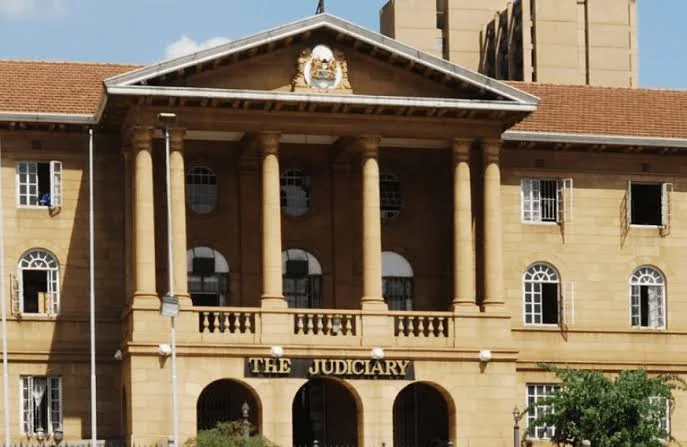
A fresh legal battle over judges’ car allowances has put billions of shillings in public funds at stake, with the Salaries and Remuneration Commission (SRC) warning that retaining the benefit could encourage similar demands across the public sector and push up the government’s compensation bill.
In its submissions to the Supreme Court, the commission estimates that the grants will cost taxpayers Sh9.8 billion over four years. It has cautioned that the financial burden could grow if other State officers and accounting officers in public institutions pursue comparable benefits.
The Supreme Court is due to hear the case on Wednesday, October 14, following an earlier decision by the Court of Appeal that upheld the payments. The appellate court found that the grants were benefits judges had already acquired and could not be withdrawn to their disadvantage.
At the centre of the dispute is the SRC’s 2021 decision to cancel the allowance. The commission maintains that the benefit was introduced without its approval, raising questions about its constitutional authority to determine and regularly review the pay and benefits of State officers.
A five-judge Court of Appeal bench ruled in March that the grant was an existing entitlement attached to judicial office. The decision upheld earlier findings by the High Court that the allowance could not be withdrawn in a manner that left judges worse off.
The disagreement traces back to circulars issued by the Head of Public Service on July 7, 2011, and subsequently reviewed in June 2015 and June 2018. According to the SRC, the circulars bypassed its mandate, contributed to unequal compensation arrangements within the public service and weakened controls over government expenditure.
Commission disputes how allowance was introduced
The SRC argues that the authority to set judges’ remuneration rests with the commission rather than the President, the Judicial Service Commission or the Cabinet Secretary for the National Treasury.
"The power and function to set and regularly review the remuneration and benefits of judges is not vested in the President, Judicial Service Commission (JSC) or the Treasury Cabinet Secretary" the commission told the court.
The commission says it carried out reviews of judicial remuneration in 2013, 2014, 2017 and 2018, but the JSC did not disclose during those exercises that judges were receiving the taxable car allowance.
It has also questioned the need for the additional benefit, arguing that judges already have access to official transport and a car loan facility.
The existing scheme allows State officers, including members of the Judiciary, to obtain loans at an annual interest rate of three per cent. The SRC contends that the availability of these arrangements makes the separate car grant unfair when compared with benefits offered elsewhere in the public service.
Beyond the question of fairness, the commission challenges the legality of the circulars themselves. It says the Head of Public Service had no legal authority to introduce or change the remuneration of State officers in 2011 without the SRC’s approval.
The commission has raised a further concern over the scope of the circulars, arguing that they referred specifically to High Court judges even though judges in the Court of Appeal and Supreme Court also received the allowance.
Judges’ entitlement linked to pre-2010 arrangement
The Court of Appeal took a different position, rejecting the argument that the car grant was an improperly introduced or newly created benefit.
The judges found that the entitlement existed before the 2010 Constitution came into force and continued under the new constitutional framework.
Evidence presented in court showed that judges had previously received a duty-free car grant under the repealed Constitution. Government circulars later changed the arrangement into a taxable allowance.
"The benefit existed prior to the Constitution 2010 and continued thereafter," the court observed.
The appellate bench held that the introduction of the 2010 Constitution did not erase benefits judges had already earned. It found that withdrawing the allowance would violate Article 160(4), which safeguards judicial remuneration and benefits against reductions that disadvantage judges.
The court also agreed with the High Court that allowing another arm of government to make arbitrary changes to judicial benefits could threaten the independence of the Judiciary.
According to the judges, such decisions could expose members of the Judiciary to financial uncertainty arising from decisions made outside the institution, potentially weakening the safeguards meant to protect judicial independence.
The ruling therefore upheld the position that the allowance was an existing benefit protected by the Constitution, rather than a new payment that could be cancelled at the commission’s discretion.
Court rejects other objections in the appeal
The proceedings followed a public interest petition filed in 2023 by advocate Peter Mwangi Gachuiri, who challenged the SRC directive seeking to withdraw the allowance.
During the appeal, the commission argued that the dispute should have been heard by the Employment and Labour Relations Court instead of the High Court.
The Court of Appeal dismissed that argument, finding that the petition raised constitutional questions that fell within the High Court’s jurisdiction.
The bench also rejected a request to disqualify the judges hearing the matter on the grounds that they stood to benefit financially from the outcome. In dismissing the application, the court relied on the doctrine of necessity.
Under the arrangement in dispute, each judge is entitled to a taxable grant of up to Sh10 million every four years to purchase a personal vehicle.
The SRC’s estimate puts the cost of the benefit at Sh9.8 billion over a four-year term. The commission warns that the financial implications could extend beyond the Judiciary if similar allowances are sought by other public officers.
The Supreme Court hearing will take place against the background of the conflicting positions: the SRC’s argument that the grants fall outside the proper process for setting public-sector remuneration, and the previous court findings that the allowance is an accrued benefit protected by the Constitution.