
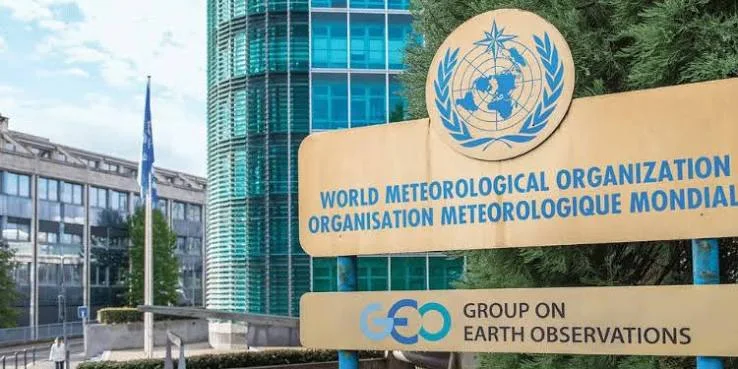
The World Meteorological Organization (WMO) has warned that 2026 will be among the four hottest years on record, with an intensifying El Niño expected to fuel further warming and extreme weather events well into 2027.
In its State of the Climate Update 2026, released on Monday, November 9, the agency said global temperatures, ocean heat and sea levels had reached unprecedented levels, while melting glaciers and declining freshwater reserves were worsening climate risks.
The report shows that global average surface temperatures between January and September 2026 were approximately 1.47 degrees Celsius above pre-industrial levels.
It also identifies the past four years, from 2023 to 2026, as the four warmest on record, with the warming trend expected to continue as El Niño strengthens.
WMO said the weather phenomenon, which has been intensifying since August, could become the strongest on record by December and continue into early 2027.
"El Niño doesn't add new heat to the planet. It releases heat from the ocean, which is the warmest ever measured. There is simply more heat available to release," WMO Secretary-General Celeste Saulo said.
The agency warned that the combination of El Niño and human-induced climate change could intensify heatwaves, tropical cyclones and heavy rainfall, exposing millions of people to extreme weather.
UN Secretary-General António Guterres said the world had entered a new era of climate extremes, calling on governments to accelerate emissions cuts and support vulnerable countries.
"We have entered a new age of climate extremes. A supersized El Niño is colliding with a planet already superheated by manmade climate change," Guterres said.
The report further found that the global mean sea level reached a record high in 2026, while ocean heat content continued to rise for the tenth consecutive year.
Glaciers lost more than 400 gigatons of ice in 2025, equivalent to approximately one millimetre of global sea-level rise. The annual loss would have filled five Olympic-sized swimming pools every second.
Meanwhile, freshwater storage has declined globally since 2014, with 42 per cent of the assessed global area recording below-normal water storage in 2025.
WMO warned that worsening climate conditions could deepen food insecurity, poverty and displacement, while increasing health risks associated with extreme heat, droughts and flooding.
The agency also stressed the importance of early warning systems, noting that countries reporting multi-hazard early warning systems increased from 56 in 2015 to 136 in 2025.