MPs question slow pace of Last Mile electricity rollout

KPLC officials told the committee that delays were partly caused by disruptions following the collapse of the Finance Bill 2024, which affected payments to contractors. However, MPs dismissed the explanation, insisting that the agency must take responsibility for delivery.
The National Assembly has raised concern over the slow rollout of the national electricity connection drive, with lawmakers saying the programme has reached only 9 per cent completion despite years of investment and strong public demand for power access.
The National Assembly Departmental Committee on Energy raised the issue during a sitting at the Main Chambers, Parliament Buildings on Tuesday, where officials from Kenya Power and Lighting Company (KPLC) and the Rural Electrification and Renewable Energy Corporation (REREC) were questioned over delays in the Last Mile Connectivity Programme.
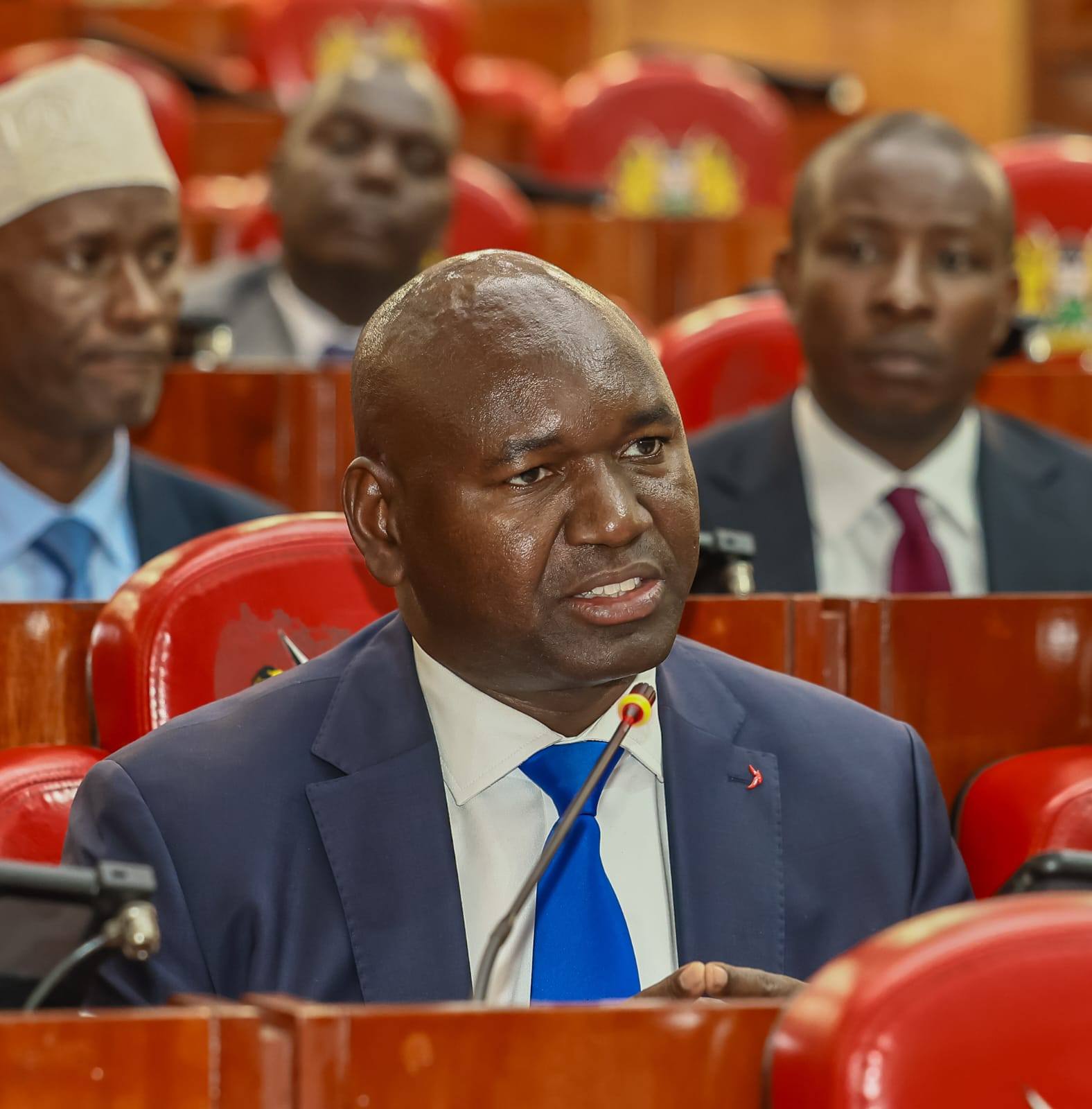
The session, chaired by MP David Gikaria (Nakuru Town East), focused on the gap between official national electricity access figures and what residents in constituencies say they are experiencing on the ground.
Gikaria challenged the accuracy of the reported statistics, saying the situation presented by agencies does not match field realities.
“We are being told connectivity is above 70 per cent, yet on the ground, it is a different story. Based on the data we have, last-mile connectivity is at only 9 per cent with just months to go. Electricity is the biggest enabler of economic growth—this does not add up,” Gikaria stated
He warned that the slow pace of implementation could affect public trust in government development programmes, especially those linked to basic services.
KPLC officials told the committee that delays were partly caused by disruptions following the collapse of the Finance Bill 2024, which affected payments to contractors. However, MPs dismissed the explanation, insisting that the agency must take responsibility for delivery.
“Let us not hide behind the Finance Bill. That cannot be the reason for continued underperformance. We must move on. If KPLC is now profitable, why can’t you use your own resources to drive last-mile connectivity instead of waiting for donors?” Hon.Gikaria posed.
Lawmakers also questioned planning methods used in the rollout, with Hon. Julius Mawathe (Embakasi South) warning that reliance on GIS systems risks leaving out informal settlements.
“As you roll out last-mile connectivity, you must consider slum areas like Mukuru and Mathare. Many residents lack electricity, and this is why we continue to witness frequent fire outbreaks caused by candles,” he said.
He added that depending solely on technical mapping systems limits engagement with local leaders who understand community needs better.
MP Geoffrey Mulanya (Nambale) raised concern over the limited number of contractors handling the nationwide project, saying it could be affecting speed and efficiency. KPLC’s Acting Chief Executive Officer confirmed that only 26 contractors are currently engaged across the country.
MP Victor Koech (Chepalungu) also questioned contractor performance, saying payments were being made but results on the ground were not visible.
“People in Chepalungu hardly feel the presence of Kenya Power. Contractors are being paid, yet the work is not being done. Who accounts for the lost time?” he asked.
KPLC said it has introduced reforms aimed at improving implementation, including localized invoicing and the creation of a project account in February 2025 to speed up payment processing that had previously faced delays.
Despite the challenges, the agency maintained that it is targeting completion of the current phase by October 2026. However, the committee directed both KPLC and REREC to submit a detailed constituency-by-constituency progress report covering all 290 constituencies for parliamentary review.


Comments
Sign in with Google to comment, reply, and like comments.
Continue with Google