
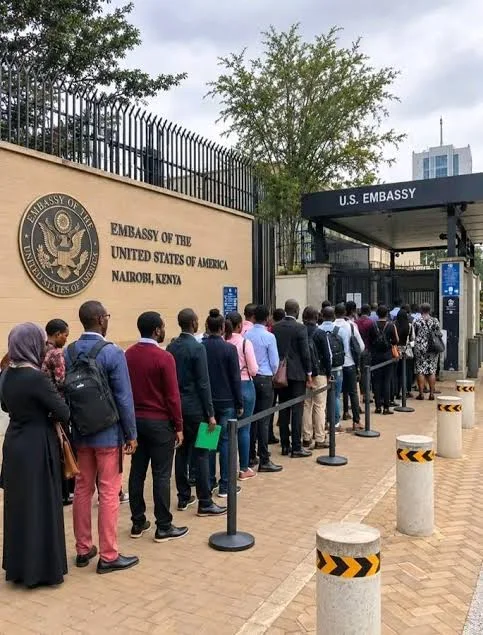
Kenyans applying to travel to the United States have been urged to exercise caution when preparing their visa applications, with the US Embassy in Nairobi warning that overstaying, misrepresentation and forged paperwork are among the factors contributing to rising visa refusals.
US Embassy Deputy Consular Chief Natalia Rincon said on Wednesday, November 25, during an interview with Iqra FM, that an increase in immigration violations by Kenyan travellers has raised concerns, with individual cases potentially affecting the wider pool of applicants.
She said reports published annually by the Department of Homeland Security (DHS) track how travellers from different countries comply with immigration rules, noting that Kenya has recorded a worrying trend of visa overstays in recent years.
"Over the last couple of years, the rate of Kenyans overstaying in the United States has increased. Every year, the Department of Homeland Security publishes a report covering all nationalities across the world, showing how well they comply with visa conditions. Unfortunately, the report shows that Kenyans have misused their visas more than citizens of other nationalities in the last couple of years," she said.
Rincon cautioned that repeated cases of visa violations could contribute to higher refusal rates, urging Kenyans to ensure they honour the conditions attached to their travel documents.
“So, as Kenyans continue to misuse their visas, refusal rates go up. What we can do as a country is ensure that Kenyans use their visas properly because the better they comply with visa conditions, the lower the refusal rate can be," she said.
The embassy official also warned against withholding personal information or giving false details during visa interviews, saying applicants should disclose their travel records, relatives living in the US and any previous arrests or encounters with law enforcement.
She clarified that having family members in the US or a criminal-related encounter in the past does not automatically bar someone from obtaining a visa, but such details must be truthfully disclosed.
Rincon further cautioned applicants against falling victim to visa agents who promise to facilitate approvals using fabricated documents, including bank statements meant to demonstrate financial capacity.
"At the end of the day, whatever you put in your application or present at the interview window, you, as the applicant, are responsible for ensuring that the information is accurate and honest. Unfortunately, there are people out there who take advantage of applicants by giving them false information or selling them fraudulent documents," she said.
She said the embassy does not vet or endorse visa agents, adding that Kenyans who engage intermediaries should personally verify the information and paperwork submitted in their names.
Applicants whose visa requests have been rejected were advised to allow at least six months before making another application, unless they have experienced a major change in circumstances that could strengthen their case.
Rincon cautioned that submitting applications repeatedly without addressing the reasons for an earlier rejection may not improve the outcome.
She also urged travellers to distinguish between the validity of a visa and the length of time they are permitted to remain in the US, explaining that the two are not the same.
Kenyans granted B-1/B-2 visas may receive travel documents valid for five years, but the period they can stay in the country is determined by immigration officers upon arrival.
Travellers seeking to remain beyond the period granted must apply for an extension through US immigration authorities before their authorised stay ends. Failure to comply with the conditions could result in visa cancellation or revocation.
Rincon said the embassy was working to improve awareness of visa requirements and tackle misinformation that exposes applicants to exploitation, urging Kenyans to submit truthful applications and respect the conditions governing their travel.