
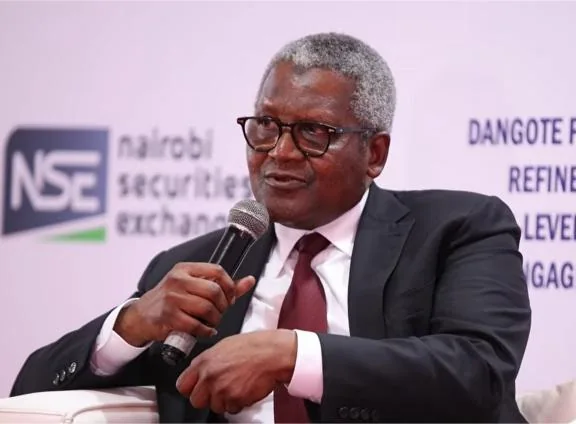
Africa’s richest man, Aliko Dangote, has confirmed that one of his companies acquired a 24.76% stake in Kenya Pipeline Company (KPC), ending days of speculation over the identity of the investor behind a Sh42.5 billion block transaction.
Dangote disclosed the investment in London, saying his group had bought a quarter of Kenya’s petroleum pipeline network to strengthen its position in the distribution of petroleum products.
“We bought 25 percent of their pipeline network for their distribution of petroleum products,” said Dangote according to Bloomberg.
The transaction involved 4.5 billion KPC shares, equivalent to 24.76% of the company, and was executed through the Nairobi Securities Exchange. The deal initially involved unidentified investors, sparking speculation about who had acquired such a large stake in one of Kenya’s strategically important energy companies.
Dangote’s confirmation now offers a key clue to the strategic thinking behind the purchase.
KPC operates critical petroleum transportation and storage infrastructure serving Kenya and the wider East African region. A 25% stake therefore gives Dangote’s group exposure to a key part of the downstream petroleum supply chain.
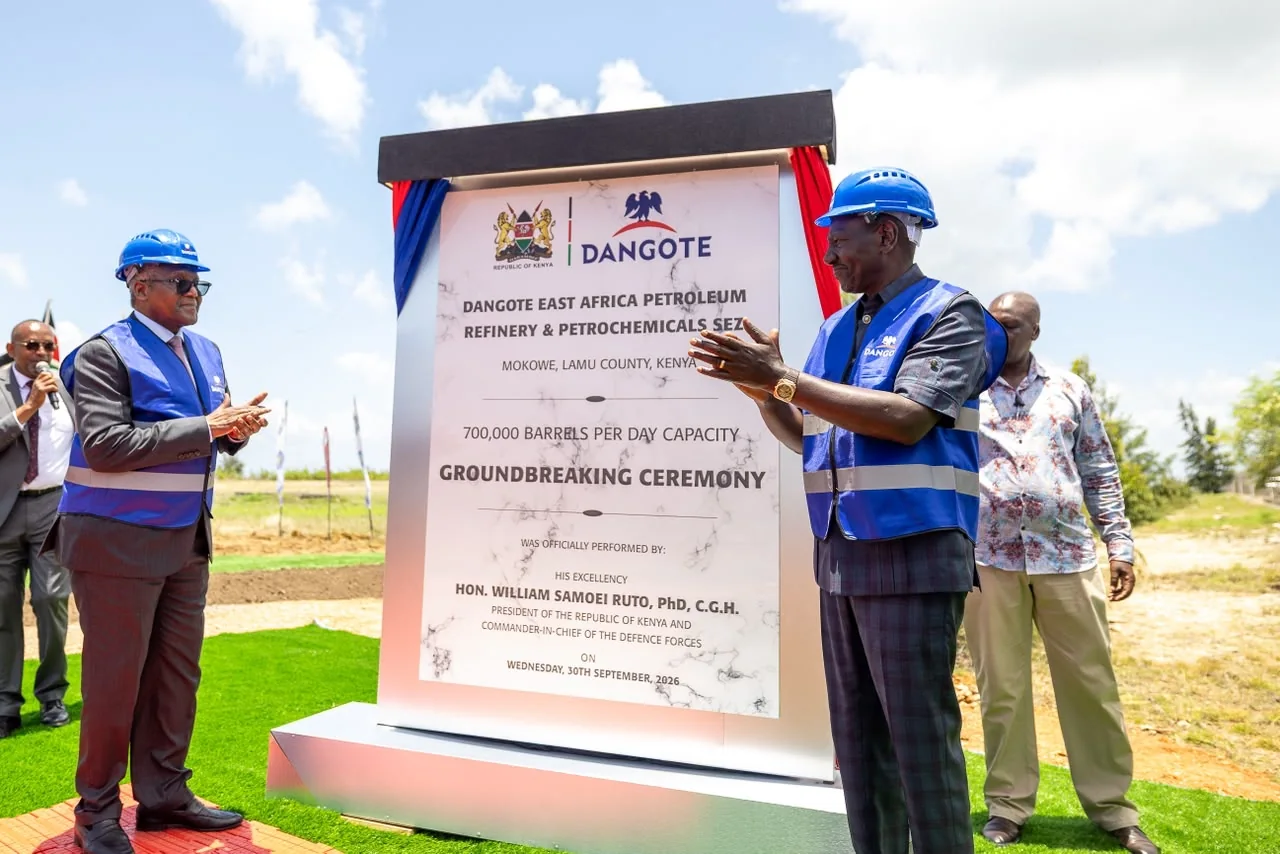
Dangote is simultaneously pursuing a massive energy investment in Kenya. On September 30, he broke ground on a proposed $16 billion (Sh2 trillion) oil refinery in Lamu, a project expected to serve Kenya and other East African markets. The refinery is scheduled for completion in 2030 and would be Dangote’s second major refining project after his 700,000-barrel-per-day refinery in Nigeria.
The KPC investment could therefore complement his wider ambition to build an integrated petroleum business in the region from refining and storage to transportation and distribution.
The transaction also makes Dangote the second-largest shareholder in KPC, giving his group influence over the company's strategic direction and opening the possibility of board representation.
The shares were transferred by state-backed investors less than eight months after they participated heavily in KPC's initial public offering. Several public institutions were encouraged to invest in the IPO after demand from private investors fell short of expectations. In total, 13 State-backed schemes and agencies invested about Sh64.23 billion for a combined 38.35% stake.
Among the biggest institutional investors were the National Social Security Fund, which invested Sh38.5 billion, the Public Servants Pension Scheme with Sh13 billion, the County Workers Pension Fund with Sh3.6 billion and the Unclaimed Financial Assets Authority with Sh3.2 billion.
The block transaction required 24.76% additional regulatory approval. The deal was valued at approximately Sh42.5 billion.
The KPC purchase consequently raises the prospect of a much broader regional energy strategy. If the Lamu refinery proceeds as planned, Dangote could have a major presence on both sides of the petroleum value chain: producing refined products while holding a substantial interest in the infrastructure used to move and distribute them.
KPC itself has recently reported stronger financial performance. Its net profit rose 13% to Sh11.58 billion for the year ended June 2026, while the company proposed dividends of about Sh5.81 billion.
Dangote's confirmation therefore transforms what initially appeared to be a mysterious share-market transaction into a potentially important component of his East African energy expansion.