
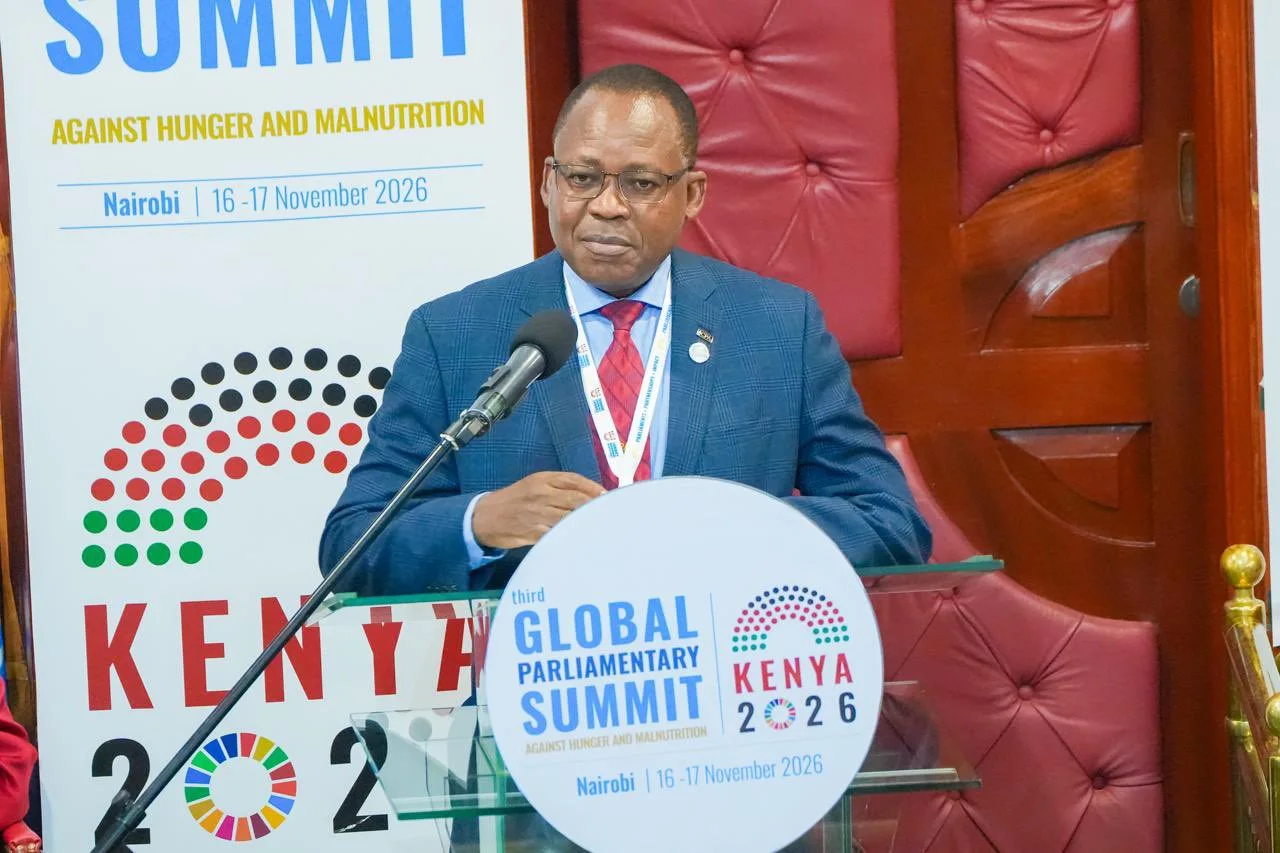
The President of the Parliament of Aruba, Alfred Marlon, has urged governments worldwide to recognise hunger and malnutrition as human rights issues, calling for stronger policies to guarantee access to adequate and nutritious food.
Addressing the Third Global Parliamentary Summit Against Hunger and Malnutrition in Nairobi on Monday, Marlon said poverty and inadequate nutrition continued to undermine human dignity and social justice.
He argued that no child should go hungry or any family be forced to choose between buying food and meeting other basic needs.
“They are matters of human dignity, social justice, equality, and fundamental human rights. No child should go to bed hungry. No family should have to choose between putting food on the table and meeting other basic needs,” he said.
Marlon said parliamentarians had a responsibility to represent citizens, enact laws, scrutinise government policies and approve budgets that support efforts to end hunger.
“As parliamentarians, we have a special responsibility. We are not only representatives of our people, but we are also lawmakers and guardians of democracy. We must ensure that laws, policies, and national budgets contribute to ending hunger and improving nutrition,” he said.
He highlighted the particular challenges facing small island economies such as Aruba, which depend heavily on international food supply chains and remain vulnerable to rising food prices, climate change and disruptions in global markets.
Marlon said addressing these challenges required investment in sustainable food systems, increased local agricultural production, innovation and public education on nutrition.
He called on governments to strengthen domestic food production and reduce dependence on imported food while adopting sustainable approaches capable of withstanding economic and climate-related shocks.
The Aruba parliamentary leader also emphasised the need for international cooperation, noting that hunger remained a global challenge requiring collective efforts across countries.
“Hunger does not respect borders, and neither should our commitment to fight it,” he said.
He urged countries to share experiences and best practices while ensuring political commitments translated into practical interventions that improve people's lives.
Marlon said international gatherings such as the Nairobi summit should move beyond speeches and declarations to deliver concrete action against hunger and malnutrition.
“I strongly believe that countries, big or small, developed or developing, must work together. We must listen to one another, exchange best practices, and transform our political commitments into concrete results for our citizens,” he said.
He challenged legislators to make access to nutritious food a priority in their national agendas, regardless of people's economic circumstances or geographical location.
“Together, we can build a world without hunger,” he said.