
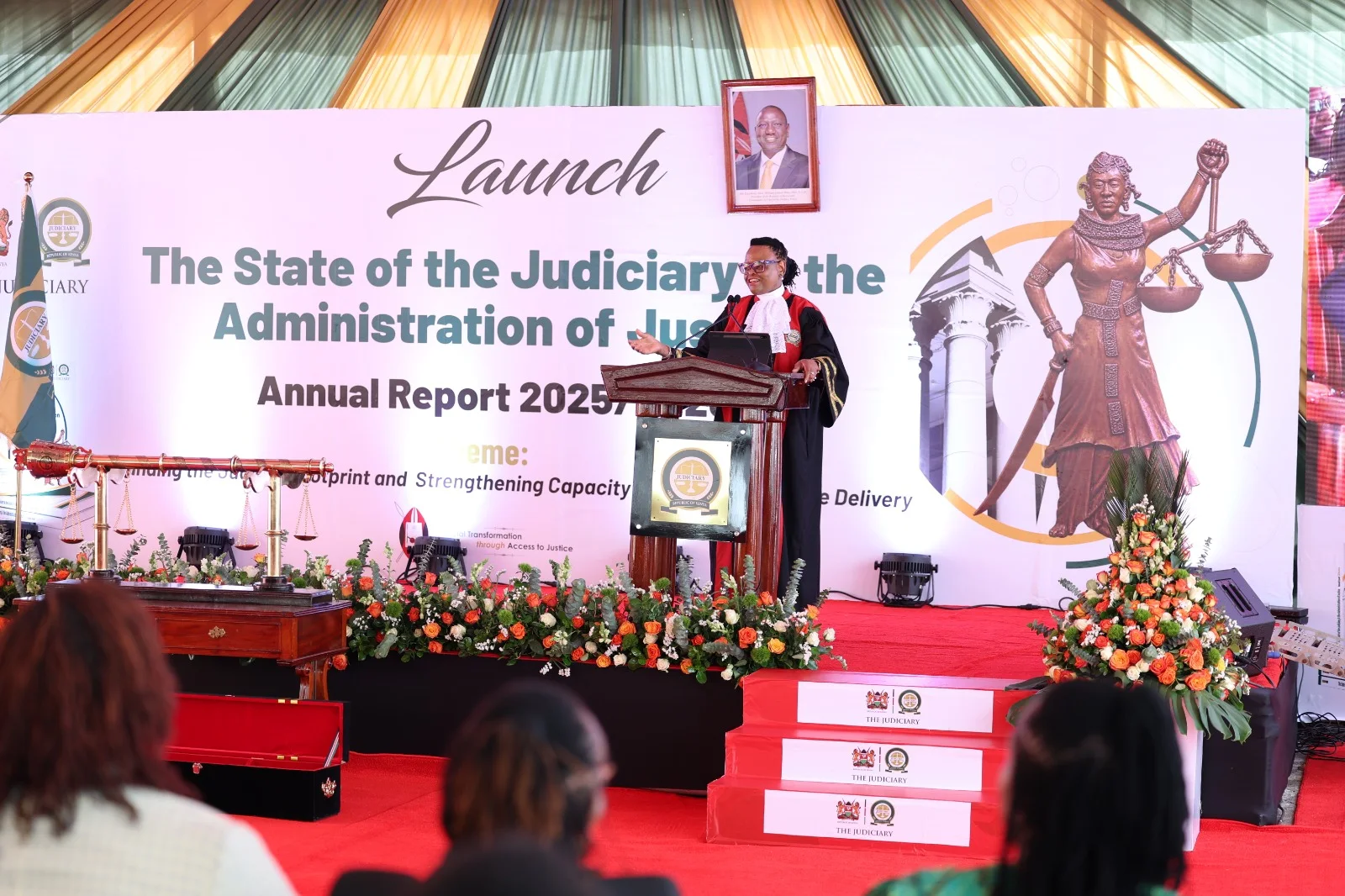
Chief Justice Martha Koome has called for stronger action to protect journalists from attacks and intimidation, warning that threats against media practitioners risk silencing critical voices and denying Kenyans access to information.
Koome maintained that journalists must be free to investigate, gather and publish information in the public interest without facing violence, harassment or threats, stressing that their personal safety and dignity are fundamental to media freedom.
“The safety and dignity of journalists are essential to the protection of media freedom,” she said.
Speaking through a speech delivered on her behalf by Deputy Chief Registrar of the Judiciary Paul Ndemo, Koome highlighted the difficult working conditions facing journalists, particularly women who are increasingly exposed to gender-based harassment, online attacks and threats intended to discourage them from speaking out.
“I acknowledge the particular vulnerabilities of women journalists who often face harassment, gendered online abuse and threats designed to silence their voices,” Koome said.
She warned that mistreatment of journalists should not be viewed as an internal workplace matter, noting that it has far-reaching consequences for fundamental freedoms and public participation in democratic affairs.
“These are not simply workplace concerns. They are threats to equality, freedom of expression and democratic participation,” she said.
The Chief Justice called on relevant institutions and media organisations to put in place stronger support systems to safeguard journalists, including practical safety training, protective arrangements and access to psychosocial services.
She further stressed the need for institutions to take responsibility and ensure those involved in attacks against media practitioners are held accountable.
“Media resilience must therefore include adequate safety training, protective measures, psychosocial support and institutional accountability for attacks and gag journalists,” she said.
Koome also called for improved working relations between the Judiciary, journalists and members of the public, saying continued engagement would help citizens better understand electoral justice processes and protect confidence in constitutional institutions.
She said addressing misinformation was equally important, particularly where misleading claims could weaken public trust in the institutions responsible for upholding the Constitution.
“We shall continue engaging the media and the public to promote understanding of electoral justice processes and counter misinformation that may undermine confidence in constitutional institutions,” she said.
Turning to the impact of emerging technologies on journalism, Koome said artificial intelligence could improve the quality of reporting by supporting investigations, fact-checking and access to information.
However, she cautioned that the technology also creates new challenges by making it easier to produce and circulate fake images, digitally generated audio and misleading accounts of events.
“Artificial intelligence can strengthen investigative journalism, verification and access to information. However, it can also facilitate the production and rapid circulation of fabricated images, synthetic audio and misleading narratives,” she said.
She urged media editors to strengthen verification procedures, equip journalists with digital literacy skills and promote responsible adoption of artificial intelligence to preserve the credibility of news reporting.
Koome also challenged the public to take greater responsibility when engaging with information, warning against accepting or circulating content without first establishing its accuracy.
“The public too must be encouraged to question, verify and critically assess the information it consumes,” she said.