Senate disputes medical evidence in Gachagua impeachment case
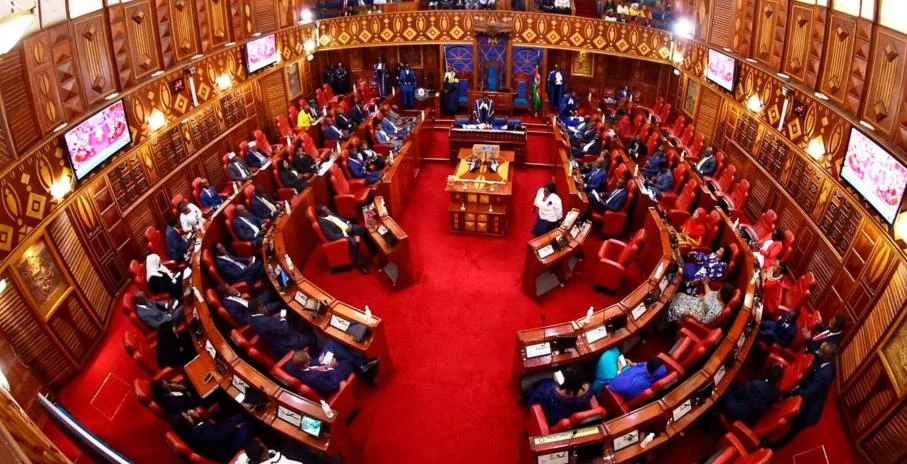
The Senate argues that the documents were not tabled before senators during the impeachment hearing and only appeared later in court after the process had already been concluded.
A new twist has emerged in the legal contest surrounding the removal of former Deputy President Rigathi Gachagua, after the Senate moved to discredit medical documents presented to justify his absence during impeachment proceedings.
In court filings submitted through Senate Clerk Jeremiah Nyegenye, the Senate alongside Speaker Amason Kingi is now disputing the authenticity, timing, and consistency of hospital records produced by cardiologist Dr Daniel Gikonyo.
The Senate argues that the documents were not tabled before senators during the impeachment hearing and only appeared later in court after the process had already been concluded.
This development adds pressure to a wider petition by Gachagua and 40 co-petitioners, including Gema Watho Association, who are seeking to overturn the impeachment decision on grounds that he was denied a fair hearing.
They argue that Parliament proceeded with the vote despite being informed that he had been taken ill and admitted to hospital, which they say compromised his ability to participate in his defence.
Gachagua’s legal team, supported by Senior Counsel Paul Muite, maintains that senators ignored medical updates and rushed through the process in a politically charged environment.
They also accuse Parliament of acting under influence from the Executive and using the impeachment process to settle internal political disagreements within the Kenya Kwanza leadership.
However, Nyegenye insists that the responsibility to provide clear proof of illness rested with Gachagua’s side at the time senators were deciding whether to halt the proceedings on October 17, 2024.
“Given that the request for adjournment was premised on alleged illness, it was reasonably expected that counsel would provide material evidence demonstrating that the petitioner had been taken ill,” he states.
The Senate further argues that the medical report relied upon was introduced too late, long after the impeachment process had already ended.
The Senate and Speaker Amason Kingi remain named as respondents in the case challenging Gachagua’s removal from office.
Dr Daniel Gikonyo, founder of Karen Hospital, told the court that Gachagua was admitted on October 17, 2024, after suffering severe chest pain linked to a suspected cardiac event.
He stated that doctors recommended hospital observation for between 48 and 72 hours due to the seriousness of the condition.
Dr Gikonyo also told the court that President William Ruto called him during treatment to inquire about Gachagua’s condition.
Despite this, the Senate now says the medical records contain contradictions that weaken their reliability.
A key issue raised is the discharge summary attached to the affidavit, which the Senate claims shows conflicting timelines.
“The annexed ‘system-generated’ medical report indicates that the petitioner was admitted on October 17, 2024 at 4:18pm and discharged on November 20, 2024 at 1:36pm,” the affidavit states.
Nyegenye argues that if taken as accurate, the document would mean Gachagua remained in hospital for 31 days, a period that does not align with earlier testimony or the impeachment timeline.
He further notes that Dr Gikonyo had earlier stated that hospitalisation was only required for 48 to 72 hours, creating a contradiction in the evidence.
The Senate also maintains that although Gachagua’s lawyers had indicated medical documents would be presented during the hearing, no such records were tabled before senators at the time.
It further questions the discharge summary, arguing that it was prepared by a different doctor and therefore cannot be fully relied upon as evidence from the cardiologist who filed the affidavit.
This latest objection follows a court decision allowing the medical affidavit to remain part of the case record despite attempts to strike it out.
The question of whether Gachagua was genuinely too ill to attend the impeachment proceedings has now become one of the most contested issues in the petition.
His side continues to argue that Parliament acted unfairly, bypassed proper procedure, and failed to establish a special committee to examine the charges before proceeding to a vote.




Comments
Sign in with Google to comment, reply, and like comments.
Continue with Google