Pressure rises as Senate flags inaccessible courts and offices in Mombasa
The hearing followed a petition by Zedekiah Adika, who raised alarm over poor accessibility at facilities including Bima Towers, Uhuru na Kazi offices, Mombasa Law Courts, county offices and other state premises.
Concerns over disability access failures in Mombasa public institutions escalated in the Senate on Friday as lawmakers confronted government agencies over slow implementation of laws meant to guarantee equal access to services.
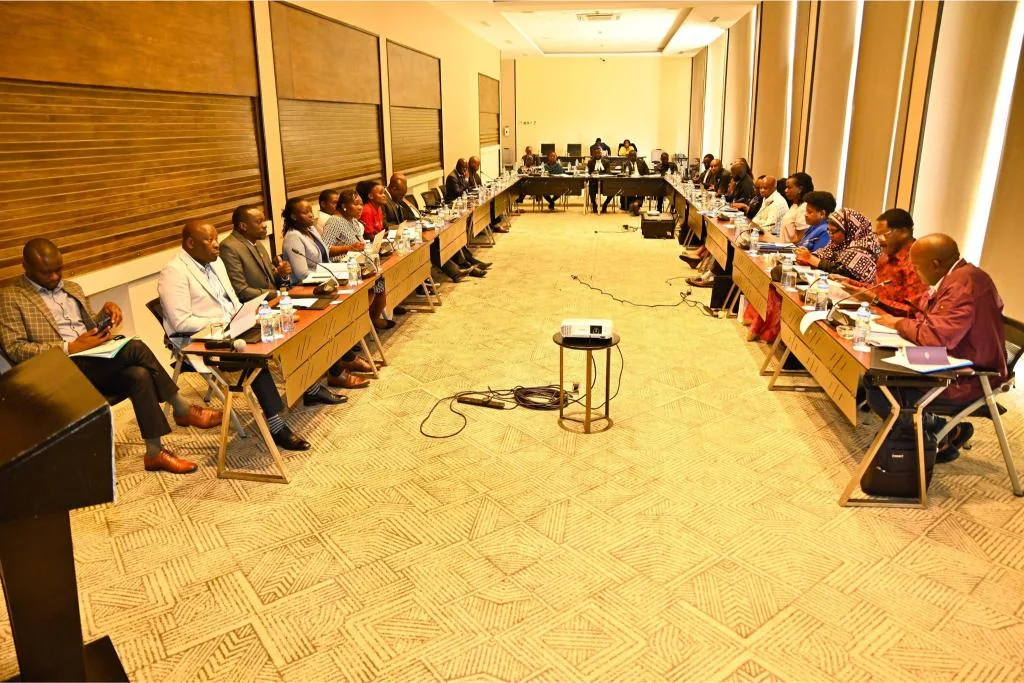
The Senate Labour and Social Welfare Committee, chaired by Sen Julius Murgor (West Pokot), interrogated officials over repeated complaints that persons with disabilities cannot fully access courts, government offices and regulatory buildings in the coastal city.
The hearing followed a petition by Zedekiah Adika, who raised alarm over poor accessibility at facilities including Bima Towers, Uhuru na Kazi offices, Mombasa Law Courts, county offices and other state premises.
Officials from the Judiciary, the Ministry of Labour and Social Protection, and NEMA appeared before the committee to explain why accessibility standards under the Persons with Disabilities Act 2025 have not been fully enforced.
The State Department for Social Protection acknowledged weaknesses in implementation, with Principal Secretary Joseph Motari saying government agrees that “must be accessible to all” and stressing that “no Kenyan should be excluded from accessing government services due to physical or systemic barriers”.
He informed senators that accessibility audits had already been carried out in Mombasa through the National Council for Persons with Disabilities, revealing major gaps in infrastructure at several public buildings.
Motari added that draft regulations are ready for review between 18 and 22 May before public participation begins. He also said a new audit system covering seven key areas has been developed, alongside a county reporting structure being prepared with the Council of Governors.
Despite these assurances, senators expressed dissatisfaction over delays nearly a year after the law took effect.
Vice-chair Crystal Asige criticised ministries for what she termed endless delays. She said: “A whole 365 days later, there isn’t even one regulation, and we’re still reading in a submission saying that we are planning on doing it,” warning that failure to budget for reforms could delay implementation to 2028.
The Judiciary was also heavily questioned over the Mombasa Law Courts complex, which was completed in 2021 but remains unused due to structural defects.
Officials said the Judiciary is implementing inclusion reforms supported by a $1m Ford Foundation grant spread over five years, aimed at improving accessibility audits, converting documents into Braille and audio formats, and holding annual inclusion forums.
They also said a long-term 10-year infrastructure plan is being prepared to standardise court designs nationwide, including ramps, lifts with voice systems and Braille support, and improved accessible sanitation facilities.
On the Mombasa court, officials confirmed that a ramp connecting street level to the second floor has been designed and will be constructed starting July under the Ministry of Public Works, with completion expected in December.
However, senators demanded clarity on responsibility for the defective court complex. Sen Miraj Abdullahi questioned who certified the building, who supervised construction and whether any action had been taken against those responsible. Judiciary officials said they did not have full details and requested seven days to submit a full report.
The committee also criticised the absence of senior officials from NEMA and the Ministry of Environment, despite the urgency of the matter and the presence of petitioners.
Sen Beth Syengo questioned why top leadership had not attended, while Sen Murgor refused to accept submissions from technical officers, insisting that only senior officials with authority to commit government action should respond.
Lawmakers urged better coordination between ministries, county governments and the Judiciary, calling for joint audits and infrastructure planning through the Ministry of Public Works and involvement of disability bodies at every stage.
Before closing the session, the committee issued clear directives: fast-track disability regulations, complete the Mombasa court ramp within the year, submit a detailed report within seven days on the stalled court complex, and ensure inclusion of disability groups in all future planning.
Senators also signalled upcoming oversight visits, with Sen Murgor stating: “Come August or September, we are inspecting that work in Mombasa,” indicating that parliamentary scrutiny would move to on-site verification.
For affected petitioners, the session ended without immediate relief, as they were left with renewed promises while accessibility challenges remain unresolved across several government buildings.




Comments
Sign in with Google to comment, reply, and like comments.
Continue with Google