
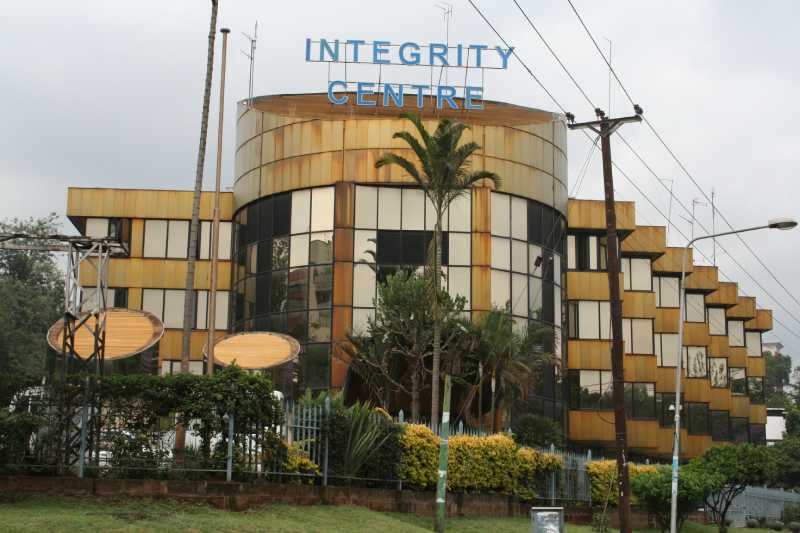
The Ethics and Anti-Corruption Commission (EACC) has secured 45 convictions in cases involving forged academic and professional certificates, as authorities intensify efforts to curb the use of fraudulent qualifications to secure public sector jobs and elective positions.
EACC Chief Executive Officer Abdi A. Mohamud disclosed that the commission had investigated 228 allegations of certificate forgery, with 134 investigation files forwarded to the Director of Public Prosecutions (DPP) with recommendations for prosecution.
Of the cases that have proceeded to court, 45 have resulted in convictions, while five ended in acquittals. Another 60 cases remain pending before the courts.
The commission has also recovered Sh41.2 million from individuals who obtained employment or other financial benefits using forged academic and professional qualifications.
Mohamud revealed the figures on Monday, November 23, 2026, during a workshop for media practitioners on integrity in leadership and elections at Whitesands Beach Resort in Mombasa.
He said the commission had made significant progress in investigating cases involving forged academic documents within the public sector over the past five years.
The latest figures highlight the extent of fraudulent qualifications in public institutions and the commission's efforts to hold individuals who use falsified documents to obtain employment and other benefits accountable.
Mohamud warned that the commission would intensify scrutiny of academic and professional certificates submitted by individuals seeking elective positions ahead of the August 2027 General Election.
He said the commission would examine supporting documents accompanying candidates' self-declaration forms to establish whether their academic and professional qualifications meet the required standards.
The exercise is intended to prevent individuals from using falsified qualifications to obtain integrity clearance and subsequently seek elective office.
Mohamud also noted that some individuals previously investigated over certificate forgery had either been prosecuted or faced civil proceedings, including elected leaders.
“Some of those that have been investigated and either prosecuted or instituted civil matters against, are elected leaders.”
The commission's renewed focus comes as political parties and prospective candidates begin preparing for the 2027 General Election, with questions emerging over the authenticity of qualifications presented by individuals seeking public office.
The EACC chief executive maintained that the commission receives more than 20,000 self-declaration forms from individuals seeking nomination as candidates during an election year.
The commission works alongside the Independent Electoral and Boundaries Commission (IEBC) to assess candidates' compliance with the moral and ethical requirements outlined under Chapter Six of the Constitution.
Following the assessment, EACC submits recommendations to the electoral body concerning individuals whose records raise integrity concerns.
However, Mohamud clarified that the commission does not have the constitutional mandate to independently disqualify candidates from contesting elections.
He explained that the responsibility for registering candidates rests with the IEBC, while EACC provides integrity assessment reports to inform the electoral body's decisions.
The commission has previously submitted integrity assessment recommendations during the 2017 and 2022 General Elections.
Beyond investigations and prosecutions, the commission plans to intensify public sensitisation ahead of the 2027 elections, urging Kenyans to examine the integrity and academic qualifications of individuals seeking elective positions.
The campaign will include the establishment of public reporting desks where citizens can submit complaints relating to corruption and ethical violations.
The initiative is expected to provide members of the public with an avenue to report suspected cases of misconduct involving prospective political leaders and other individuals seeking public positions.
The commission's approach places greater emphasis on public participation in promoting accountability and ensuring that individuals seeking leadership positions meet the ethical standards required by law.
The latest crackdown also reaffirms the financial implications of certificate fraud, with the Sh41.2 million recovered representing benefits obtained through employment and other opportunities secured using falsified qualifications.
As the country approaches the August 2027 General Election, the EACC is expected to increase its scrutiny of candidates' academic and professional records as part of broader efforts to strengthen integrity in public leadership.