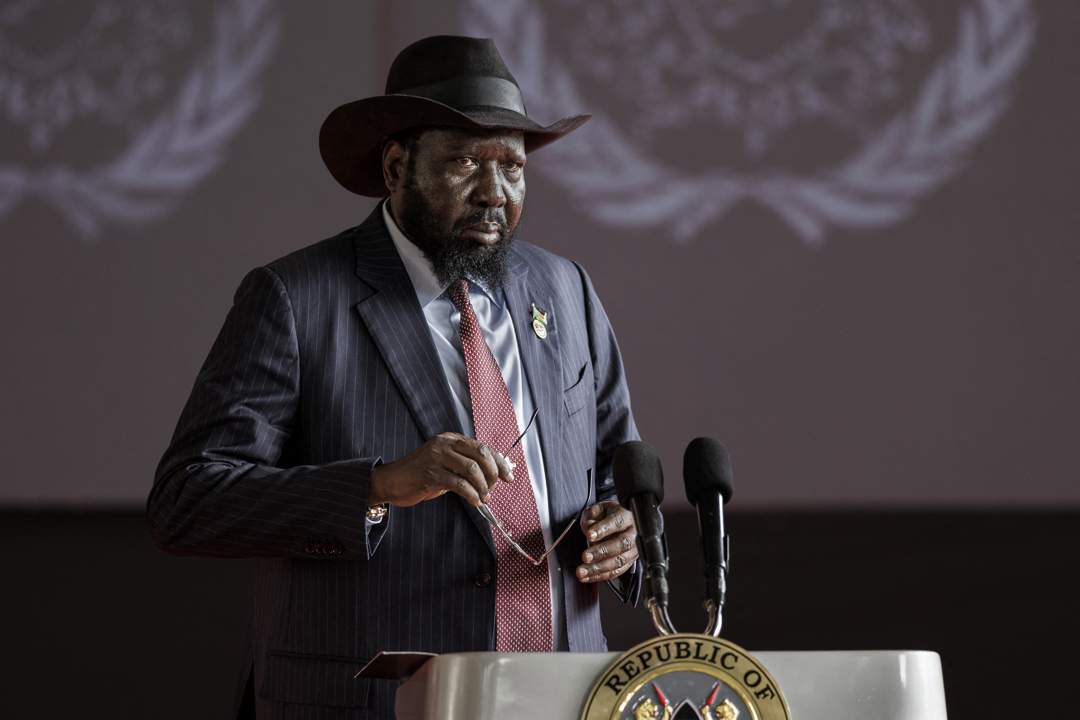
After years of delays, South Sudan has moved its first general election to February 2027, giving the country an additional 51 days to prepare for a historic vote that continues to face serious political, security and financial obstacles.
The National Elections Commission (NEC) has rescheduled the polls from December 22, 2026, to February 11, 2027, through a revised electoral timetable, extending the country's transition period once again.
The decision comes as concerns grow over whether South Sudan can organise a credible and inclusive election, with international observers warning that the country is still struggling to put the necessary arrangements in place.
During a recent United Nations Security Council meeting, UN and African Union officials cautioned that proceeding with the December elections without addressing existing gaps could threaten the country's fragile peace and risk a return to conflict.
The elections commission is also grappling with a major funding deficit. It has so far received only $21 million (Sh2.7 billion) against the $276 million (Sh35.8 billion) required to conduct the exercise.
Beyond the financial challenges, officials raised questions about the country's technical capacity, restrictions on civic space, the involvement of opposition parties and the participation of millions of displaced people in the electoral process.
United Nations Mission in South Sudan (UNMISS) chief Anita Kiki Gbeho warned that political divisions, continued insecurity and the failure to bring opposition groups into dialogue could undermine the preparations.
AU High Representative for the Horn of Africa Jakaya Kikwete also cautioned that elections conducted without proper arrangements could plunge South Sudan into another crisis. He urged international partners to provide support to help the country navigate the process.
The detention of former First Vice-President Riek Machar has emerged as another major obstacle, with his release considered an important condition for opposition groups to engage in political dialogue.
However, the government has defended its earlier plan to hold the elections on December 22, arguing that further delays could prolong the transitional administration without a clear end.
Under the new schedule, voter registration will run from November 14 to November 28, with the provisional register expected to be released on November 29.
The nomination of candidates is set to begin on December 14 and close on December 20. The final list of those cleared to contest will then be published between January 18 and January 21, 2027.
Campaigning will officially start on December 27 and continue until February 9, giving candidates 45 days to seek support from voters. February 10 will be reserved for a campaign silence period before polling begins the following day.
The commission has set aside February 11 and 12 for the counting of ballots and announcement of results at individual polling stations.
Thereafter, votes will be tallied at state, administrative-area and national levels, with the process expected to be completed by February 15. The final results are scheduled for publication on February 16.
The revised calendar further provides 148 days, running from February 17 to July 15, for handling petitions and resolving disputes arising from the elections.
Despite announcing the new timetable, the NEC did not explain the circumstances that led to the latest change in the polling date.
The elections are expected to mark a defining moment in South Sudan's political history, offering an opportunity to replace transitional leadership with permanent institutions chosen through a nationwide vote.
Since gaining independence in 2011, the country has yet to conduct a general election. Its political transition has been repeatedly extended, largely due to disagreements over the implementation of peace arrangements and the organisation of a credible vote.
The 2018 peace agreement, which ended years of civil war and provided the foundation for the transitional unity government, also remains only partly implemented.
Members of the UN Security Council have differed over the best way forward, with some warning that holding elections before the country is ready could reignite violence, while others have called for respect for South Sudan's national ownership of the process and increased international assistance.
“Rushed elections could undermine the peace agreement and trigger renewed large-scale violence,” the Council warned, calling for inclusive political dialogue, agreement on electoral arrangements and full implementation of the peace agreement.