UNEP warns funding and staffing pressures threaten global environmental cooperation
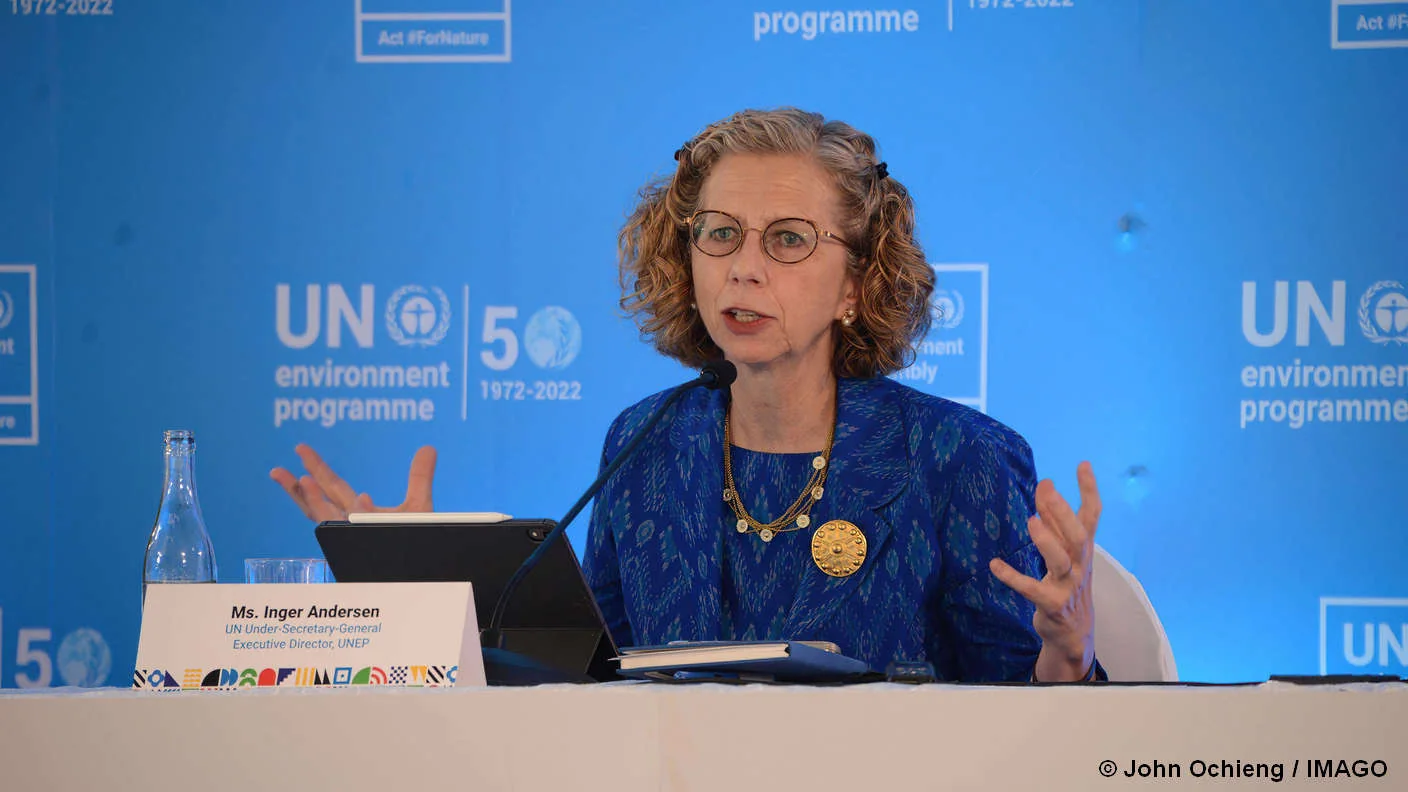
In a post on X on Monday, Andersen said the 2025 Annual Report of the United Nations Environment Programme (United Nations Environment Programme) highlighted both the resilience and the continuing challenges facing global environmental cooperation.
UN Under-Secretary-General and UNEP Executive Director Inger Andersen says environmental multilateralism is facing financial and political pressure despite growing global demand.
UNEP reports supporting conflict-affected communities in Gaza and Ukraine, and notes that over 100 Member States contributed to its Environment Fund, supporting programmes valued at about Sh425 billion.
In a post on X on Monday, Andersen said the 2025 Annual Report of the United Nations Environment Programme (United Nations Environment Programme) highlighted both the resilience and the continuing challenges facing global environmental cooperation.
She noted that, “amid global tensions and shifting national priorities, multilateralism is undoubtedly facing challenges.” However, she added, “even so, 2025 was a year in which nations showed that environmental multilateralism is the beacon that rises high above the fog of geopolitical differences to rally the world in united action.”
UNEP stated that it continues to support communities affected by environmental consequences of conflict and disasters, including in Gaza and Ukraine, while also addressing long-term environmental vulnerabilities.
“From the Gaza Strip to Ukraine, UNEP is supporting communities grappling with the environmental effects of disasters and conflicts, while also addressing the environmental vulnerabilities that often feed instability,” the report stated.
The agency says its work spans climate change, biodiversity loss, land degradation, desertification, pollution and waste, and is increasingly central to global stability and economic resilience.
UNEP highlighted the seventh session of the United Nations Environment Assembly (UNEA-7), held in Nairobi in December, where countries adopted 11 resolutions and three decisions to strengthen global environmental governance.
“At the global gathering in Nairobi, nations backed UNEP as the leading global environmental authority,” Andersen stressed.
The resolutions covered issues including minerals critical to the energy transition, glacier melt, wildfires, coral reef protection, antimicrobial resistance and the environmental implications of artificial intelligence.
UNEP also reported progress in international environmental agreements, including the establishment of a new Intergovernmental Science-Policy Panel on Chemicals, Waste and Pollution, and support for ratification of the Agreement on Marine Biological Diversity of Areas Beyond National Jurisdiction.
The agreement reached the threshold to enter into force in 2025, marking a key step in ocean governance.
Despite these advances, UNEP warned that its operations are increasingly constrained by funding pressures and staffing challenges.
“UNEP’s budget has tightened, personnel have departed, and our ability to deliver is being tested even as Member States ask more of the organization,” Andersen noted.
She stressed that predictable and flexible financing is essential, particularly through the Environment Fund, which she described as the backbone of UNEP’s work.
The report states that the fund supports science, policy coordination and global environmental action, and helps leverage nearly Sh425 billion (US$3.3 billion) in environmental programmes worldwide.
“UNEP needs a steady source of predictable, flexible financing – particularly to the Environment Fund, which is UNEP’s backbone,” she said.
UNEP also reported strong but uneven financial support from member states, with more than 100 countries contributing to the fund in the past year.
“Last year, more than 100 Member States contributed to the Environment Fund,” Andersen explained, adding that this reflects the increasing confidence of Member States in UNEP and widening commitment to its work.
However, she urged countries to meet their full contributions to ensure the organisation can meet growing expectations.
“The environment is undoubtedly the foundation upon which peace, prosperity, economic growth and stability rest,” she said. “To achieve these goals, the world needs environmental multilateralism more than ever.”
UNEP concluded that environmental cooperation remains essential to addressing global crises, from climate shocks to conflict recovery, and warned that weakening support could undermine long-term stability.
The agency says its work is central to building a better and more resilient future for people and planet, but insists that success depends on sustained international commitment and funding.




Comments
Sign in with Google to comment, reply, and like comments.
Continue with Google