
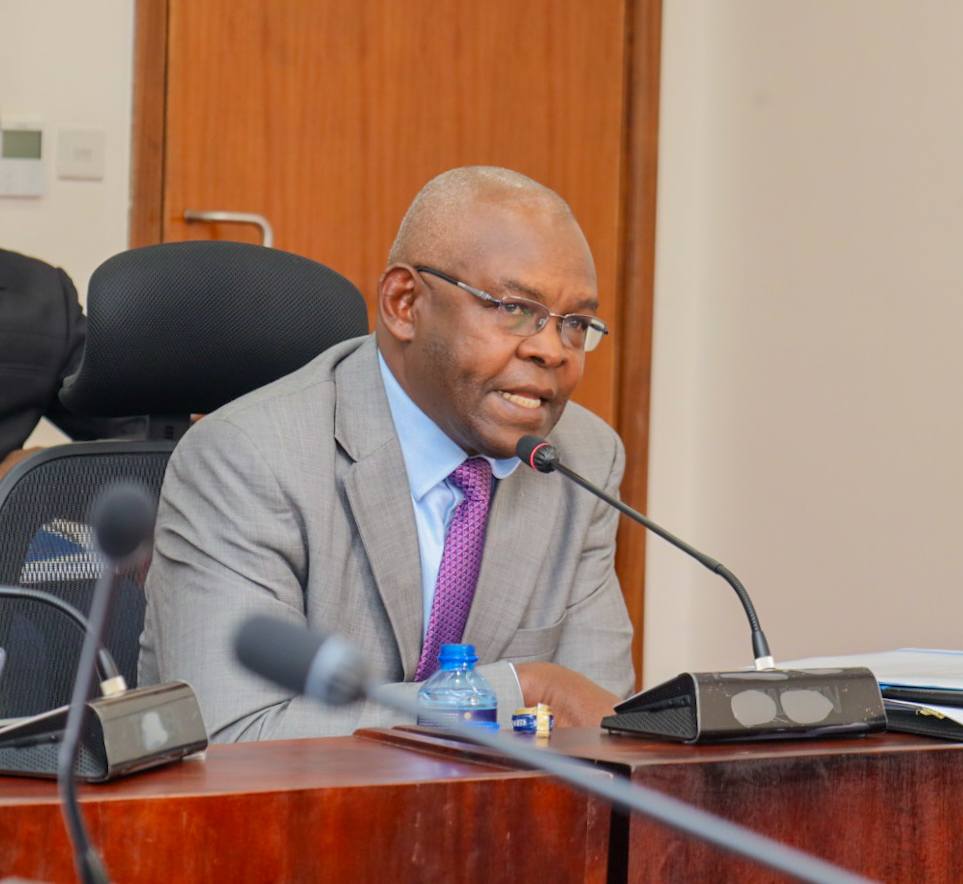
Central Bank of Kenya Governor Kamau Thugge says the country's monetary policy remains focused on maintaining domestic economic stability amid rising global inflation and uncertainties driven by geopolitical tensions.
Speaking on October 30, 2026, during an engagement with the National Assembly Departmental Committee on Finance and National Planning in Machakos County, Thugge said the CBK's primary mandate is to maintain price stability, safeguard the financial system and support broader economic growth.
He told lawmakers that despite rising global energy and food prices, Kenya's inflation has remained within the government's target range of 5 per cent, plus or minus 2.5 percentage points.
"Although overall inflation went up slightly to 6.8 percent in September 2026, up from 6.6 percent in August, it continues to be buffered by prudent monetary policy measures, active government interventions, and a stable exchange rate," he said.
Thugge noted that Kenya's economy remained resilient, with GDP growth averaging 5.1 per cent in the first half of 2026, prompting an upward revision of the annual growth projection to 5 per cent from 4.6 per cent in 2025.
He attributed the performance to growth in the services and industrial sectors, alongside increased construction activity supported by affordable housing and infrastructure projects.
The Governor also said the Central Bank Rate had remained unchanged at 8.75 per cent since February 2026, a move aimed at anchoring inflation expectations and maintaining exchange rate stability.
"Hon. Chair and Members, overall inflation has remained within the target range. The exchange rate has remained stable, supported by adequate foreign exchange reserves. Economic growth has also remained resilient in 2026," he told the Committee.
The lawmakers also questioned the Governor on proposed increases in commercial banks' minimum core capital requirements, with concerns raised that the changes could disadvantage locally owned lenders in favour of foreign institutions.
Thugge said the CBK was engaging the National Treasury on the proposals, maintaining that stronger capital bases would help banks withstand emerging risks, including climate change and cyberattacks.
The engagement also covered artificial intelligence in banking, virtual asset service providers, non-performing loans and declining diaspora remittances from traditional markets such as Saudi Arabia.