
The government has defended the Sh104.8 billion Digital Health Superhighway project, describing it as a 10-year service arrangement financed through monthly payments rather than an upfront procurement, amid a court challenge over the 2% health information management fee deducted from Social Health Authority (SHA) claims.
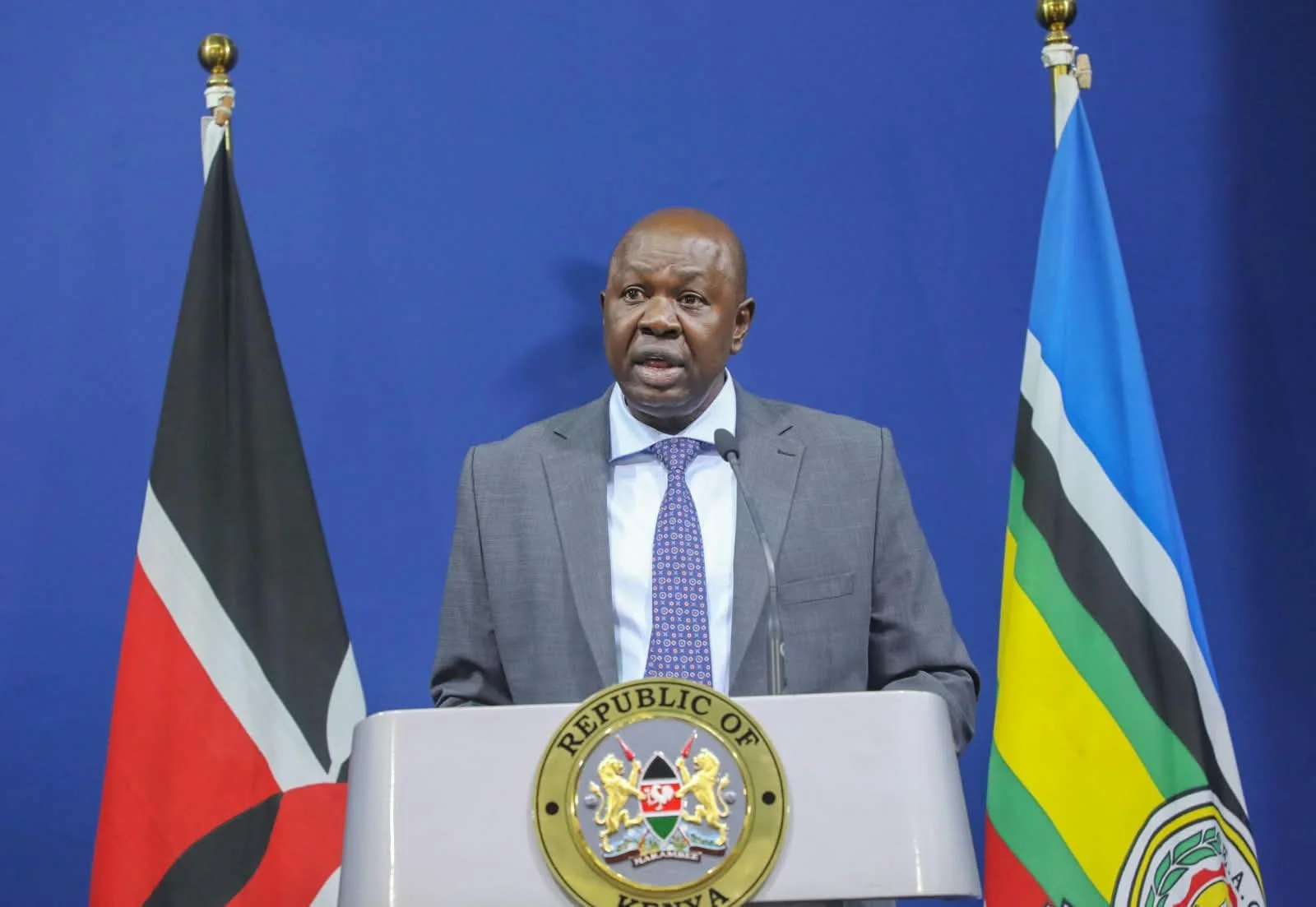
Addressing the media in Nairobi on Thursday, Government Spokesperson Charles Owino said the project, which began in February 2025, involves a consortium comprising Safaricom, Apeiro Limited and Konvergenz Network Solutions (KNS), which is investing Sh104.8 billion to build, install, maintain and support the digital health infrastructure over 10 years.
Owino said the arrangement is a service model in which the government pays for services delivered rather than purchasing equipment, software licenses and other infrastructure directly.
"It is not a purchase. It is a service model. The consortium invests its own Sh104.8 billion in a period of 10 years to build, maintain and support the system," he said.
He explained that the arrangement eliminates upfront government capital expenditure, with the consortium responsible for providing computers, tablets, internet connectivity, cloud hosting, cybersecurity, technical support, training and maintenance.
"The government pays for service actually delivered, for example, verified patient claims processed or facilities connected," Owino said, adding that service providers would also bear the risk of equipment breakdowns, software failures and connectivity disruptions.
The defense comes amid a legal challenge over the 2 percent Health Information Management System (HIMS) utilization fee, which the Vihiga High Court declared unconstitutional over concerns about the lack of public participation in its introduction.
The court suspended the declaration for 120 days to allow the government to undertake public participation and regularise the charge, warning that the existing fee entry would lapse if it did not introduce a lawful replacement within that period.
Under the arrangement, healthcare facilities receive 98% of approved claims, while the remaining 2% goes to the Digital Health Agency (DHA), subject to a maximum deduction of Sh5,000 per claim.
Owino said the integrated system will connect more than 6,000 health facilities, digitize hospital operations, streamline SHA claims processing, track medical supplies and strengthen accountability.
It comprises 43 interconnected platforms designed to replace fragmented paper-based processes with a unified digital network that supports biometric patient identification, electronic claims management, medicine tracking, and emergency response services.
The government has also sought to reassure cancer patients following recent changes to treatment approvals, insisting that the Sh800,000 oncology benefit remains unchanged.
Owino said the cover comprises Sh400,000 under the Social Health Insurance Fund (SHIF) and another Sh400,000 under the Emergency, Chronic and Critical Illness Fund (ECCIF).
He said the changes were introduced to standardize cancer treatment prices, align services with national treatment guidelines and prevent patients from exhausting their benefits before completing treatment.
Hospitals have been directed to explain and justify any additional charges for services not covered by SHA before providing them.
Owino said the government remains committed to complying with court directives and ensuring the digital health program improves patient outcomes, reduces administrative inefficiencies, and guarantees timely reimbursement of healthcare providers.