
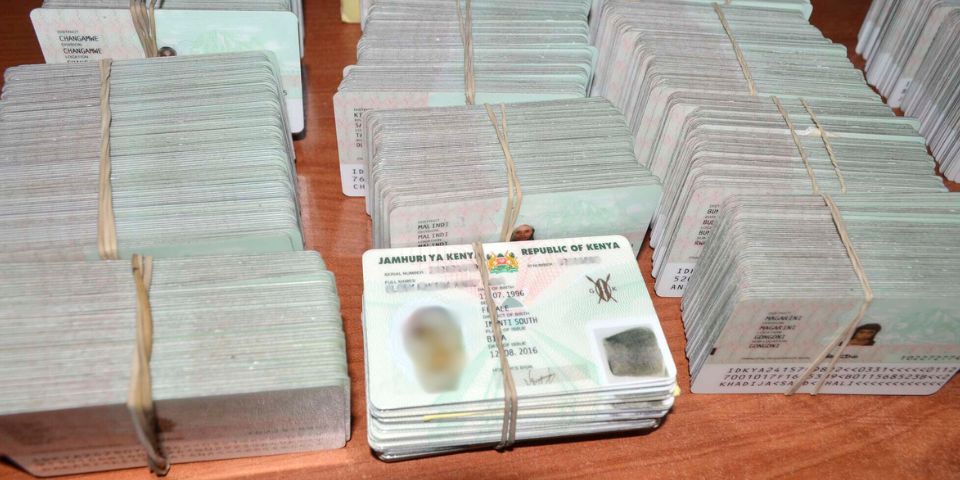
Kenya's national identity card registration programme has grown into a Sh31 billion project under President William Ruto's administration, with the government accelerating the issuance of identification documents as political parties begin positioning themselves for the 2027 General Election.
The expanded budget, which is more than three times the original Sh10 billion estimate, comes as the State seeks to register millions of new applicants and help the electoral commission meet its target of adding six million voters to the national register.
Official records show that the project, which began in 2014 under the previous administration, was initially designed to run for eight years at an estimated cost of Sh10 billion.
However, the financial requirements have since been revised upwards twice under the Kenya Kwanza government, first reaching Sh12 billion around November 2023 before rising to Sh31 billion from January 2025.
The government has also extended the project's expected completion date to June 30, 2028, according to figures contained in reports by the Controller of Budget (CoB).
The growing expenditure reflects the administration's expanded efforts to improve access to national identification documents, which are essential for citizens seeking to participate in elections.
For the 2025/2026 financial year, the State Department for Immigration and Citizen Services allocated Sh6.8 billion towards the purchase of materials required to produce identity cards.
Another Sh4.9 billion was earmarked for contracted technical services, while Sh3.5 billion went towards supporting the ongoing mobile registration campaign.
The national government budget implementation review report for the financial year indicated that the funding was intended to facilitate efficient registration for both national identity cards and birth certificates.
The department also emerged as the best-performing government entity in development budget utilisation, recording an absorption rate of 116 per cent against an overall average of 60 per cent.
Within the department, the National Registration Services sub-programme registered an absorption rate of 131 per cent, exceeding its reporting period target of 75 per cent.
The Controller of Budget linked the higher spending to additional allocations made under Article 223 of the Constitution to finance the joint mobile registration outreach programme for identity cards and birth certificates.
Article 223 permits the government to incur additional expenditure without obtaining prior parliamentary approval.
By December 31, 2025, cumulative spending on the ID registration project had reached Sh11.7 billion. This represented an increase of Sh2.1 billion from the Sh9.6 billion expenditure recorded on December 31, 2024.
Alongside the increased financial allocation, the government has introduced administrative changes intended to reduce the time Kenyans spend waiting for identity documents.
The measures include scrapping application charges for first-time applicants and those seeking replacements for lost or defaced cards, as well as introducing improved digital registration systems.
Officials say the reforms have helped expand access, with more than 1.7 million Kenyans registered since the current financial year began in July.
The government is also preparing to register one million eligible secondary school learners sitting the Kenya Certificate of Secondary Education examinations, in a move expected to bring more young citizens into the identification system.
The registration campaign has taken on added political importance because Kenyans must possess national identity cards before they can be enrolled as voters.
The Independent Electoral and Boundaries Commission (IEBC) wants to increase the number of registered voters to approximately 28.5 million by the 2027 General Election, representing an additional six million voters from the 22.1 million recorded during the 2022 polls.
The commission had registered 2.9 million new voters by August 20, with the exercise continuing through its constituency offices countrywide.
One of the major changes introduced by the Ruto administration concerns the identification of residents in border counties, who had previously been subjected to stringent vetting procedures over security concerns.
The President removed the additional requirements, arguing that they had placed unnecessary obstacles before legitimate Kenyan citizens from northern parts of the country.
During this year's Madaraka Day celebrations in Wajir County, Ruto maintained that the decision was aimed at ending discrimination without compromising national security or the integrity of Kenyan identification documents.
"It's not an invitation for foreigners to acquire Kenyan documents illegally. Kenyan identity cards will only be issued to legitimate citizens of this republic. Our commitment to justice and inclusion goes hand-in-hand with our duty to protect the integrity of our national identity and the security of our country. We did not abolish verification of citizenship, we abolished discrimination. We abolished the targeting of entire communities simply because of their ethnicity or place of birth," Dr Ruto said.
National Assembly Majority Leader Kimani Ichung'wah backed the changes, arguing that the previous vetting system subjected some Kenyans to unnecessary hardship before they could obtain documents enjoyed by other citizens.
"What the president has done is to do away with the excessive vetting, unfair vetting of fellow Kenyans from the northern part of Kenya who were being taken through a very painful exercise of vetting to ensure that they enjoy the same rights as any other citizen in the republic of Kenya," Ichung'wah said.
Despite the government's defence of the reforms, the registration exercise has become a point of political contention, with opposition leaders questioning whether the process is being conducted fairly across the country.
Some opposition figures have accused the administration of allowing foreigners to obtain Kenyan identity cards and register as voters in an alleged scheme to strengthen Ruto's electoral support ahead of the next General Election.
They have also raised concerns that areas perceived to support the government could be benefiting from faster processing of identification documents, while applicants in opposition strongholds face prolonged delays.
Democracy for the Citizens Party (DCP) leader Rigathi Gachagua has repeatedly raised the issue, claiming that political affiliation is influencing the speed at which Kenyans receive their identity cards.
He has called on the government to ensure that all eligible citizens are treated equally, regardless of their political preferences.
"In areas considered to be anti-government, new applicants are waiting for three and four months to get IDs. We are asking for issuance of ID cards to all Kenyans without discriminating them because of their perceived political leaning. We dont want selective issuance of voters' cards," Gachagua said recently.
The former Deputy President has also questioned the impartiality of the electoral commission, saying it should be prepared to account for changes in voter registration figures and ensure that the process is not manipulated.
Nyandarua Senator John Methu, who is also the DCP secretary-general, said the opposition intends to demand accountability from both the IEBC and the office responsible for issuing national identity cards.
Methu said his party would seek information on the number of additional voters registered since the previous mass voter registration exercise was halted, including a breakdown of the regions where the new registrations have taken place.
He added that the opposition would also ask the Registrar of Persons to disclose how many people had received national identity cards and identify the regions from which the successful applicants came.
The growing political debate has placed the Sh31 billion registration programme under scrutiny as the government pursues its target of expanding access to identity documents, while opposition leaders demand transparency in the distribution and processing of the cards ahead of the 2027 elections.