
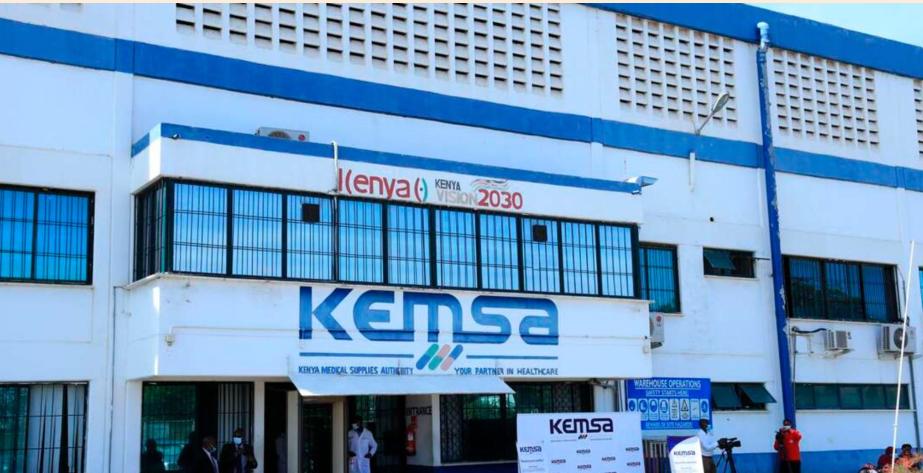
The diversion of medicines meant for public hospitals could become harder as the Kenya Medical Supplies Authority (KEMSA) introduces a new digital system that will allow the government to account for medical supplies from the time they leave manufacturers until they are administered to patients.
The technology is expected to strengthen controls across the pharmaceutical supply chain by giving authorities the ability to establish where medicines are at any given stage, identify unexplained movements and determine whether deliveries have reached the health facilities they were intended for.
The technology is expected to strengthen controls across the pharmaceutical supply chain by giving authorities the ability to establish where medicines are at any given stage, identify unexplained movements and determine whether deliveries have reached the health facilities they were intended for.
The initiative, being implemented jointly with the Ministry of Health, will introduce product-level tracking to improve transparency and address weaknesses that have allowed essential medical commodities to disappear or end up in unauthorised hands.
Speaking on Tuesday, KEMSA Chief Executive Officer Waqo Ejersa said the system would allow medical products to be tracked throughout the distribution network, leaving little room for supplies to be diverted without detection.
“This technology is a game changer in the management of medical supplies. It will ensure every product can be tracked from the manufacturer to the final patient, strengthening accountability across the supply chain,” Ejersa said.
The system will use GS1 DataMatrix barcodes containing specific information about each medical product, including its identification details, manufacturing batch, expiry date and unique serial number.
By introducing these codes, KEMSA will be able to monitor individual medicine packs rather than relying solely on general stock records. This will help officials establish the origin and destination of products and identify points where discrepancies occur.
The technology will also make it easier to investigate missing supplies by providing information on their movement through manufacturers, storage facilities, and health institutions.
To further strengthen the system, KEMSA plans to link it with its Enterprise Resource Planning platform and the National Logistics Management Information System.
The connection will improve the sharing of stock information, strengthen inventory controls and give the authority a clearer picture of medical commodities moving through its distribution network.
KEMSA is also introducing additional security features to protect selected supplies during transport. These will include geo-fenced electronic locks and electronic proof-of-delivery systems.
The measures will help officials monitor consignments in transit, confirm delivery times, and verify whether medical products have been received at their designated destinations.
Ejersa said the changes were part of efforts to eliminate weaknesses that had previously made it possible for medical supplies to be diverted from the intended distribution channels.
He noted that the ability to track every movement would improve the detection of irregularities and provide a basis for holding individuals involved in the diversion of medicines accountable.
“Our goal is to seal loopholes that have previously allowed medical supplies to be diverted. With this system, every movement will be traceable, making it easier to detect irregularities and safeguard essential medicines,” he said.
The introduction of the technology comes ahead of a compliance deadline set for December 31, 2026, when manufacturers and suppliers working with KEMSA are expected to adopt internationally recognised GS1 identification standards.
From January 1, 2027, the authority will begin individual pack serialisation, assigning a distinct identification number to every medicine pack.
From January 1, 2027, the authority will begin individual pack serialisation, assigning each medicine pack a unique identification number.
The development will allow officials to trace specific products independently, making it easier to establish their distribution history and identify supplies that may have been misplaced, diverted or require further attention.
Beyond preventing the loss of medicines, the system is expected to improve the overall efficiency of the pharmaceutical supply chain by strengthening stock control, reducing fraud and making the distribution process more transparent.
It will also help authorities identify affected batches through product identification and expiry information, enabling them to establish which consignments need to be traced or investigated.
The reforms come as KEMSA reports progress in supplying health facilities, with its order fill rate currently at 92 per cent, up from 40 per cent in 2022.
The authority has also seen its funding increase from Sh5 billion to Sh21 billion under President William Ruto's administration, in a move aimed at strengthening the availability and distribution of essential medicines.