
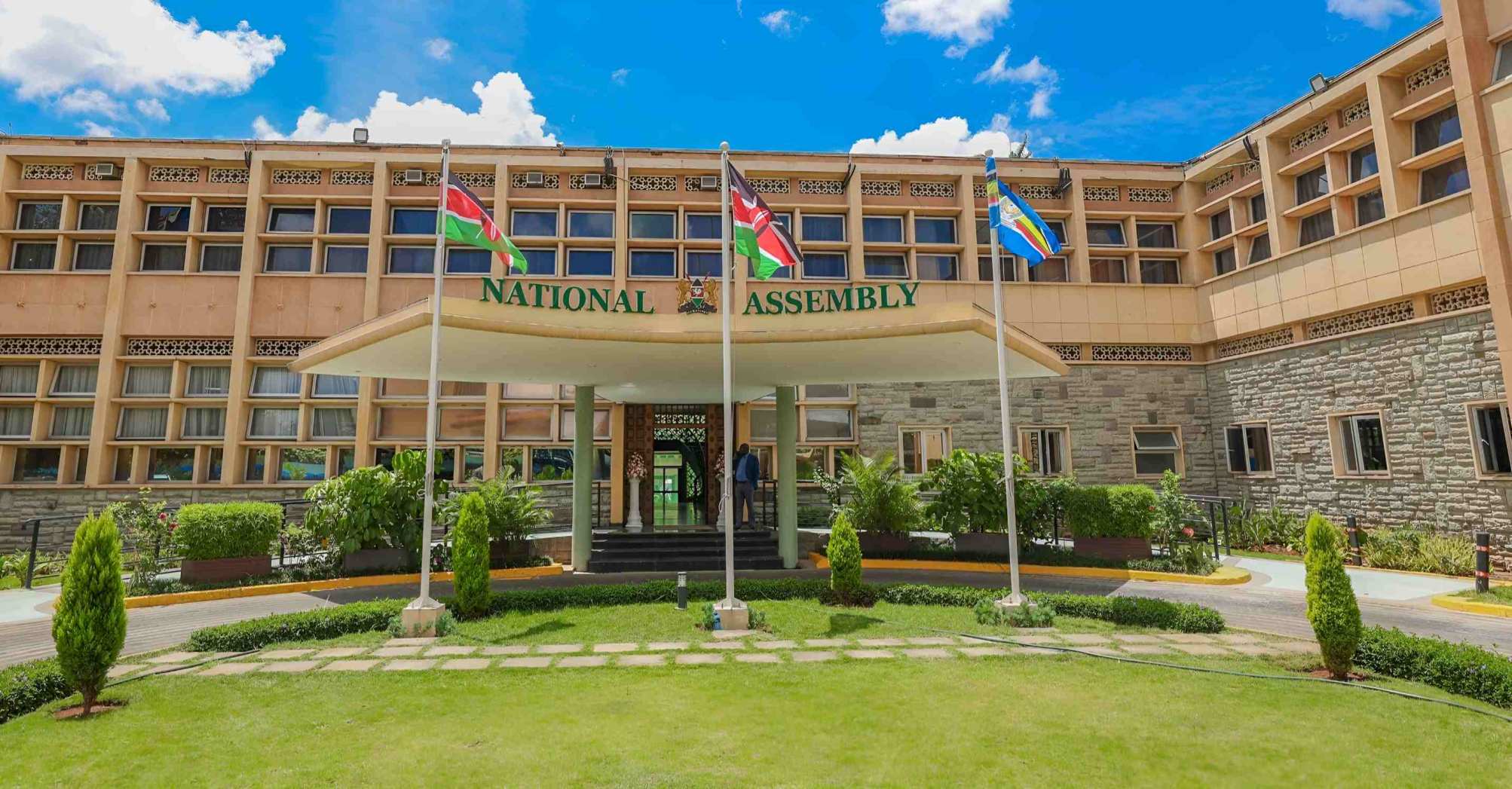
Plans to create a new body to regulate forensic science services have come under scrutiny in Parliament, with lawmakers questioning its cost, staffing arrangements and the need to add another board to the Government structure.
Members of the Departmental Committee on Administration and Internal Security also want the Government to clarify how the proposed National Forensic Science Laboratory will be funded, who will recruit its specialists and how private laboratories will be monitored once the proposed National Forensic Science Bill, 2026, becomes law.
The concerns emerged during a meeting between the committee and the State Department for Internal Security and National Administration at Lake Naivasha Resort in Nakuru County.
Homa Bay Town MP Peter Kaluma questioned why the Government Chemist could not instead be given an independent structure with a defined mandate and accountability framework.
“You have independent offices, and then you just structure the body downwards based on the mandate the office is given,” Kaluma said.
Kaluma said the proposed board could add to the growing number of State agencies whose operations require public funding.
“I don’t see the need for that board,” he said, challenging officials to demonstrate why the Government Chemist could not function as a single office rather than have a separate regulatory board established alongside it.
He also raised questions about the proposal to give the Public Service Commission responsibility for hiring forensic scientists, saying recruitment of highly specialised personnel should take into account the technical needs of the institution.
“Do we know the level of expertise, and therefore the type of person with what qualification and experience to employ?” Kaluma asked.
The MP referred to past disagreements between the Public Service Commission and the Office of the Attorney-General over the recruitment of specialised personnel.
He argued that an institution dealing with forensic science would be better placed to identify the qualifications and experience required for its technical positions.
Deputy Chief State Counsel in the State Department for Internal Security and National Administration Kepha Onyiso said the concern was valid and indicated that the recruitment arrangement could require further discussion.
“Ideally, I prefer the organisation to do that recruitment because there are a lot of parameters that the PSC might not be aware of,” Onyiso said.
Onyiso said the question of recruitment authority had previously been taken to court in a dispute involving the PSC and the Attorney-General’s office, with the case advancing through the judicial process.
He said the State Department was ready to continue discussions with the committee on the proposed governance model.
The financial side of the proposed reforms also came under close examination, with committee chairman and Narok West MP Gabriel Tongoyo seeking details of the revenue generated by the Government Chemist.
Tongoyo wanted to know how much the department currently receives from charges for its services and whether the income could help meet the cost of running the proposed regulatory framework.
“You are going to have board members and staff. They will need funding,” Tongoyo said.
He asked officials to provide the department’s annual collections, estimates of what could be raised under the proposed system and whether the money would help lower reliance on the Exchequer.
Government Chemist William Kailo Munyoki told the committee that the department currently collects about Sh16 million a year, while its budget stands at approximately Sh490 million.
Munyoki said collections could be much higher if charges were imposed across all services, but said the Government would need to consider the nature of forensic work before introducing such a system.
“If we charge everybody who comes to the lab, we can get even Sh400 million,” Munyoki said, adding that such charges would still need to be considered alongside the Government’s obligation to provide essential forensic services.
He further told the committee that the Government Chemist has a development allocation of about Sh40 million in the current financial year for a project estimated to cost Sh129 million in total.
Munyoki said one of the main purposes of the Bill was to draw a clear line between regulation of forensic services and the actual laboratory work.
The proposed National Forensic Science Regulatory Board would register and license forensic service providers and set standards for the sector, including private laboratories.
The National Forensic Science Laboratory, on the other hand, would carry out forensic analysis under the Government Chemist.
“The board is not managing the Government Chemist. That board is only to provide advice and also regulate, register and licence forensic science providers,” he said.
Munyoki said the Government Chemist would sit on the regulatory board while continuing to oversee the daily operations of the National Forensic Science Laboratory.
He said the proposed structure would also help resolve confusion over the use of the term Government Chemist, which can refer either to the department or the person heading the office.
Existing Government Chemist employees would be transferred to the proposed National Forensic Science Laboratory under the new arrangement but would continue serving under the Public Service Commission.
According to Munyoki, this would help contain the financial effect of the new law because the major additional costs would mainly involve setting up the regulatory board and creating the registrar’s office.
Teso North MP Edward Oku Kaunya urged officials to establish the full budgetary effect of the Bill before the legislation is completed.
“If you have not looked at that aspect, whether there is financial or budgetary implication or not, you need to,” Kaunya said.
The committee also sought clarification on the place of private forensic experts and laboratories in the proposed system.
Kaluma asked whether the Government Chemist would be expected to supervise other providers while private laboratories retained the right to offer forensic services.
Munyoki said the proposed regulatory board would cover both government and private providers.
Its responsibilities would include setting standards, registering practitioners and licensing laboratories. It would also have powers to suspend or revoke licences where providers failed to comply with the required standards.
Another area that drew concern was the question of payment for forensic work arising from criminal investigations.
Government Chemist official Daniel Boit cautioned that charging for every examination could make it difficult for people with limited financial means to access justice.
He referred to investigations involving suspected narcotics and sexual offences, where forensic tests can be needed before a prosecution is pursued.
“If we were to put the burden on the station to pay, there are chances that this cost might be directly or indirectly taken to the complainant,” Mr Boit said.
Boit said participants in public consultations on the Bill had asked the Government to finance forensic services rather than transfer the expense to members of the public.
“The best practice, from our experience, would be increased budgetary allocation to our services, so that this service can be offered to the citizens of this country,” he said.
Kaluma proposed that the Bill could separate forensic services linked to public criminal investigations from areas where private providers could operate.
He suggested that the law could provide for greater evidentiary weight for certain Government Chemist reports while still permitting private forensic laboratories to provide services in appropriate cases.
The committee also questioned the officials on the countries whose forensic systems had been studied during preparation of the proposed legislation.
Munyoki said Kenya had examined systems in South Africa, Rwanda, Uganda, Tanzania, the United Kingdom and the Netherlands.
He said Tanzania had converted its Government Chemist into an authority with a full board and expanded responsibilities, including oversight of some chemical imports.
Rwanda, he said, established a Forensic Science Institute that brings together different players, while Uganda has a Government Laboratory operating alongside forensic facilities run by the police.
Mauritius and Malaysia were also cited among countries whose forensic science systems had developed further.
When Tongoyo asked which country could provide a useful model for Parliament, Munyoki identified Tanzania while also pointing to lessons that could be drawn from the United Kingdom.
The proposed law would also introduce anti-doping analysis as part of the country’s forensic services, an area Munyoki said had previously been lacking despite Kenya’s international prominence in athletics.
He said the reforms are intended in part to tackle existing backlogs and improve both the quality and speed of forensic examinations.
Kaluma also sought clarification on the role played by the Office of the Attorney-General and the Kenya Law Reform Commission in preparing the Bill.
He asked whether the two institutions had been adequately involved before the proposal reached Parliament.
Munyoki said officials from the Kenya Law Reform Commission and the Attorney-General’s office had participated in the drafting process through a technical committee formed during the police reforms process.
He said several government agencies had prepared their own draft Bills, which were later brought together for discussions and harmonisation.
Onyiso told the committee that public participation had already been carried out and that the State Department would continue working with MPs on the proposed legislation.
“We have done public participation, and with this consultation with the committee, we want it to come to you as soon as possible,” he said.