
Kenyans working in Gulf countries who find themselves trapped in abusive homes or facing emergencies abroad may continue to struggle without help, with Members of Parliament accusing government agencies of failing to provide the support needed to protect them.
The legislators have raised concerns over the limited capacity of Kenyan diplomatic missions to respond to distress calls, questioning why vulnerable workers are forced to depend on private individuals and community fundraising to escape difficult situations or bring deceased relatives back home.
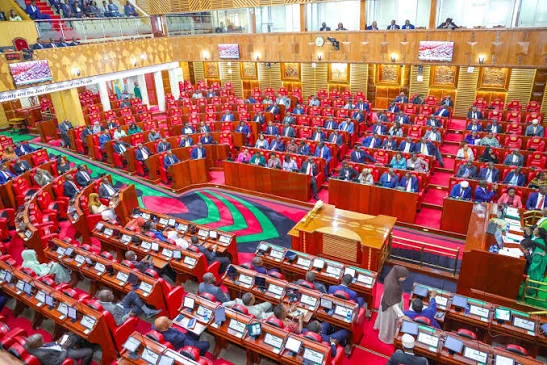
The concerns were raised on Tuesday, November 3, during a meeting between the Departmental Committee on Labour and the State Department for Labour and Skills Development, led by Principal Secretary Shadrack Mwadime.
The committee was considering the International Convention on the Protection of the Rights of All Migrant Workers and Members of Their Families, which the Labour Ministry wants the National Assembly to approve for ratification.
Mwadime told the MPs that adopting the Convention would give Kenyan migrant workers stronger protection against exploitation, discrimination, forced labour, unequal pay and the alteration of employment contracts without their consent.
He said the agreement would also extend protection to Kenyans working abroad through irregular channels, including those in countries where Kenya does not have Bilateral Labour Agreements.
However, the presentation did little to ease the legislators' concerns, with members insisting that the government must address the practical challenges facing citizens abroad rather than concentrate on policy commitments.
Amina Dika (Tana River), drawing from her 12 years of living and working in Dubai, questioned the absence of safe accommodation facilities at Kenyan consulates for domestic workers escaping abusive employers.
She said some women who flee difficult working conditions have no choice but to seek refuge in private homes, while WhatsApp groups and contributions from Kenyans living abroad are often relied upon to organise their return or repatriate bodies of deceased citizens.
The committee also questioned reports of Kenyans being buried in foreign countries without their families' approval, saying the government needed to improve communication and coordination between diplomatic missions and relatives back home.
Another concern involved allegations that Kenyans were being recruited through informal networks operating in Dubai to join frontline fighting in the Russia-Ukraine conflict.
Members further pointed to operational challenges facing labour attachés in Riyadh, including a lack of official vehicles and difficulties accessing detention facilities where Kenyan workers may be held.
Committee Chairperson Kilifi South Ken Chonga said MPs were increasingly being approached by families seeking help for relatives working abroad, but their efforts to obtain assistance from the Ministry of Foreign and Diaspora Affairs had often failed.
He maintained that protecting migrant workers required cooperation between the Labour Ministry and Foreign Affairs, noting that diplomatic officials were expected to intervene when Kenyans faced immediate danger in foreign countries.
“I have personally called Foreign Affairs for my own people in Kilifi and I have not succeeded even a single time. Labour can put structures, but when a girl is locked in a house in the Gulf, it is Foreign Affairs that must act. That failure is what we must fix," said Hon. Chonga.
In his response, Mwadime acknowledged shortcomings in the handling of migrant workers' welfare cases, particularly those involving Kenyans who die abroad and are buried before their families are consulted.
He explained that such cases sometimes arise when information is not communicated promptly between relatives, foreign mortuaries and Kenyan diplomatic missions. Delays in reporting deaths may also result in mortuaries reaching the end of their legally permitted body-holding periods.
The PS added that recovering bodies after burial was not a straightforward process, as it required proceedings through foreign courts, with the Ministry of Foreign and Diaspora Affairs expected to lead the process.
"We agree that burying a citizen without family consent is tragic. It happens when cases are not reported to our missions on time and mortuaries exceed holding timelines. But this Convention guarantees fundamental rights regardless of whether a worker used regular or irregular channels and it protects Kenyans even where there is no Bilateral Labour Agreement," said PS Mwadime.
To address the financial challenges associated with emergency assistance, the PS cited the proposed Kenya Migrant Workers Welfare Fund under the new Labour Migration Bill.
He said the proposed fund would provide resources to support Kenyans facing emergencies abroad, including interventions for workers in distress and arrangements to bring them back home.
Mwadime urged the National Assembly committee to back the ratification of the international agreement, saying it would help align Kenya's labour protection framework with national and international human rights commitments.
He also called for continued engagement with stakeholders to establish how the Convention would be implemented and ensure that migrant workers receive the protection guaranteed under the agreement.