
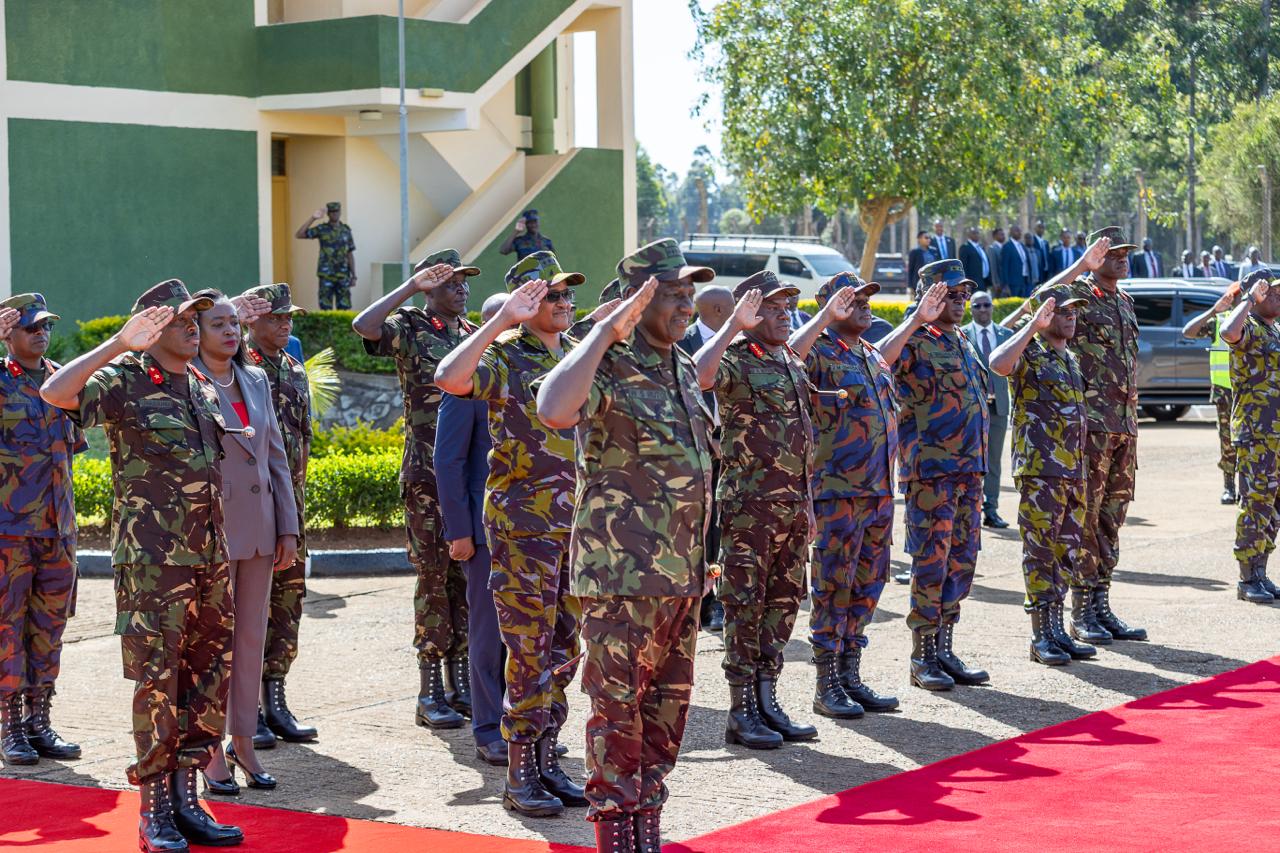
The Kenya Defence Forces could soon have greater authority over how foreign military personnel train and operate in the country, under proposals being prepared for consideration by Parliament.
The proposed changes would give the military a stronger hand in deciding whether Kenya should enter into Defence Cooperation Agreements (DCAs) with other countries and the conditions that should govern such partnerships.
The move follows the ongoing disagreement between Kenya and the United Kingdom over jurisdiction in cases where foreign soldiers are accused of committing offences while undertaking training in Kenya.
Under the proposals, the KDF would be expected to examine weapons brought into the country by foreign troops before they are used during exercises. The military would also assess whether planned activities could harm or disrupt communities living around training areas.
Another responsibility being considered for the KDF is determining the locations where foreign troops can conduct their exercises.
The draft rules would bar foreign countries from establishing military training camps in areas close to Kenya's international borders. This would, for example, prevent visiting troops from setting up a camp along the Kenya-Somalia border.
Lawmakers argue that allowing such facilities near the border could make it difficult for the KDF to carry out its responsibility of protecting Kenya's territorial boundaries.
There are also concerns that troops operating from camps near the border could unintentionally provide Kenya's perceived enemies with an opportunity to gain access to the country's territory. Another concern is the possibility of foreign troops being drawn into cooperation with hostile groups or forces.
The proposed framework also seeks to address how foreign troops compensate landowners and communities hosting their training activities.
The KDF would be expected to make sure that payments made to private ranchers do not differ greatly from what is given to local communities. The provision is aimed at preventing situations in which private landowners receive better payments than communities living in areas affected by military exercises.
"These are the templates that the Defence, Intelligence and Foreign Relations Committee will use to determine future Defence Cooperation Agreements" said an officer working on the document, to be presented to the House soon.
The proposals are being prepared at a time when the National Assembly is yet to agree with the UK on the renewal of the Defence Cooperation Agreement that allows the British Army Training Unit in Kenya (BATUK) to continue its military exercises in the country.
MPs want changes made to Articles 6(5) and 23 of the agreement, particularly to ensure that murder is placed under the jurisdiction of Kenyan courts.
Parliament is also demanding that the agreement contain a Corporate Social Responsibility component for BATUK.
Under the existing wording, some serious offences are left outside the meaning of "official duty", a provision that gives Kenya primary jurisdiction over those cases.
Murder, however, is not among the offences specifically excluded from that definition. This has left an opening for Britain to seek jurisdiction over murder cases involving its soldiers, a situation Kenyan lawmakers now want addressed.
The push for changes to the UK agreement comes as the National Assembly reviews three Defence Cooperation Agreements involving Kenya and foreign governments.
One of the agreements is with the Government of the Republic of Angola and was signed on May 25 by the Defence Cabinet Secretaries of Kenya and Angola.
The pact provides for cooperation in military training and exercises, as well as the sharing of information and intelligence.
It also covers maritime and cyber security, counterterrorism, counter-violent extremism and humanitarian operations.
The House is also considering a Defence Cooperation Agreement between Kenya and the Government of the Republic of Turkiye.
The wider review of the agreements is expected to shape how Kenya handles future military partnerships, with the proposed framework placing more responsibility on the KDF to assess security risks, training locations, weapons and the interests of communities hosting foreign forces.