Kenya sets aside Sh38.7 billion for JKIA expansion under new funding model
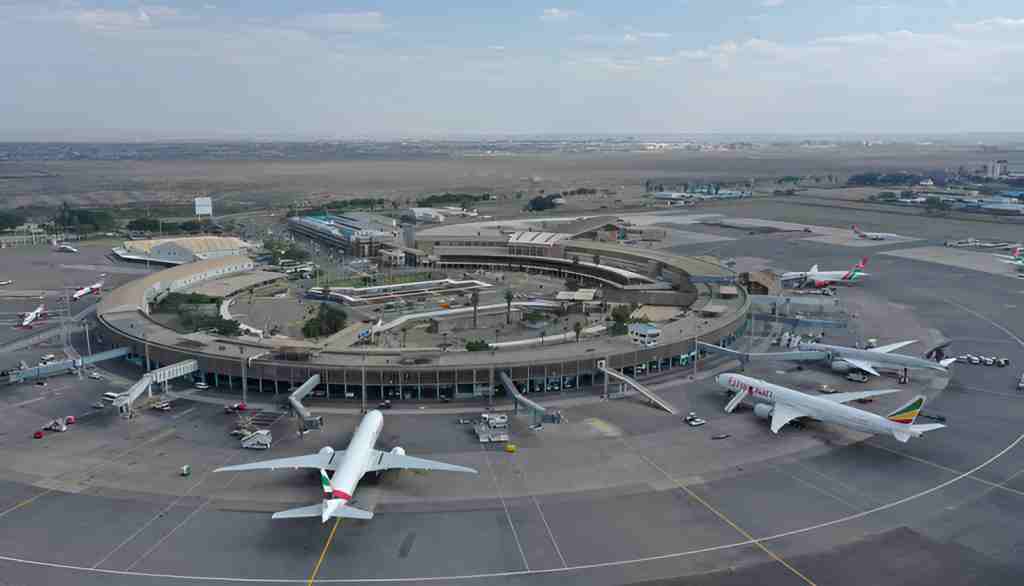
The allocation will be drawn from the National Infrastructure Fund and forms part of a broader financing structure for the airport overhaul, which is estimated to cost Sh193.7 billion. The amount set aside represents roughly 20 percent of the total project cost.
President William Ruto has unveiled a major funding push that will see Sh38.7 billion from proceeds of State asset sales channelled into the expansion and modernisation of Jomo Kenyatta International Airport (JKIA), in a move aimed at accelerating the upgrade of the country’s main aviation gateway while drawing in both local and foreign investors into the large-scale project.
The allocation will be drawn from the National Infrastructure Fund and forms part of a broader financing structure for the airport overhaul, which is estimated to cost Sh193.7 billion. The amount set aside represents roughly 20 percent of the total project cost.
The plan comes as Kenya reshapes its infrastructure development strategy following the cancellation of a proposed concession deal involving India’s Adani Group, which had earlier been lined up to handle the airport expansion under a long-term arrangement.
According to the Head of State, the government is now taking a more active investment role in key national projects while also working with private investors to share risks and returns.
“I want to tell the investors that you are not going to invest alone, we as government are also going to invest so that when you make money, we also make money for our people,” President Ruto said.
“We are going to invest so that we can de-risk that investment. We are building a new airport in Nairobi which is going to cost us around $1.5 billion and it presents an opportunity for investment. Government of Kenya is going to put in 20.0 percent,” he added.
The National Infrastructure Fund is projected to grow to Sh387.4 billion by the end of July, supported by proceeds from major State transactions, including the Kenya Pipeline Company initial public offering and partial divestiture from Safaricom Plc.
So far, Sh106.3 billion from the sale of a 65 percent stake in Kenya Pipeline Company has already been injected into the fund, forming part of the seed capital for major infrastructure projects across the country.
The government is also considering raising additional financing through a bond or long-term borrowing, backed by future revenues from the air passenger service levy under a securitisation framework.
Under this model, expected future income is packaged into tradable securities and sold to investors, allowing the State to access upfront capital while repaying through future cash flows.
The air passenger service levy, which charges $50 (Sh6,450) for international passengers and Sh600 for domestic travellers, has been identified as one of the key revenue sources for the planned borrowing structure. Sh18.5 billion from the levy had earlier been earmarked for backing the project financing.
“We are going to invest so that we can de-risk that investment. We are building a new airport in Nairobi which is going to cost us around $1.5 billion and it presents an opportunity for investment. Government of Kenya is going to put in 20.0 percent,” the President said.
The JKIA expansion will focus on upgrading existing terminals, expanding runway capacity, and improving passenger handling systems. It will also include digital upgrades such as modern check-in systems and enhanced security screening technology.
Terminal expansion and reconfiguration are also part of the plan, aimed at easing congestion and improving efficiency at the airport as passenger numbers continue to grow.
Following the collapse of the Adani Group deal, Kenya shifted focus to international development financiers, engaging institutions such as the Japan International Cooperation Agency, China Exim Bank, KFW, the European Investment Bank and the African Development Bank for possible support.
The earlier proposal had envisioned Adani Group operating and expanding JKIA under a 30-year lease, but the arrangement was abandoned after its executives were indicted in the United States over corruption-related allegations tied to unrelated energy contracts in India.
The current funding framework is anchored under the National Infrastructure Fund, established through legislation signed by President Ruto on March 9, 2026, which ensures that proceeds from State asset sales are reserved for strategic infrastructure development.




Comments
Sign in with Google to comment, reply, and like comments.
Continue with Google