
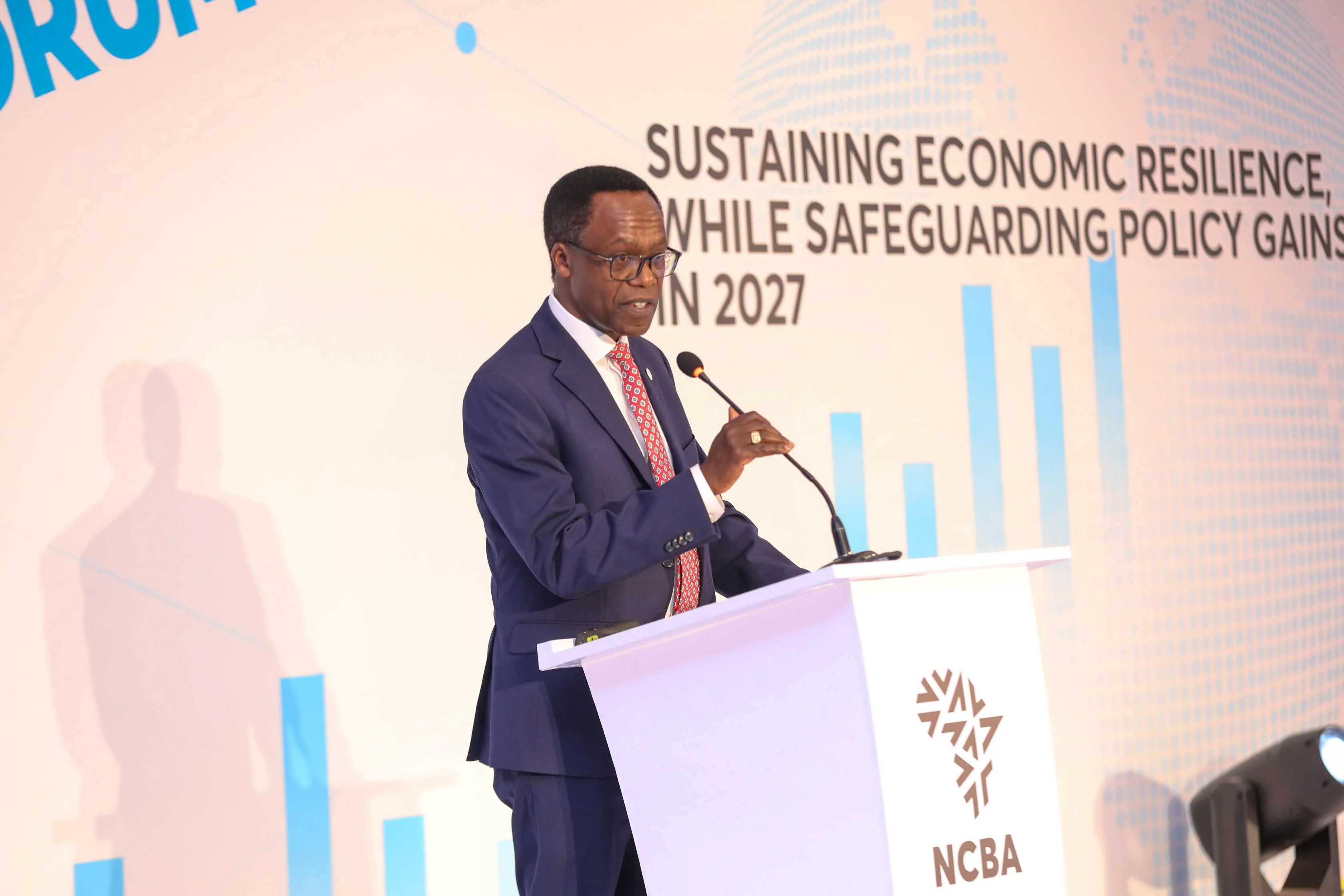
NCBA Group has lowered its forecast for Kenya's economic growth in 2026 to 4.8 per cent from an earlier projection of 5.1 per cent, citing global uncertainty, domestic economic pressures and the impact of successive external shocks.
The regional banking group expects the economy to expand by between 4.0 and 5.0 per cent in 2027, warning that geopolitical tensions, volatile commodity prices, changing weather patterns and the upcoming general election could weigh on growth.
Speaking at the NCBA Economic Forum 2026 in Nairobi on Tuesday, Group Managing Director and Chief Executive John Gachora said Kenya had demonstrated resilience but needed stronger measures to protect its economic gains.
The forum, held under the theme “Sustaining Economic Resilience, While Safeguarding Policy Gains in 2027”, brought together National Treasury Cabinet Secretary John Mbadi, World Bank Division Director for Kenya, Rwanda, Somalia and Uganda Dr Qimiao Fan, and President's Council of Economic Advisors chairperson David Ndii, among other participants.
Gachora said the economic outlook had been affected by several international developments, including the Middle East crisis, the Russia-Ukraine conflict, monetary policy tightening in major economies and volatility in sovereign bond markets.
“The year 2026 has been characterized by a convergence of shocks, including the crisis in the Middle East, the ongoing Russia-Ukraine conflict, a sudden tightening of monetary policy in several key economies and volatility in sovereign bond markets.
“While our economy has remained resilient, our capacity to absorb successive shocks is not limitless. Our task is therefore twofold: to safeguard the gains made so far while accelerating growth,” Gachora said.
He said the country's next phase of economic expansion would depend on its ability to sustain investment, improve productivity and strengthen sectors that create employment and generate exports.
Treasury Cabinet Secretary John Mbadi, meanwhile, highlighted improvements in Kenya's macroeconomic position since 2022, noting that the economy recorded average growth of 5 per cent between 2022 and 2025.
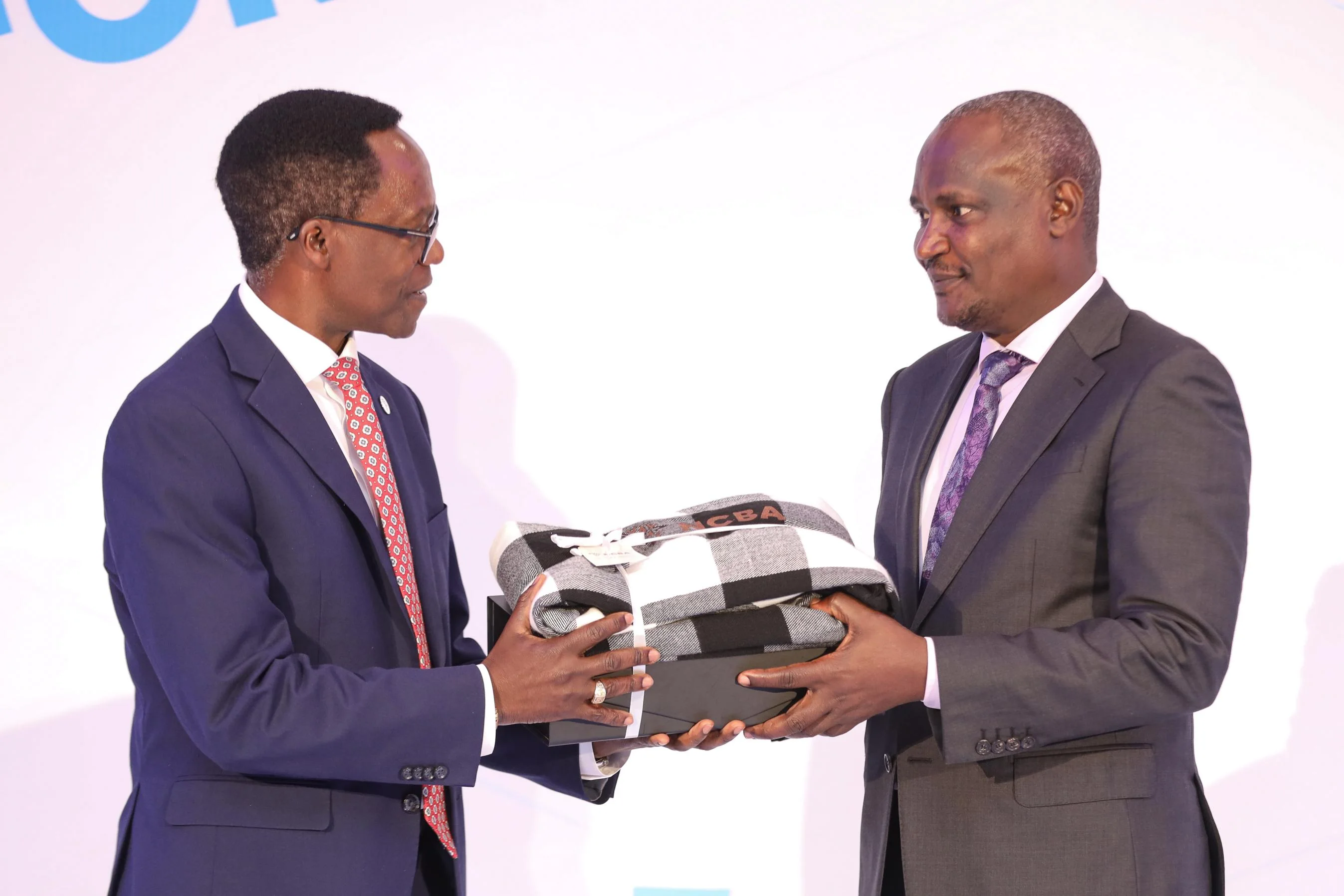
He said inflation stood at 7.3 per cent in October 2026, while the shilling had strengthened to an average of about Sh129.90 against the US dollar.
Foreign exchange reserves had also risen to $14.9 billion, equivalent to 6.1 months of import cover, according to the Treasury Cabinet Secretary.
However, Mbadi warned that sustaining the gains would require fiscal discipline, more efficient public spending, stronger revenue collection and prudent debt management.
He pointed to rising expenditure pressures, including domestic debt interest payments and pension obligations, as constraints on the government's available financial resources.
The Treasury projects Kenya's economy will grow by 5.1 per cent in 2027, with inflation remaining within the target range and the shilling maintaining stability.
“We project economic growth of 5.1 per cent in 2027, with inflation remaining within target and the shilling maintaining stability. Safeguarding these gains will require sustained fiscal discipline, improved revenue mobilisation and better management of public expenditure,” Mbadi maintained.
He added that the government was pursuing reforms aimed at improving access to credit, including transparent, risk-based lending rates anchored on the Kenya Shilling Overnight Interbank Average (KESONIA), modernised payment systems and changes to the Credit Guarantee Scheme to increase lending to small and medium-sized enterprises.
Ndii said improving activity in agriculture, manufacturing and other sectors pointed to stronger economic momentum, citing increases in milk, sugar and coffee production as well as vehicle registrations.
He said some of the improvements were not yet reflected in official economic statistics.
Ndii also pointed to an investment pipeline estimated at $45.7 billion across infrastructure, manufacturing, agriculture and information and communications technology.
The proposed National Infrastructure Fund is expected to mobilise $10 billion, while a proposed $24 billion Lamu Port and oil complex investment could expand export capacity and strengthen regional integration.
The forum concluded with calls for closer cooperation between the government, private sector and development partners to protect macroeconomic stability, attract investment, expand productive capacity and sustain job creation as Kenya approaches 2027.