President Ruto breaks ground Naivasha–Kisumu–Malaba SGR to boost regional trade
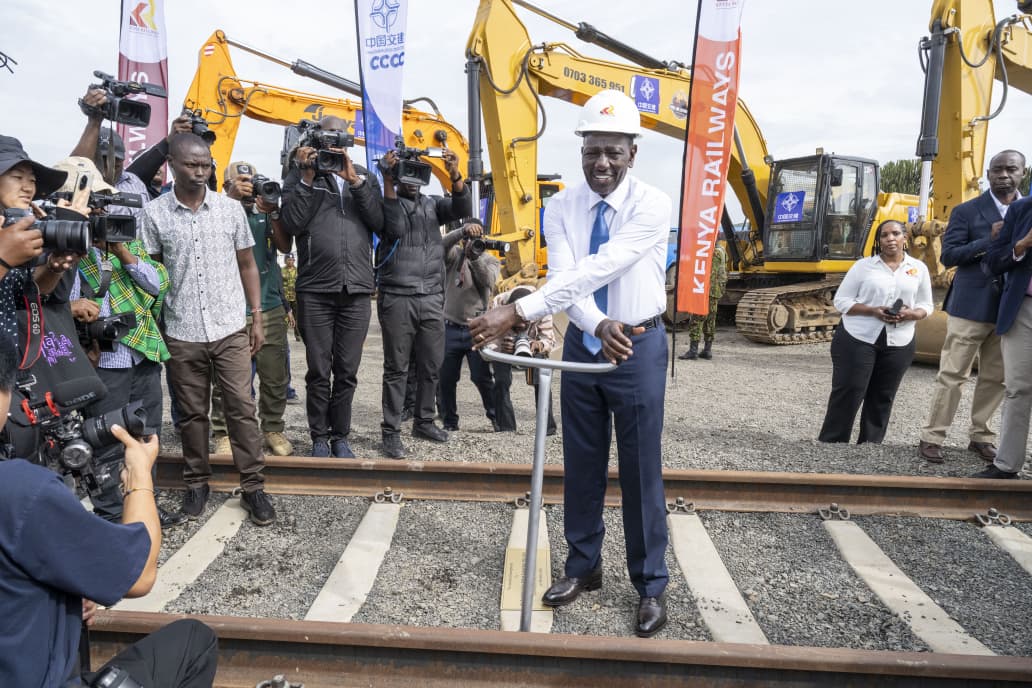
President William Ruto has launched construction of the Naivasha–Kisumu–Malaba SGR, a nearly 1,000km line aimed at cutting transport costs and boosting regional trade competitiveness.
President William Ruto has launched the construction of the Naivasha–Kisumu–Malaba Standard Gauge Railway, presenting it as a major step toward lowering transport costs, improving connectivity, and strengthening Kenya’s position as a trade hub in Africa.
Speaking during the groundbreaking ceremony in Narok County on Thursday, the president said the nearly 1,000-kilometre railway will link Nairobi to the Lake Victoria region and extend to the Ugandan border, opening up key production zones and improving the movement of goods and people across the country.
He said the project is designed to connect Kenya more efficiently, reduce the cost of doing business, and anchor the country at the centre of trade in the Great Lakes region and across the continent.
Ruto traced the roots of Kenya’s railway system back to the 1890s, noting that it has long shaped both the national economy and the wider region. He recalled that the 2014 decision, made alongside former President Uhuru Kenyatta, to construct the SGR marked what he called a bold and historic move to modernise that legacy.
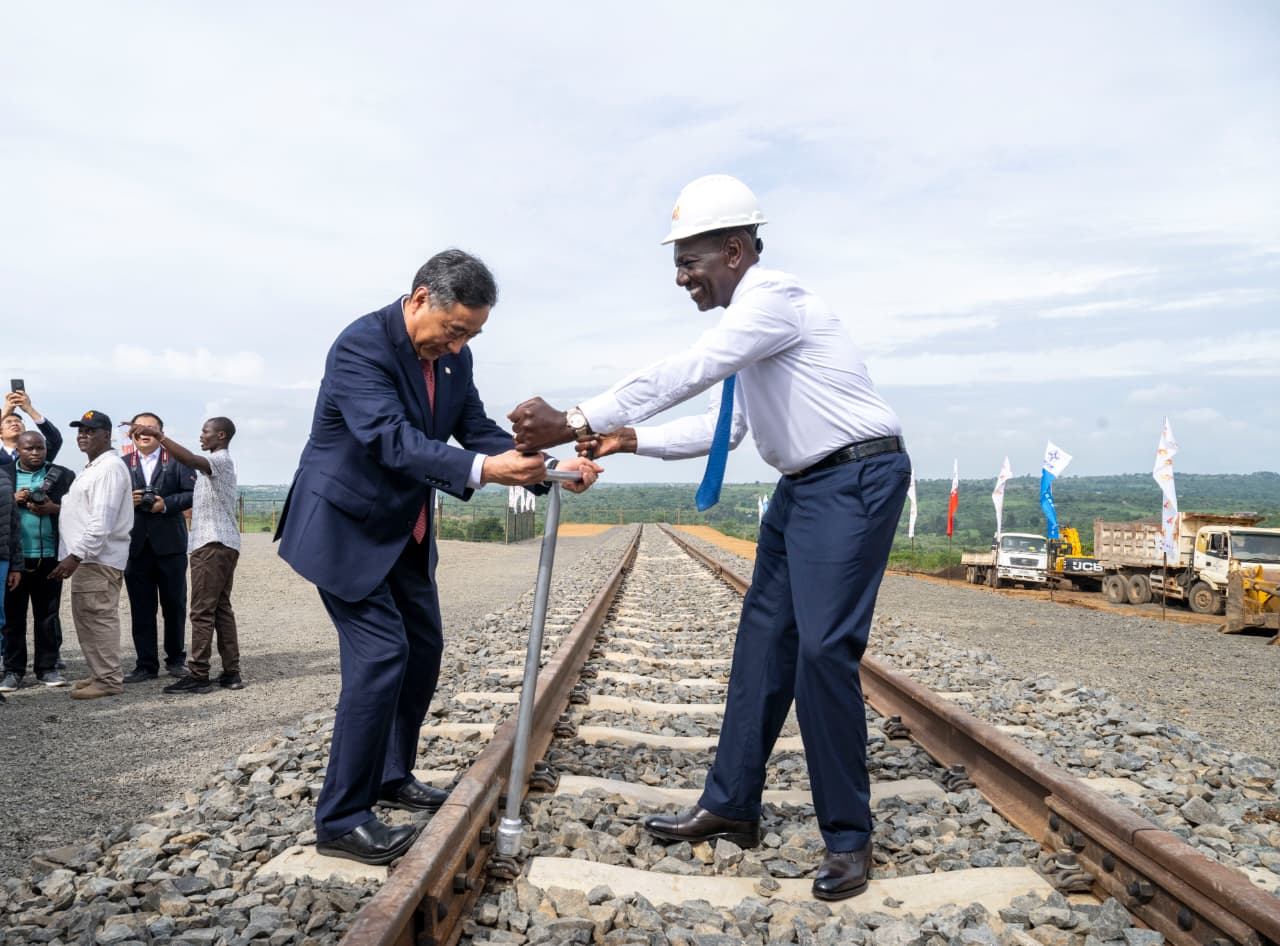 President William Ruto with China Communications Construction Company Chairman, Song Hailiang during the groundbreaking ceremony for the land-mark construction of the Naivasha-Kisumu-Malaba Standard Gauge Railway line in Narok on March 19, 2026 PHOTOS/PCS
Highlighting current performance, the president said SGR freight operations generate more than 1.3 billion shillings every month, while passenger revenue has grown steadily.
“SGR trade operations generate more than 1.3 billion shillings every month,” he said, adding that passenger earnings have “grown by about 40%, surpassing the 4 billion shilling mark annually.”
He pointed out that in December 2025 alone, passenger revenue reached 602 million shillings, describing the figures as “clear evidence of a modern railway that is working and delivering for our economy.”
Even so, Ruto admitted that the railway’s reach remains limited in its current form.
“A railway that terminates at Narok is, by definition, incomplete,” he said, explaining that it fails to connect key agricultural regions in western Kenya or integrate with lake transport in Kisumu, reducing its full economic impact.
He raised concern over delays in cargo movement, noting that goods still take “up to 80 hours from Mombasa to Malaba and over 100 hours to Kampala,” warning that “a slow transport corridor inevitably loses business and weakens our competitiveness as a nation.”
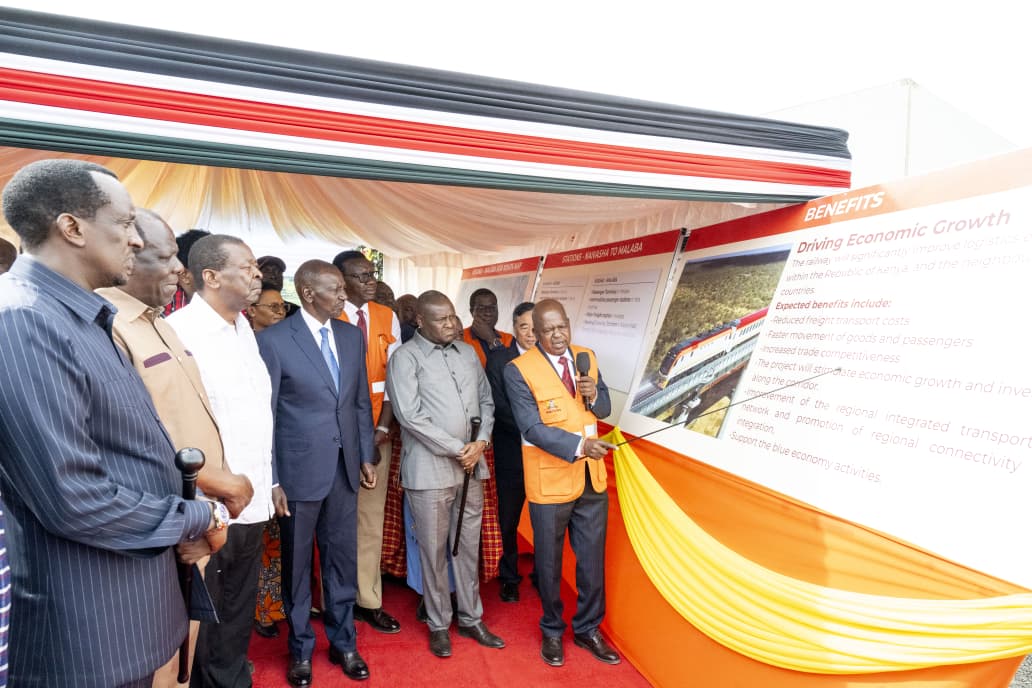 President William Ruto leads groundbreaking ceremony for the land-mark construction of the Naivasha-Kisumu-Malaba Standard Gauge Railway line in Narok on March 19, 2026 PHOTOS/PCS
The president described the 262.3-kilometre Narok–Kisumu section as more than just an extension.
“Not just an extension but a strategic economic intervention,” he said, adding that it will link Nairobi’s industrial corridor with farming regions such as Narok, Kericho, and Nyamira before reaching Kisumu.
According to Ruto, the railway is backed by strong economic reasoning, with expected gains including lower transport costs, increased trade, and job creation.
“Every reduction in logistics cost translate into lower food prices, more affordable construction and greater industrial competitiveness,” he said.
He added that the project will turn the SGR into “a two way economic system, moving not only imports inland, but also exports outward,” while also easing pressure on roads by shifting cargo to rail.
This, he said, will help “reducing accidents, lowering maintenance costs and saving lives.”
The president also said the line will transform Kisumu into a major logistics hub by bringing together rail, road, and lake transport systems to serve Kenya and neighbouring countries.
While acknowledging the high cost of the project, which runs into billions of shillings, he said the government has planned its financing carefully. He noted that the approach will be trade driven, phased, and supported by innovative funding methods.
Ruto stressed the regional importance of the railway, pointing out that countries including Uganda, Rwanda, Burundi, South Sudan, and the Democratic Republic of Congo depend on access to the sea through Kenya.
He warned that this advantage must be protected and strengthened, saying it is not guaranteed.
The president also confirmed that the next phase will begin soon.
“On Saturday, we will break ground on the 107 SGR phase 2c section linking the port city to the border town of Malaba,” he said.
He dismissed criticism of the project, especially claims that it is a “railway to nowhere.”
“We are just confirming to them that we had a plan. It was never a road to nowhere,” he said.
Song Hailiang, chairman of China Communications Construction Company, described the railway as a major long-term investment in infrastructure and regional connectivity.
Prime Cabinet Secretary Musalia Mudavadi also supported the initiative, saying it will benefit the wider East African region and that “it shall pay off.”
Ruto concluded by expressing confidence in Kenya’s economic direction, saying recent stability has created room for such large-scale development.
“The decisions we make today will shape the destiny and future of our nation tomorrow,” he said.



Comments
Sign in with Google to comment, reply, and like comments.
Continue with Google