Ruto roots Kenya–Tanzania ties in history, culture and shared identity
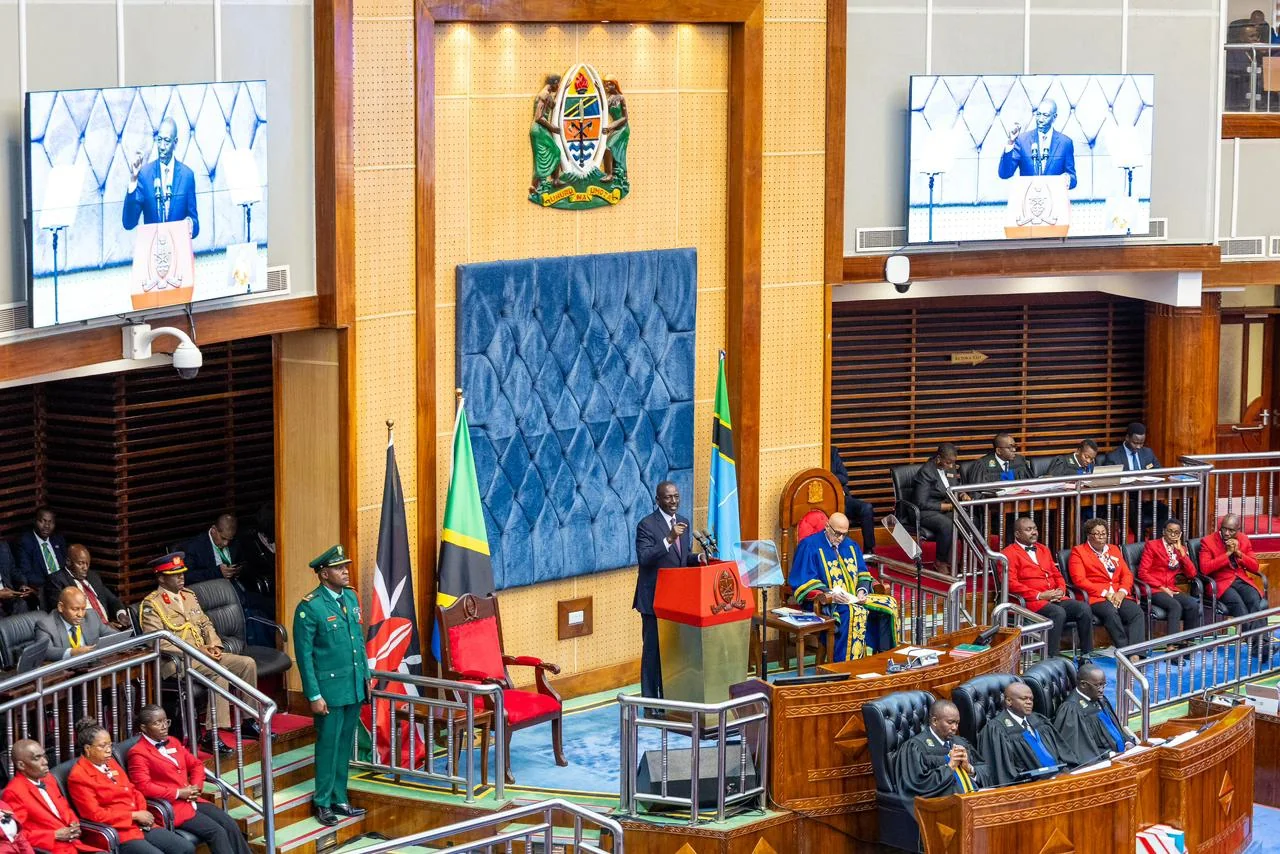
President William Ruto told Tanzania’s parliament that Kenya and Tanzania share cultural and linguistic unity. He highlighted Kiswahili, cross-border communities and the two countries’ long ties, urging leaders to strengthen bonds and cooperation.
President William Ruto has restated the close cultural and linguistic ties between Kenya and Tanzania, saying the two countries are bound by shared heritage, history and daily human interaction that continues to shape East Africa’s integration.
While addressing the Tanzania Parliament in Dodoma on Tuesday, the Head of State highlighted Kiswahili, cross-border communities and historical solidarity as key pillars that continue to connect the two nations. He urged leaders on both sides to protect and deepen these ties for future generations. Before the address, he held discussions with Tanzania’s National Assembly Speaker Mussa Azzan Zungu and later proceeded to the House to deliver his speech.
“Today, I stand here in reciprocity, not because we as Kenyans are your neighbors, not just your friends, nor even your partners. We are your brothers and sisters,” he said.
He said the relationship between Kenya and Tanzania is rooted in decades of shared struggle and cooperation, stretching back to the independence era and the vision of the founding leaders.
“Our Founding Fathers understood that Africa’s future would not be secured in isolation, but in unity,” he said.
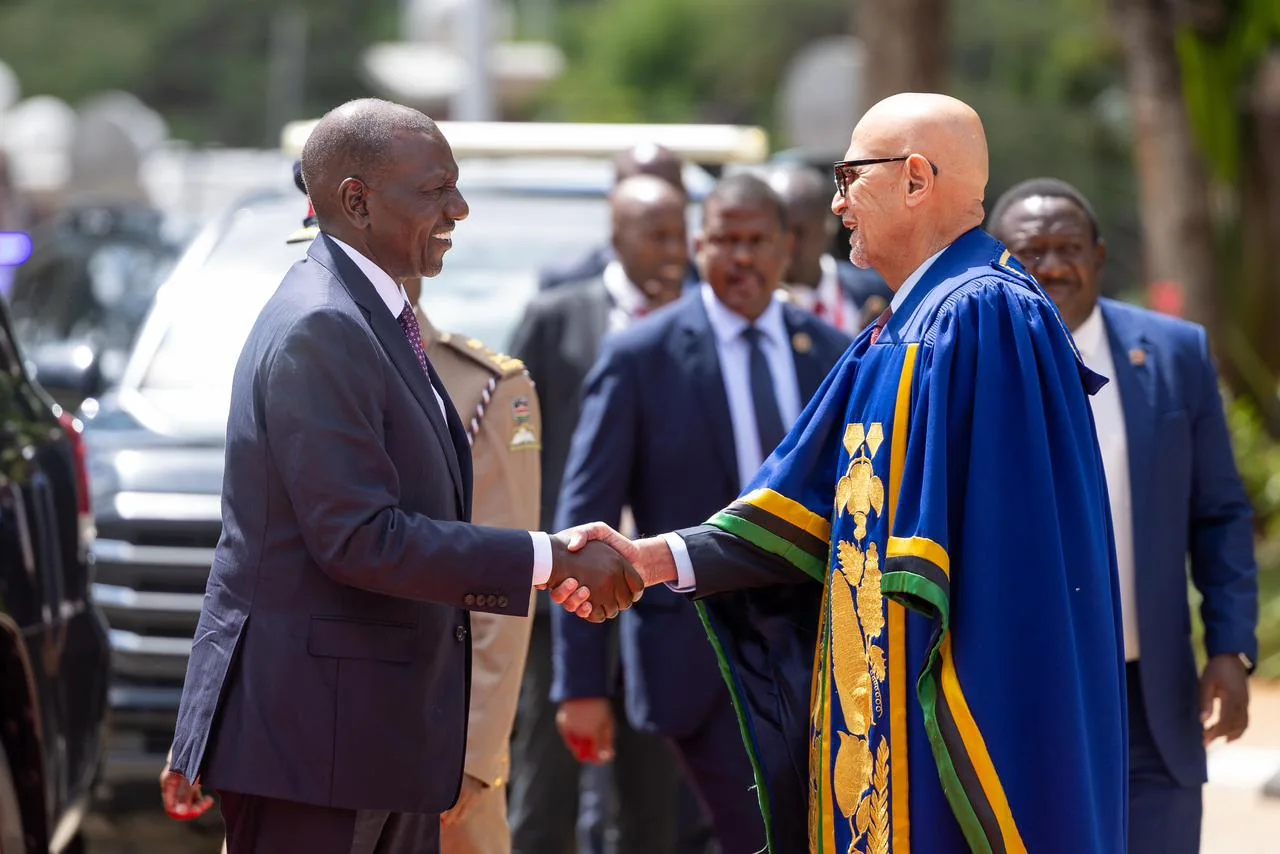
President William Ruto with Tanzania’s National Assembly Speaker, Mussa Azzan Zungu ahead of President William Ruto’s Tanzania Parliament address on May 5, 2026. PHOTO/PCSHe added that this vision continues to guide regional integration efforts, noting that East African countries share a common future that depends on cooperation.
“For decades, Tanzania and Kenya have walked side by side, a partnership forged in struggle and anchored in shared purpose,” he added.
A major focus of his address was language, where he pointed to Kiswahili as a central force in uniting people across borders.
“We share a language, Kiswahili, spoken by over 100 million people across East Africa, making it one of the most widely spoken African languages and a powerful unifying force across our borders,” he said.
President Ruto described Kiswahili as more than a communication tool, saying it reflects identity, belonging and regional connection.
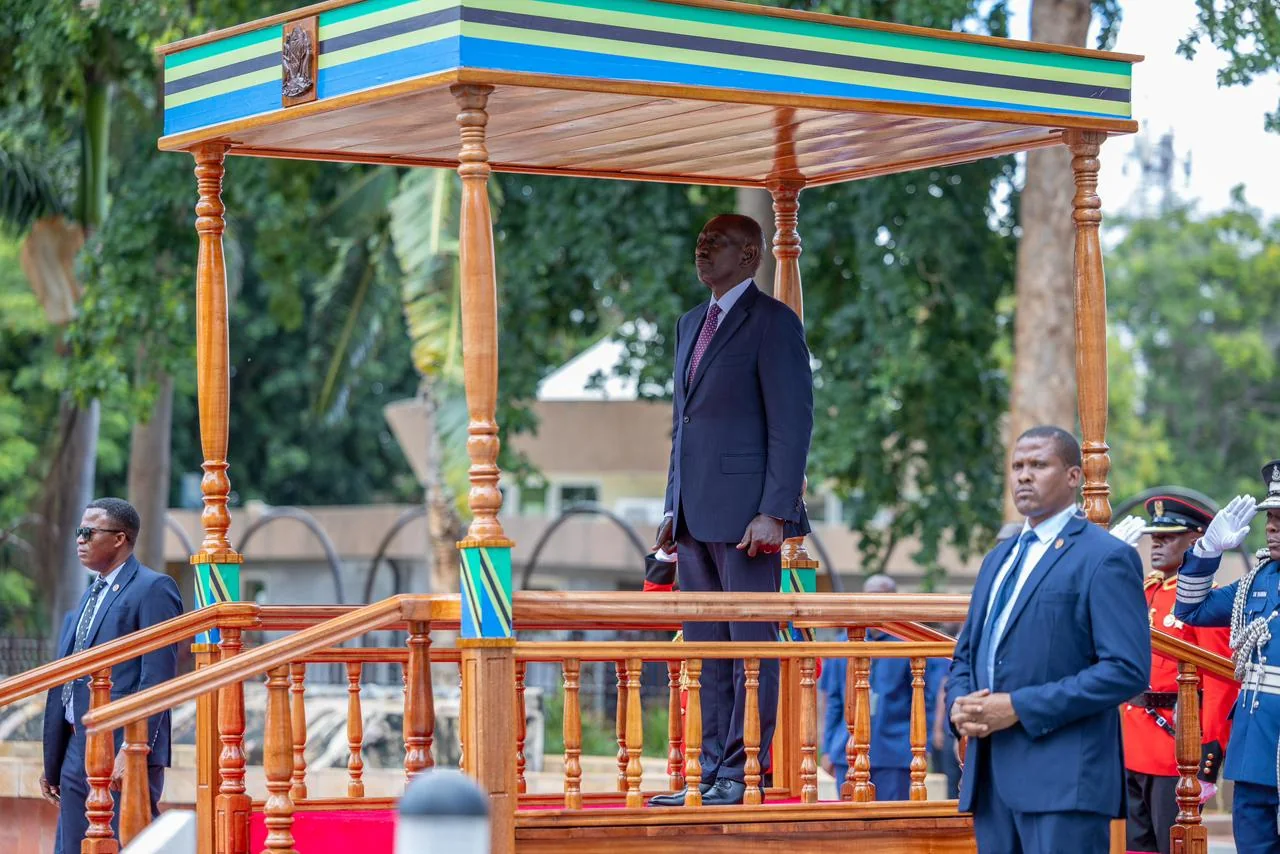
President William Ruto prepares to address Tanzania Parliament in Dodoma, Tanzania on May 5, 2026 PHOTOS/PCS
The President also highlighted communities that live across the Kenya–Tanzania border, saying they continue to strengthen social and economic ties between the two countries.
“We share communities such as the Maasai and the Kuria, whose lives straddle our boundaries, families that intermarry, traders who cross daily and entrepreneurs whose success depends on seamless movement of goods and services,” he said.
He noted that these interactions show how deeply the two countries are connected at a human level, beyond official borders and state systems.
Ruto further pointed to the nearly 800-kilometre border separating Kenya and Tanzania, saying it should be seen as a zone of connection rather than division.
“That boundary is not merely a line on the map. It binds our destinies as a vibrant corridor of trade, culture and human connection,” he said.
The border stretches from the Indian Ocean at Lunga Lunga, through trading and farming regions, and rises toward Mount Kilimanjaro, near the Amboseli area and northern Tanzania. He described it as a continuous space of movement and interaction between people on both sides.
He also drew from nature to explain the idea of unity, referring to the annual movement of wildlife across the Serengeti and Maasai Mara.
“Each year during the great migration, millions of animals move freely between the Serengeti and Maasai Mara, guided not by borders, but by survival. They do not stop at borders. They simply cross and return,” he said.
He said this natural movement reflects how human cooperation should work, where borders do not block shared life and interaction.
“What nature has made seamless, policy must not make it difficult,” he added.
Looking back at history, Ruto said Kenya and Tanzania have long supported each other, especially during the struggle for independence.
“Even during the struggle for independence, Tanzania stood with Kenya, affirming a shared belief in freedom, dignity and self-determination,” he said.
He warned that despite these long-standing ties, relations between the two countries have at times been affected by mistrust and competition.
“For far too long, relations have been shaped by competition, suspicion and rival forces that have fragmented our markets, weakened our voice and constrained our collective progress,” he said.
He called for renewed commitment to unity, saying stronger cultural and social links are key to future cooperation and shared prosperity.
“Our strength lies in moving forward together,” he said, adding, “We have one people. We have a common destiny.”
He concluded that cultural connection remains a strong foundation for building lasting partnerships between Kenya and Tanzania.




Comments
Sign in with Google to comment, reply, and like comments.
Continue with Google