
Sexual and Gender-Based Violence (SGBV) survivors are entitled to immediate and free emergency medical care regardless of their Social Health Authority (SHA) registration status, the National Gender and Equality Commission (NGEC) has said.
The commission has warned public health facilities against turning away survivors, charging them for treatment or requiring them to register with SHA before receiving urgent medical services.
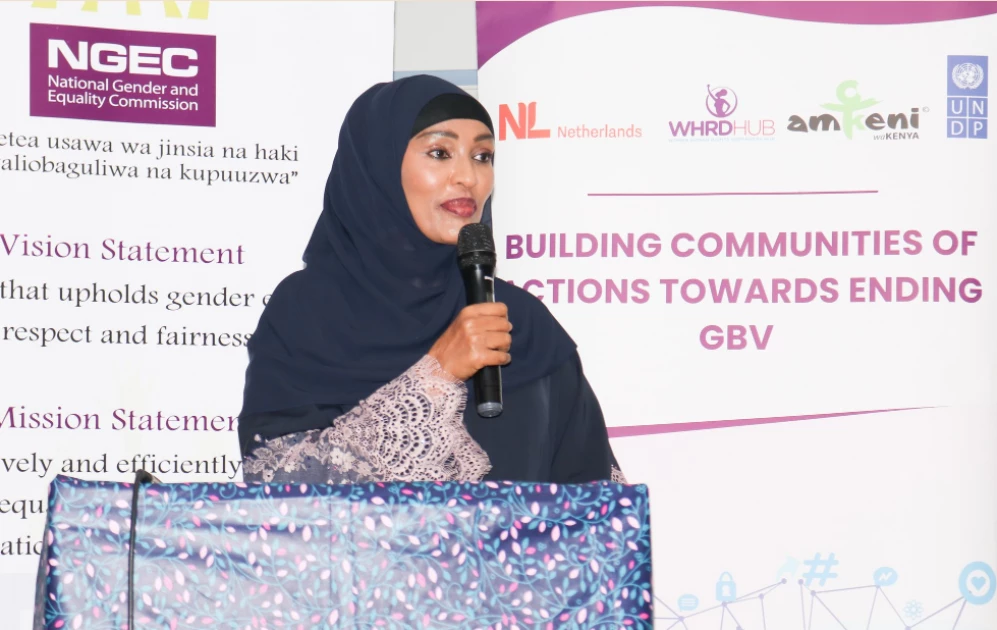
In a public advisory issued on Tuesday, NGEC chairperson Rehema Dida Jaldesa said survivors must be provided with timely, dignified and confidential care as required by law.
Jaldesa stated that no survivor should be denied medical attention based on their ability to pay, lack of a police report or failure to register with SHA.
"These services must be provided immediately, without discrimination, and regardless of whether you have registered with SHA, your ability to pay, whether you have a police report, or your age, gender or any other background," the advisory stated.
The commission outlined the services that survivors are entitled to access, including medical examination and treatment of injuries, Post-Exposure Prophylaxis (PEP) to prevent HIV infection within 72 hours, emergency contraception, Pre-Exposure Prophylaxis (PrEP) where medically appropriate, collection and preservation of forensic evidence, completion of P3 and Post Rape Care forms, as well as counselling and psychosocial support.
NGEC said these rights are protected under the Sexual Offences (Medical Treatment) Regulations, 2012 and the Constitution, which guarantee access to healthcare, dignity, equality and justice.
The commission cautioned health facilities and medical workers against refusing or delaying treatment due to SHA registration requirements, lack of donor funding or claims of unavailable supplies.
"Such actions violate your constitutional rights to health, dignity, equality and access to justice," NGEC said, citing Articles 27, 28, 43 and 48 of the Constitution and Regulation 3 of the Sexual Offences (Medical Treatment) Regulations, 2012.
The commission also warned against denying survivors forensic evidence collection or sending them away without care, saying such actions expose victims to further harm and deny them access to justice.
NGEC advised survivors who experience violations at health facilities to request to speak with the officer in charge or medical superintendent and record details of the incident, including the name of the facility, health workers involved, and the date and time of denial of services.
The commission urged affected survivors to report such cases to NGEC, the Kenya Police Gender Unit or Desk, or the relevant County Health Department.
It further encouraged survivors to seek medical attention as soon as possible, preferably within 72 hours, to increase the effectiveness of HIV prevention interventions.
"You do not need a police report before receiving medical treatment," the advisory stated.
NGEC called on members of the public to support survivors in accessing care, accompany them to health facilities where necessary and report institutions that deny or charge for SGBV-related services.
The commission also urged Kenyans to register with SHA to promote accountable and accessible healthcare services while stressing that survivor support must always be provided with confidentiality, dignity and respect.