
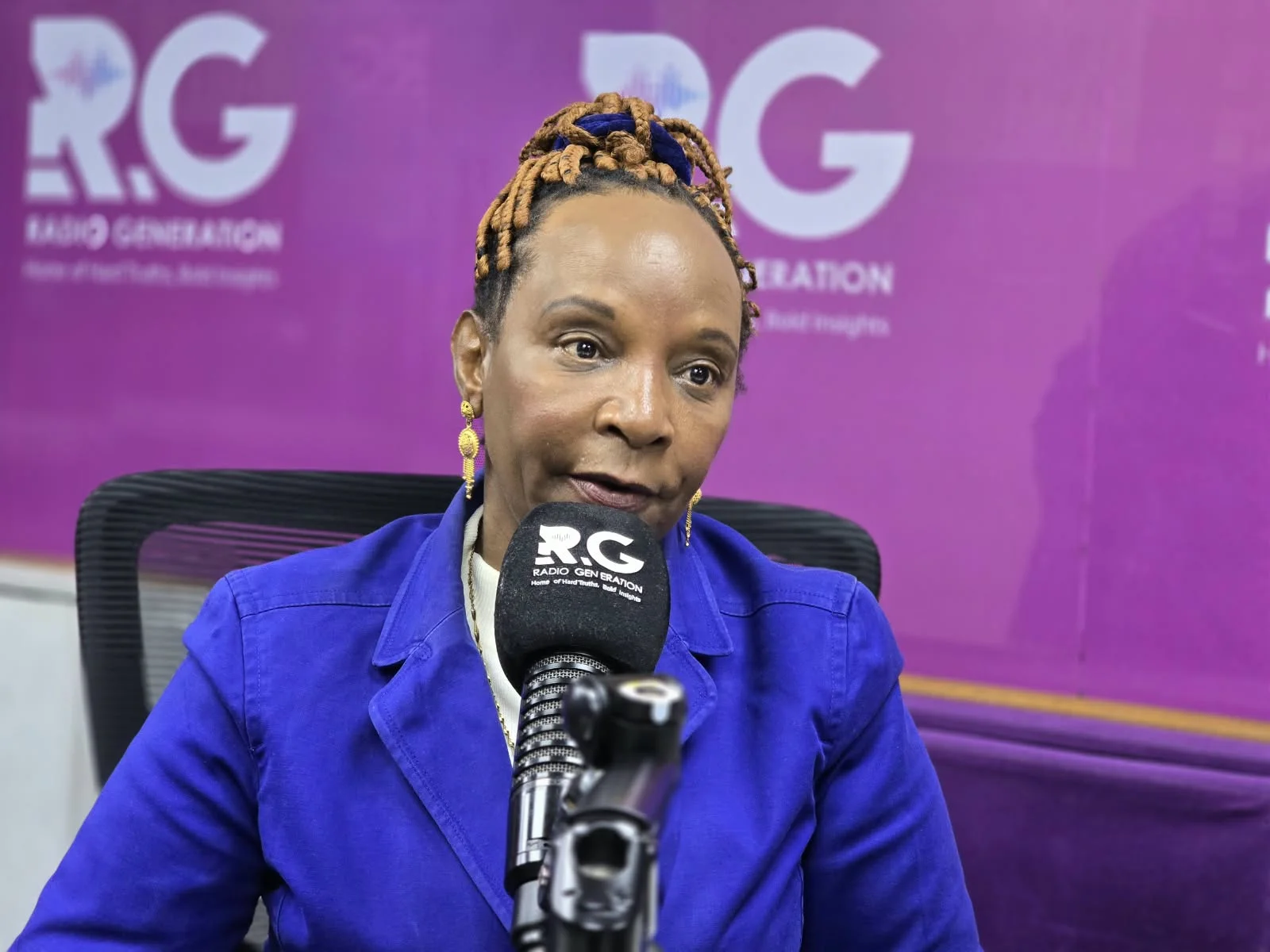
Development economist, human rights expert and gender equality advocate Sarah Mwakiuna Ntii Kilemi has criticized patriarchal cultural practices for limiting women’s participation in Kenya’s political life.
Speaking on Radio Generation on Tuesday, Kilemi said cultural expectations discourage women from openly challenging men, creating an environment where women can fear entering elective politics or speaking out when their rights are violated.
She said her engagement with communities had exposed how cultural beliefs influence perceptions of women seeking political office, particularly in traditionally patriarchal societies.
How patriarchal culture shapes views on women leaders
Kilemi cited discussions with elderly men in Meru during her assessment of the political environment, saying some of the views she encountered reflected longstanding beliefs about the role of women in leadership.
She added that such attitudes can shape how women leaders are judged, with political disagreements sometimes interpreted through gender rather than the issues at stake.
“When women do not frequent the political arena, when discussions are made, there is no space for them to say what they went through.”
Kilemi argued that the limited presence of women in political discussions allows men to dominate narratives about women leaders, particularly when female politicians become embroiled in political disputes.
She said this can reinforce perceptions that women are unsuitable for leadership and discourage other women from seeking elective positions.
Women remain underrepresented in Kenya’s politics
Kenya has made progress in increasing women's representation in politics, but women remain significantly underrepresented in elected positions.
According to UN Women, the number of elected women increased in the 2022 General Election, with women holding 201 of 1,882 elective seats, compared with 179 in 2017.
The number of women elected to the National Assembly rose from 23 to 29, while women governors increased from three to seven and female Members of County Assembly from 97 to 115.
The Inter-Parliamentary Union currently puts women's representation in Kenya's National Assembly at about 23%.
Its data shows that women account for 80 of the 348 current members for whom gender data is recorded.
The figures come despite constitutional provisions requiring the state to take measures to ensure that no more than two-thirds of members of elective or appointive bodies are of the same gender.
Article 27 of the Constitution guarantees women and men equal treatment and equal opportunities in political, economic, cultural and social spheres. It also requires legislative and other measures to implement the two-thirds gender principle.
Kilemi calls for action beyond legal protections
However, Kilemi maintained that legal protections alone cannot eliminate cultural attitudes that shape how society treats women.
She argued that cultural identity should be respected but should not be used to justify discrimination or deny women rights guaranteed by the Constitution.
Kilemi also challenged the idea that women are merely passive victims of patriarchal systems. She said women can sometimes reinforce these structures when they lack the support and institutional mechanisms needed to challenge discriminatory practices.
“Who facilitates patriarchy is the person who is at the receiving end. If the victim has no avenue of voicing what they are going through and has no support base to strengthen their voice, you know, we say the Constitution gives us voices, but we have not been given the status or the institutional capacity which enables the women then to overcome the cultural behavior, which also contributes to infringing their rights.”
The IPU says women seeking political office globally continue to face barriers linked to discrimination, cultural beliefs about women's roles, lack of political support, inadequate campaign resources, and violence, harassment, and intimidation.
Kilemi maintained that addressing these barriers requires communities to question patriarchal norms that restrict women's political agency.
She concluded that women should be able to participate in political leadership without being judged against cultural expectations that limit their ability to speak, challenge authority, or make decisions.