
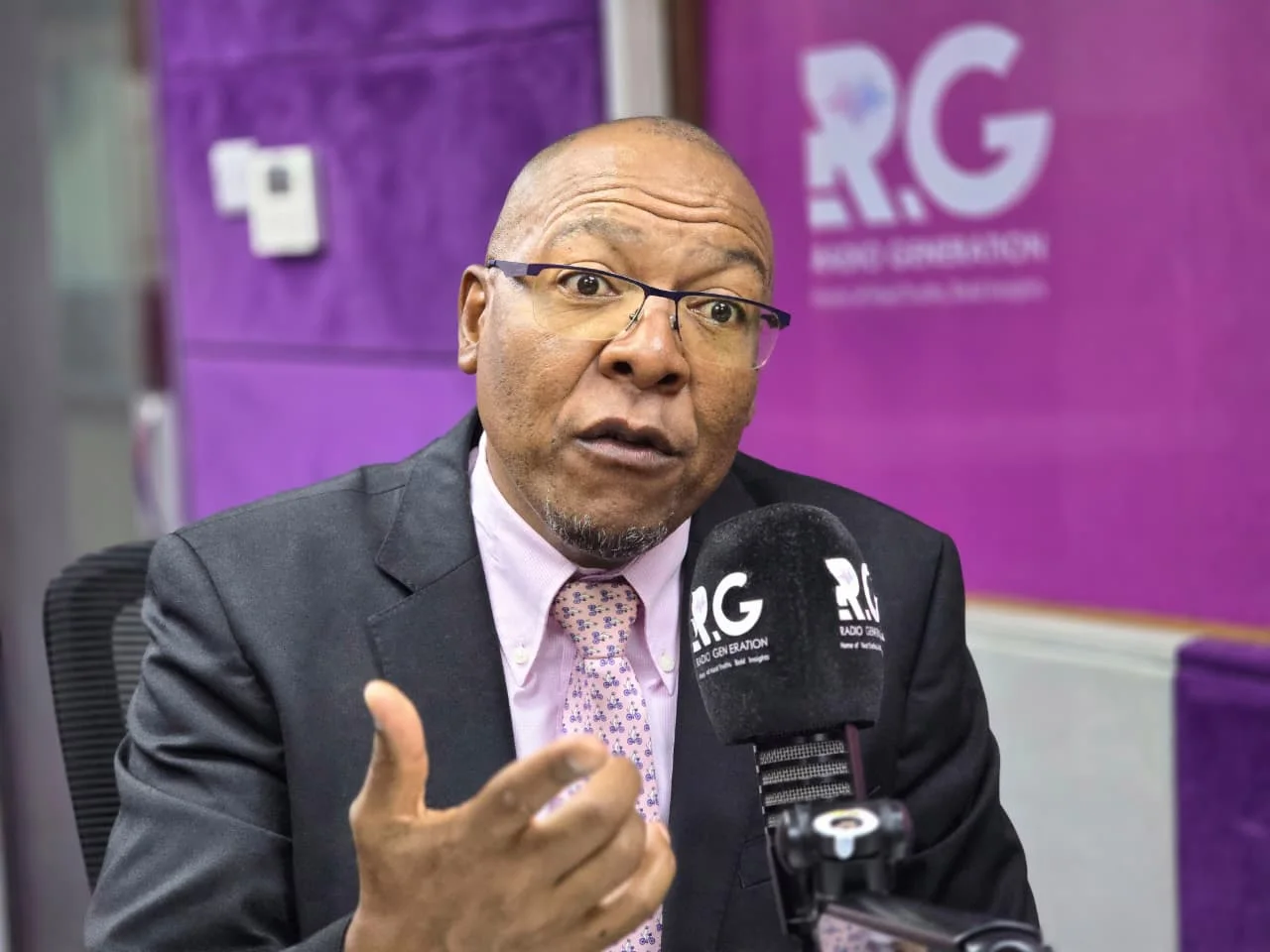
Deputy Government Spokesperson Gabriel Muthuma has defended President William Ruto’s development agenda, arguing that political opposition and legal challenges have slowed the implementation of key government projects.
Muthuma cited affordable housing, the construction of modern markets, airport expansion and the proposed refinery investment as initiatives that could transform the economy but have encountered resistance, including court proceedings.
Speaking on Radio Generation on Friday, Muthuma argued that several projects were designed to address unemployment, improve infrastructure, expand energy capacity and stimulate economic growth, but their implementation had been affected by political disagreements.
He singled out the affordable housing programme, saying the government had not achieved its original targets but maintained that the progress made should be assessed against the challenges encountered during implementation.
"The numbers that were spoken of, we haven't gotten to those numbers yet. But if they are presented as having gotten close to it, you'll have a problem because that is not difficult to fact-check," he said.
The housing programme is among the administration's flagship development initiatives, targeting the construction of 300,000 homes annually to address the country's housing deficit.
Kenya faces an estimated annual urban housing demand of about 250,000 units against an annual supply of approximately 50,000, leaving a substantial gap that has contributed to overcrowding and the growth of informal settlements.
The programme has also faced legal and public challenges, particularly over the compulsory housing levy introduced to finance construction. The Affordable Housing Act, 2024, established a 1.5 per cent contribution from employees' gross salaries, matched by an equal employer contribution.
By August 2026, the government reported that more than 280,000 housing units were under construction, representing contracts worth approximately Sh731.5 billion. A further Sh300 billion in contracts was awaiting approval, while the administration projected that the programme had generated between 640,000 and one million direct and indirect jobs.
However, the programme's implementation has attracted scrutiny over the pace of delivery. The National Treasury's FY2026/27 Budget Statement reported 277,281 housing units completed or under implementation as of May 2026, figures that combine completed and ongoing projects rather than representing houses already occupied.
The Deputy Government Spokesperson also defended the construction of modern markets, saying the facilities were intended to improve the working conditions of small-scale traders, particularly women who sell produce in open spaces exposed to harsh weather.
The government's programme targets nearly 600 modern markets across the country. In Kiambu County, for instance, construction had started on 29 of 31 planned markets by October 2026, while the Sh267 million Kangangi Fresh Produce Market was reported to be 30 per cent complete.
He argued that the projects should be assessed based on their intended economic and social benefits, rather than political disagreements surrounding their implementation.
"It's not the fact that you can't see, even as a local area leader. It's not the fact that you can't see you have women outside there who are selling their wares, on very rugged weather, scorched sun, rain. You know, sometimes," he said.
The spokesperson further defended the proposed Sh2.2 trillion Dangote oil refinery investment in Lamu, describing it as a major opportunity to expand Kenya's industrial capacity and create employment.
The proposed facility is designed to process up to 700,000 barrels of oil daily and is projected to create approximately 60,000 jobs. It is also expected to strengthen regional fuel supplies and reduce reliance on imported refined petroleum products.
According to Muthuma, the investment would have wider economic benefits beyond the refinery itself, including supporting industries, additional electricity generation and opportunities for professionals and young people.
"The refinery is expected to create approximately 60,000 high-quality jobs, particularly for engineers and other professionals. Once operational, it could also help lower fuel prices, increase electricity generation and stimulate the growth of supporting industries, transforming the economic landscape of the entire region," he said.
He questioned why political leaders would blame the government for unemployment while opposing investments that could potentially create thousands of jobs.
Muthuma also revisited the controversy surrounding the proposed Adani Group partnership to expand Jomo Kenyatta International Airport, arguing that the politicisation of the deal had affected Kenya's efforts to address long-standing aviation infrastructure challenges.
The proposed agreement was cancelled in November 2024 following public opposition and the announcement of new information concerning the Indian conglomerate. The arrangement had involved a proposed 30-year operating concession in exchange for airport expansion, including an additional runway and terminal.
However, the need to expand JKIA remains. According to the Ministry of Roads and Transport, the airport handled approximately 8.93 million passengers in 2025 against a designed annual capacity of 7.5 million.
In March 2026, the Kenya Airports Authority initiated a new tender for airport expansion and modernisation, including a new passenger terminal designed to accommodate an additional 10 million passengers annually. Long-term projections indicate passenger traffic could reach 22.31 million by 2045.
Muthuma maintained that Kenya had previously identified the need for a new airport under Vision 2030, questioning why the country had taken so long to advance its aviation infrastructure ambitions.
He also blamed court interventions for slowing government development projects, arguing that legal disputes could disrupt implementation schedules and delay the completion of infrastructure initially expected to take two years.
Muthuma maintained that the country's development agenda should not be judged solely through political disagreements, arguing that the government needed room to explain both its achievements and the difficulties encountered in delivering its promises.
He acknowledged that some projects had fallen short of their original targets but insisted that the government should communicate the facts surrounding their implementation.