TIFA survey places Kalonzo–Sifuna ahead in opposition 2027 race combinations
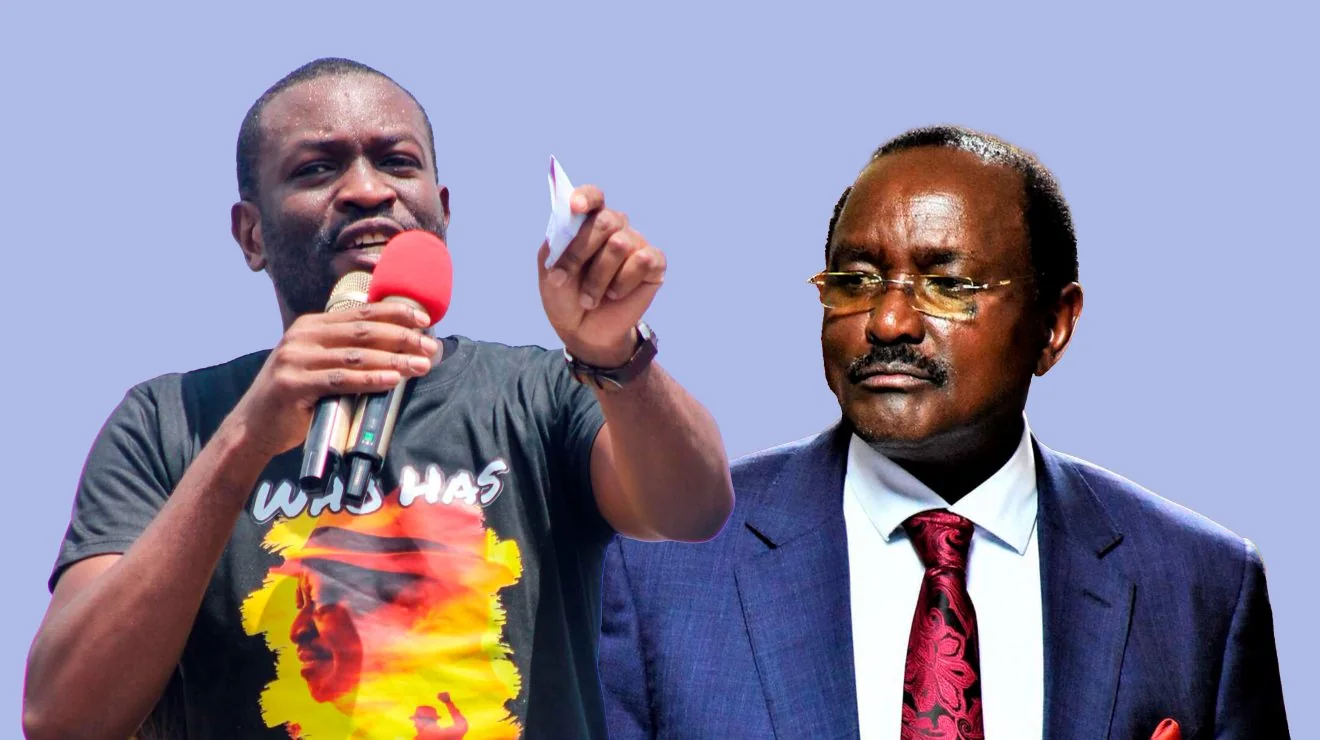
A new TIFA Research poll released May 14, 2026 finds Kalonzo Musyoka–Edwin Sifuna as the top preferred opposition presidential pairing overall, while Kalonzo–Fred Matiang’i edges among opposition supporters, with many undecided.
A new TIFA Research survey has placed Wiper party leader Kalonzo Musyoka and Nairobi Senator Edwin Sifuna as the most preferred opposition presidential combination ahead of the 2027 General Election, pointing to shifting voter preferences within the opposition space and growing support for mixed-generation leadership.
The study, released on May 14, 2026, explored different possible opposition presidential pairings across the country without assigning who would take the top or running mate position. It shows that Kalonzo Musyoka appears in nearly all leading combinations, reinforcing his continued influence in opposition politics.
Across the full sample, the Kalonzo Musyoka + Edwin Sifuna pairing emerges as the most preferred, followed closely by Kalonzo Musyoka + Fred Matiang’i. The findings suggest that while experience remains important to many voters, newer political figures are also gaining ground.
The survey also recorded strong backing for the Kalonzo–Matiang’i combination, especially among opposition supporters, where it slightly leads.
Among all respondents, several combinations were tested and ranked, including:
“Kalonzo Musyoka + Edwin Sifuna, Kalonzo Musyoka + Fred Matiang'i, Rigathi Gachagua + Kalonzo Musyoka, Kalonzo Musyoka + Martha Karua, Not Sure None”
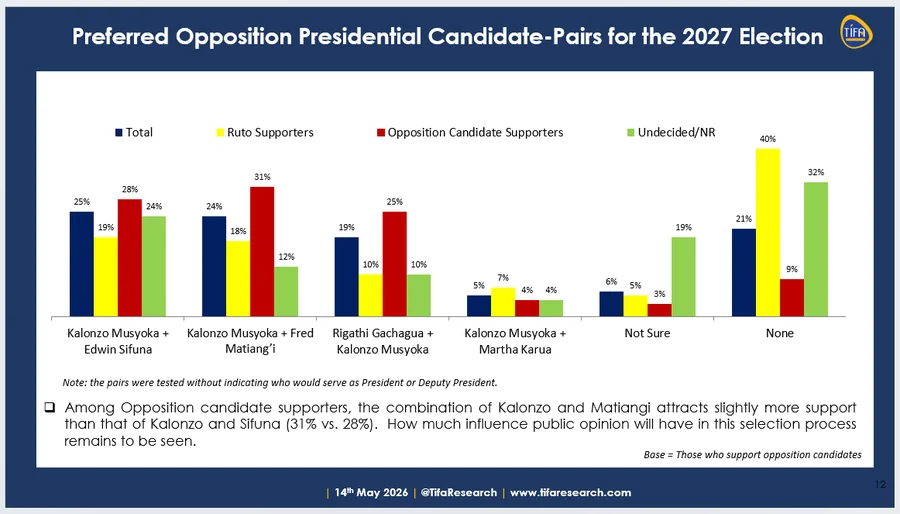 TIFA Poll showing Kalonzo & Sifuna pair is the most preferred opposition combination. PHOTO/TIFA
The results point to a highly competitive and still unsettled opposition field, with no single alliance clearly dominant beyond Kalonzo’s central role.
Among opposition candidate supporters, the study shows a narrow difference between the top two pairings.
“Among Opposition candidate supporters, the combination of Kalonzo and Matiangi attracts slightly more support than that of Kalonzo and Sifuna (31% vs. 28%).”
Despite this, the broader national sample gives Kalonzo–Sifuna a slight edge overall, suggesting wider appeal beyond core opposition voters.
Other tested combinations, including Kalonzo Musyoka with Rigathi Gachagua and Kalonzo Musyoka with Martha Karua, also registered measurable support but trailed the leading pairings by a clear margin.
A notable share of respondents remain undecided or did not express a preference, reflecting ongoing uncertainty as opposition parties weigh possible coalitions ahead of 2027.
Analysts note that Kalonzo Musyoka’s repeated appearance across all major combinations highlights his continued role as a key figure in opposition unity talks.
Edwin Sifuna’s strong performance is seen as a sign of rising influence among younger and urban voters, while Fred Matiang’i maintains steady support linked to his national profile and experience in public service.
Martha Karua’s presence in the tested pairings also points to her continued relevance in reform-driven political discussions and coalition negotiations.
The survey suggests that opposition politics is currently shaped by two competing trends: one leaning toward experienced leadership, and another pushing for generational change.
Kalonzo Musyoka’s partnerships with both established and emerging figures reflect this divide, positioning him as a central figure in almost every possible opposition alignment tested.
The research was conducted across nine zones, including Central Rift, Coast, Lower Eastern, Mt Kenya, Nairobi, Northern, Nyanza, South Rift, and Western regions.
It used face-to-face household interviews conducted mainly in Swahili and English, with a total of 2,013 respondents taking part.
The results carry a margin of error of +/- 2.18%, with higher margins expected in smaller sub-samples.
The sample included both urban and rural respondents, with rural participants forming the majority. Gender balance was nearly even, while education levels ranged from no formal schooling to tertiary education, ensuring broad representation.
Respondents aged 18 and above were included, capturing views from both younger and older voters across the country.
Analysts say the prominence of Kalonzo–Sifuna in the overall sample may reflect growing support for leadership combinations that blend experience with youth appeal.
At the same time, the Kalonzo–Matiang’i pairing continues to attract voters who prioritize experience and policy continuity, especially within opposition-supporting groups.
As the 2027 election cycle draws closer, the findings point to ongoing negotiations and shifting alliances within the opposition, with Kalonzo Musyoka remaining a central figure in nearly every possible path forward.



Comments
Sign in with Google to comment, reply, and like comments.
Continue with Google