Opposition warns Safaricom stake sale could undermine national interests
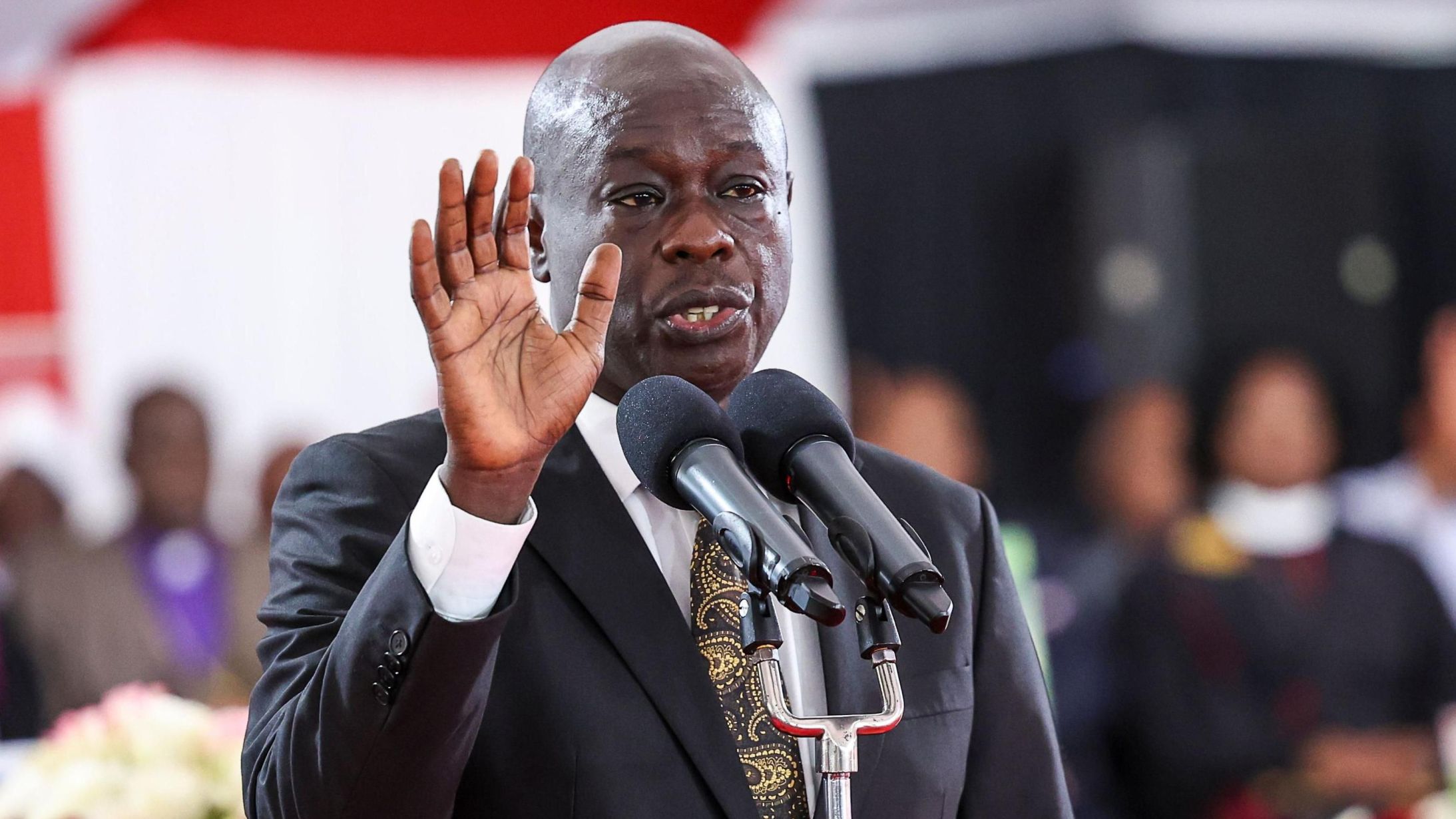
The leaders said the telecommunications firm generates reliable income for the state and cautioned against divesting government shares to address budget gaps.
Kenya’s united opposition leaders have criticised proposals linked to the National Infrastructure Fund Bill, warning that reducing government ownership in Safaricom could undermine national interests.
They say the move risks sacrificing profitable public assets for short-term fiscal relief.
During a press briefing on Thursday, the opposition leaders led by Kalonzo Musyoka, Rigathi Gachagua and Eugene Wamalwa argued that the proposed policies risk selling key national assets to cover short-term fiscal pressures.
In a policy document titled “Sessional Paper Number Three of 2025: Selling Kenya’s Crown Jewels for Fiscal Pain Relief,” the opposition warned that Safaricom remains central to Kenya’s financial and digital infrastructure.
“Safaricom is the backbone of Kenya’s digital payment architecture through M-PESA, host of critical government service delivery channels and one of the most consistently profitable public assets,” the document states.
The leaders said the telecommunications firm generates reliable income for the state and cautioned against divesting government shares to address budget gaps.
“In financial year 2024 Safaricom cleared a total dividend payout of 8 billion shillings, a significant share flowing to the government,” the statement said.
They argued that selling part of the state’s stake would permanently reduce government earnings.
“To divest this stake even partially to plug short term fiscal gaps is to cover annual household shopping. The income generating asset is permanently lost yet the budget shortfall will reappear within the next cycle,” the paper stated.
The opposition also raised concerns about Safaricom’s links to national systems and public services.
“Safaricom network underpins the National Integrated Identity Management System, Huduma Number, Lipa na M-Pesa, government payment e-Citizen and national security communication systems.”
According to the leaders, the policy proposal fails to clarify several critical issues surrounding ownership and security.
“Reducing state ownership without clear parliamentary safeguards, the sessional paper fails to answer elementary questions. Who will be permitted to buy? Will foreign state actors be banned?”
They added that private investors could gain stronger control if state ownership declines.
“What happens when commercial shareholders gain greater influence? These omissions are disqualifying failures of due diligence.”
They also pointed to previous privatisation attempts as a warning. They cited the listing of Kenya Pipeline Company as an example of a flawed process.
“The KPC IPO stands as one of the most instructive object lessons. The process was marked by pricing questions, adviser selection without public accountable competitive process, modest retail investor participation and weak secondary market liquidity.”
According to the leaders, such experiences raise doubts about the government’s ability to manage future transactions responsibly.
“If the government IPO lacked credibility and genuine market confidence, there is no basis for public trust that it can responsibly execute a partial divestiture.”
They also criticised the proposed National Infrastructure Fund, saying Kenya already has sufficient institutions to manage development financing. “Kenya is not suffering from a shortage of institutions or financial instruments.”
Instead, the opposition said the country faces a deeper governance problem. “Kenya is suffering from a crisis of governance, blatant corruption, a failure of the state to spend resources transparently, enforce accountability and protect the interest of ordinary citizens.”
The leaders insisted the proposed policies would not solve the country’s economic challenges. “The National Infrastructure Fund bill will not cure this crisis, nor will the Safaricom divestiture. These are not solutions to Kenya’s development deficit.”
They warned that the measures could worsen inequality and deepen elite control over national resources.
“They become instruments for deepening the same elite culture that has stagnated Kenya’s growth for generations.”
Speaking during the briefing, Kalonzo Musyoka urged members of parliament to openly oppose the proposals.
“If there be any members of parliament clearly within our framework they should rise in opposition so that their names are recorded just like happened with the Finance Act of 2024.”
He said legislators should demand a formal vote on the proposals. “A division should be called and every person who stands in objection to this state capture will be seen by Kenyans.”
Musyoka also warned that the opposition would pursue legal action if necessary. “The moment before this thing is signed we will take it up. We are not just about to give up because if we do we are auctioning the future of our children.”
They echoed the concerns, saying national assets must be defended. “It is not a matter of hoping, it is a matter of defending the national interest.” warning that powerful financial interests could push privatisation for profit. “These are people who can go to any extent to make money.”
Meanwhile Eugene Wamalwa said the opposition was already challenging related issues in court. “Already as we speak we are in court over Safaricom.”
He said the opposition would continue challenging government decisions through legal and political means.
“We will not just live on hope. We are responsible for this and we will take off this government step by step, blow by blow.”



Comments
Sign in with Google to comment, reply, and like comments.
Continue with Google