
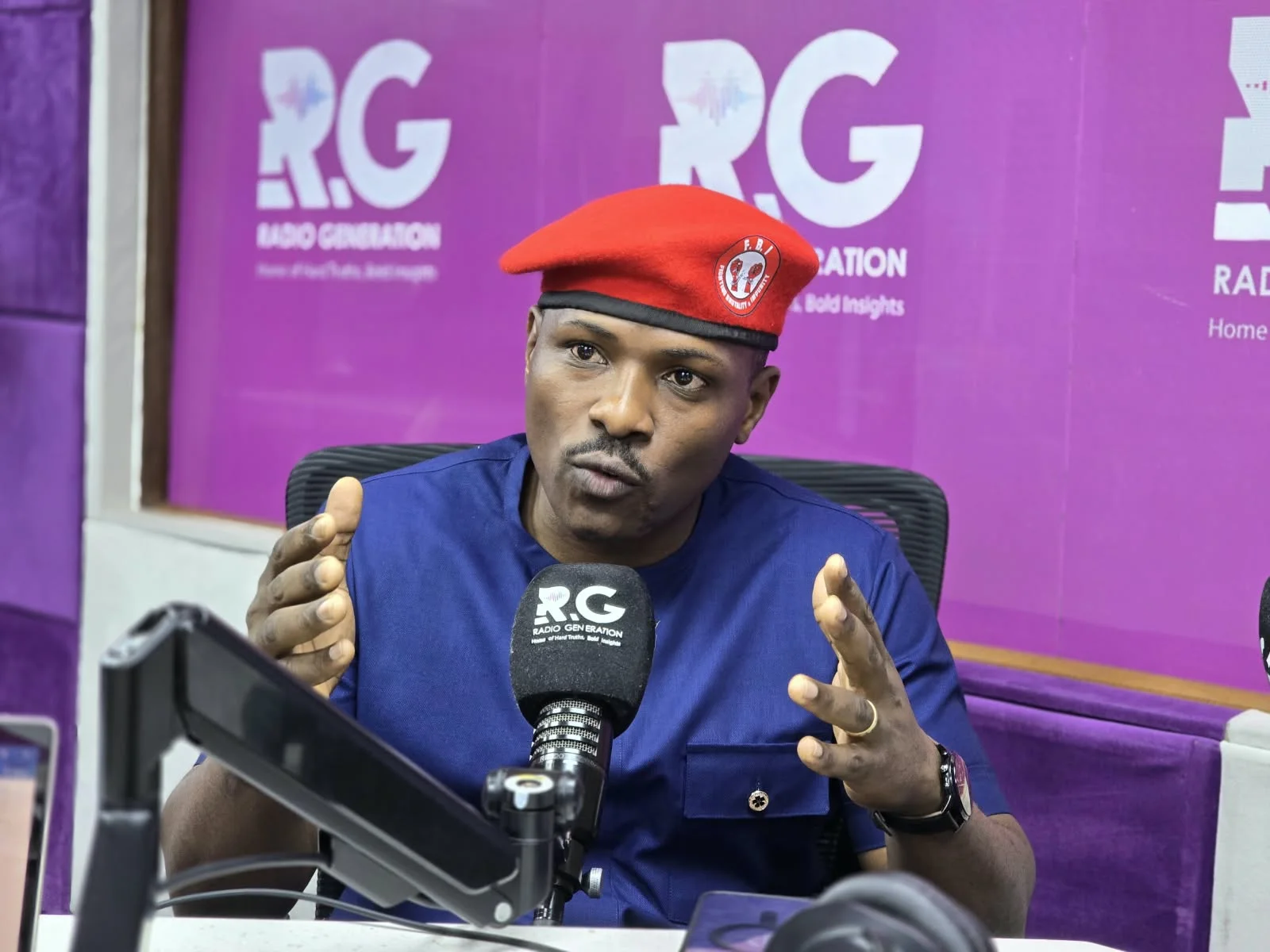
Presidential aspirant Patrick Osoi has challenged the government’s decision to pursue a Sh2 trillion refinery project with Nigerian billionaire Aliko Dangote, arguing that Kenya should first explore the ability of local investors to undertake the project and consider reviving its former oil refinery in Mombasa.
Osoi raised concerns over the proposed Dangote East Africa Petroleum Refinery in Lamu County, questioning why the government was seeking a foreign investor before establishing whether Kenyans could finance and manage a similar project.
He also called for greater public participation and parliamentary scrutiny, saying the investment involves strategic infrastructure that could shape the country’s industrial future.
Speaking during Radio Generation’s Powerfile show on Monday, Osoi argued that the government should demonstrate that local investors lack the financial and technical capacity to undertake the project before bringing in an investor from Nigeria.
“My biggest question, the worry is, don’t we have a Kenyan investor or Kenyan who can afford to do that project?” Osoi asked.
He cited the proposed Sh2.2 trillion investment and compared it with what he described as Sh7.4 trillion owed by the government to domestic lenders. He argued that Kenya should assess its own financial capacity and determine whether local resources could support major industrial projects before committing to foreign investment.
Osoi also questioned the decision to establish a new refinery in Lamu while the former Kenya Petroleum Refineries Limited (KPRL) facility in Changamwe, Mombasa, continues to serve as a storage and distribution centre.
The refinery was established in 1959, with its first processing complex commissioned in 1963. A second processing train was added in 1974, expanding the facility’s refining operations.
However, the plant stopped processing crude oil on September 4, 2013, after refining crude became less competitive than importing finished petroleum products. It subsequently shifted to storage and distribution operations.
Osoi said the facility’s history showed that Kenya had previously developed the infrastructure and expertise needed to support domestic refining. He argued that the government should have explored the possibility of restoring the Mombasa plant before pursuing the proposed investment in Lamu.
“Why should we bring in a person from outside, still having a Kenya Oil Corporation refinery, which the government would have taken the initiative long ago to revive? And if the Kenya refinery has been operating since the 1960s, then it means the Kenyan economy, or Kenya as a country, has the ability to do a refinery again,” he said.
The presidential aspirant estimated that reviving the former refinery would cost about Sh1.2 trillion, although he did not establish the basis for the figure during the interview.
The proposed Dangote East Africa Petroleum Refinery was officially launched during a groundbreaking ceremony in Mokowe, Lamu County, on Wednesday, September 30, 2026. President William Ruto attended the event alongside Dangote Group president Aliko Dangote and other African leaders.
The project is estimated to cost $16 billion, equivalent to roughly Sh2 trillion, and is designed to process 700,000 barrels of crude oil daily. The refinery is expected to be completed around 2030.
The planned integrated complex will also feature a 1,000-megawatt power plant, alongside petrochemical and fertiliser manufacturing facilities.
Supporters of the project say it could reduce the region’s dependence on imported refined petroleum products, create employment opportunities and strengthen Kenya’s industrial base through expanded local manufacturing.
However, the investment has also faced a legal challenge over land earmarked for the project.
On September 28, 2026, the Malindi Environment and Land Court ordered parties to maintain the status quo on disputed land in the Hindi/Manda Magogoni area until October 14, 2026. The case followed a challenge by 133 Chandavai residents who claim ancestral rights to the property.
The court order did not stop the September 30 groundbreaking ceremony.
Beyond the financial questions, Osoi questioned whether Kenyans had been adequately consulted before the government advanced the proposed investment. He also raised concerns about whether Parliament had examined the project and debated the need to bring in a foreign investor.
“Why should he(President William Ruto) bring somebody all the way from Nigeria, who in this case was never verified? There was no public participation. There was no parliamentary discussion about whether Kenya needed such an investor to come and invest in Kenya,” he said.
Osoi further referred to President Ruto’s remarks that the refinery project would require one million bags of cement, questioning how the supply arrangements would affect local businesses.
He maintained that his concerns centred on the government’s decision-making process, the capacity of Kenyan investors and the need to protect domestic industrial interests.
The presidential aspirant called on the government to demonstrate that the proposed investment serves Kenya’s long-term interests and has undergone adequate public scrutiny, arguing that the country should carefully consider its local industrial capacity before relying on foreign investors for major infrastructure projects.