
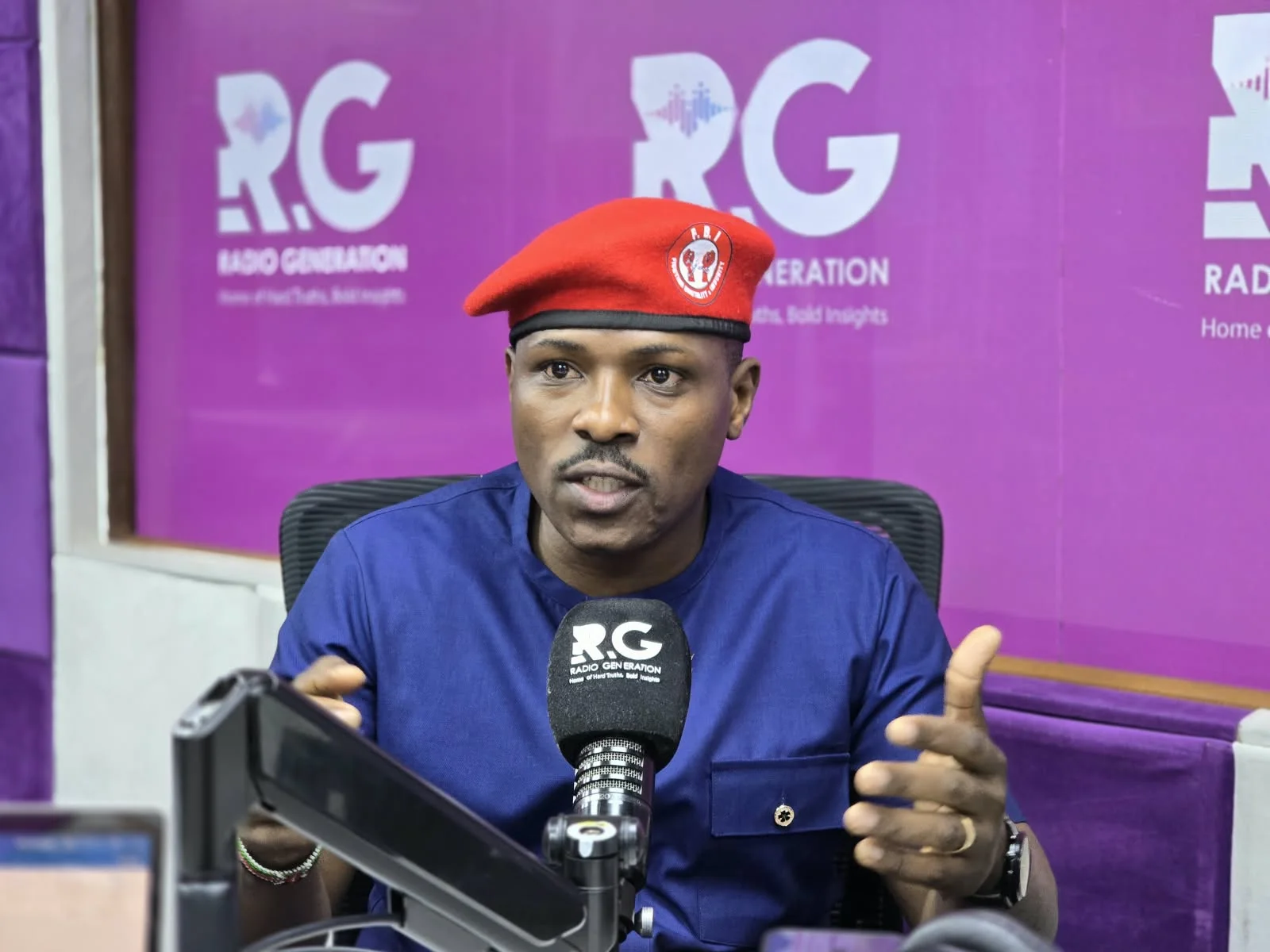
Presidential aspirant Patrick Osoi has challenged Kenyans to distinguish between political experience and leadership ability, arguing that years spent in politics do not automatically qualify an individual to govern the country.
Speaking during Radio Generation’s Power File show on Monday, Osoi said effective leadership should be measured by service to citizens, competence, and the ability to understand national governance rather than popularity, political longevity, or ethnic background.
He argued that Kenya’s political culture often places too much emphasis on political experience when assessing candidates for public office, overlooking the skills and values required to manage national affairs.
“Politics is not leadership. Leadership is servanthood. Leadership is influence. It has nothing to do with popularity. It has nothing to do with which tribe you come from. It has to do with the ability to lead people, the ability to serve people,” Osoi said.
The aspirant maintained that public office should be understood as a responsibility to serve citizens rather than an opportunity to exercise authority over them.
His argument comes against the backdrop of Kenya’s constitutional framework, which defines leadership as a public trust and places service, integrity and competence at the centre of state authority.
Article 73 of the Constitution states that authority assigned to a state officer carries the responsibility to serve the people rather than the power to rule them. It also identifies integrity, competence, suitability, accountability and selfless service in the public interest as guiding principles of leadership.
Osoi questioned the assumption that a long career in politics necessarily demonstrates an individual's ability to govern, comparing the issue to the specialised skills required in the medical profession.
He maintained that professional experience in one role does not automatically qualify a person to undertake responsibilities requiring different training and expertise.
“I want to make it very clear that if I’m a cleaner in a hospital, or rather I just do other technical work within a hospital, even if I work there for 50 years, it does not guarantee me to do an operation in a hospital.”
He argued that the same reasoning should apply to political leadership, saying voters should assess candidates on their ability to govern rather than the number of years they have participated in politics.
“We mistake that and think that because this politician has been in political space, they have the experience, the ability, the capability to run a country. That is a wrong context to view leadership, especially to run a country,” Osoi added.
He further added that aspiring leaders needed to demonstrate an understanding of national interests and the responsibilities associated with managing public affairs.
His remarks raise questions about how political experience should be weighed against professional competence, integrity and the ability to deliver public services when Kenyans assess candidates ahead of the 2027 General Election.
Osoi also challenged the tendency to associate leadership with ethnic identity and personal popularity, arguing that neither should determine an individual's suitability for public office.
Article 10 of the Constitution lists national unity, democracy, public participation, good governance, transparency, accountability and sustainable development among Kenya’s national values and principles of governance. These principles apply to state organs, state officers and public officers when making or implementing public policy.
The aspirant maintained that his ambition was driven by what he described as the need to address Kenya’s governance challenges. He presented himself as a candidate focused on national service rather than conventional political competition.
“I’m just that young Kenyan, simple Kenyan, who has grown up from very humble beginnings and in diverse counties, Western Kenya region, Mount Kenya region, and Nairobi region. That is where I grew, and just here to present myself to Kenyans, not as a politician, but as a soldier, basically to rescue this nation.”
Osoi, who described himself as a security expert with 19 years of experience, also argued that professional qualifications and political participation should not be treated as interchangeable when assessing competence.
He cited medicine and law as examples of professions requiring specialised knowledge, saying leadership of a country similarly demands an understanding of governance beyond participation in electoral contests.