
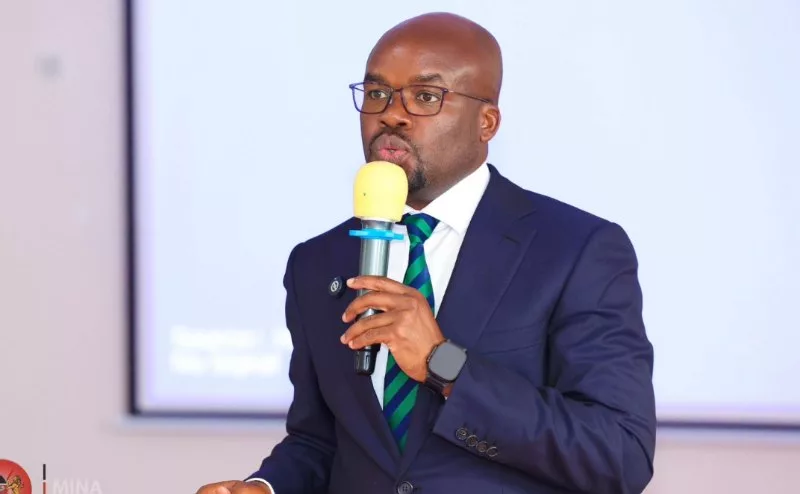
Interior Principal Secretary Raymond Omollo has pushed back against claims linking police to reported abductions and enforced disappearances, saying security agencies should not automatically be blamed whenever a person goes missing without establishing the circumstances.
Omollo maintained that although police have a legal and constitutional duty to account for missing persons, investigations must establish what happened before responsibility is placed on law enforcement officers.
Speaking on NTV on Tuesday, November 10, the PS said some reported disappearances had later been resolved without any involvement of the police, warning against making blanket accusations against security agencies.
“A case where someone is missing, of course, the easiest conversation is that the police have done this. But you are aware we've had cases where people go missing after a month or so, they show up for one reason or another, and you find that police are completely not involved,” he said.
He cited cases in which individuals deliberately made themselves unavailable, as well as incidents where families reported disappearances without providing enough information to establish what had happened.
However, Omollo acknowledged that police could not ignore families seeking answers about relatives whose whereabouts remained unknown.
He insisted that the national security apparatus must provide explanations, including confirming whether missing individuals were being held in custody or giving details of their last known whereabouts.
“The national security apparatus should answer that question,” he said.
The PS explained that accountability should not be measured solely by whether officers immediately locate a missing person, but also by their willingness to communicate what is known and explain the investigations being conducted.
He further pointed out that the Inspector General of Police and other senior officers had appeared in court to respond to concerns and questions surrounding missing persons.
Omollo also highlighted the role of the Independent Policing Oversight Authority (IPOA), saying the institution had a constitutional responsibility to investigate allegations of police misconduct and ensure officers found responsible were prosecuted.
He called for action against anyone found to have violated the law, maintaining that accountability should extend across the criminal justice system, including the police, judiciary, media and members of the public.
“Where there is culpability, it is critical that action has to be taken,” he said.
His remarks come against the backdrop of growing concerns over enforced disappearances in Kenya, with the Kenya National Commission on Human Rights (KNCHR) documenting 46 cases in 2026.
Of the reported cases, 35 were captured in the Commission's National Reparations Framework, which was presented to President William Ruto on June 15.
The human rights commission subsequently documented another 11 cases linked to the June 25 protests.
According to KNCHR, the cases involved protesters who were arrested and held incommunicado before later being found to have suffered torture and other forms of ill-treatment.
The commission has described enforced disappearances as an ongoing human rights crisis, urging the government to establish the whereabouts of those still missing and ensure individuals responsible are brought to justice.